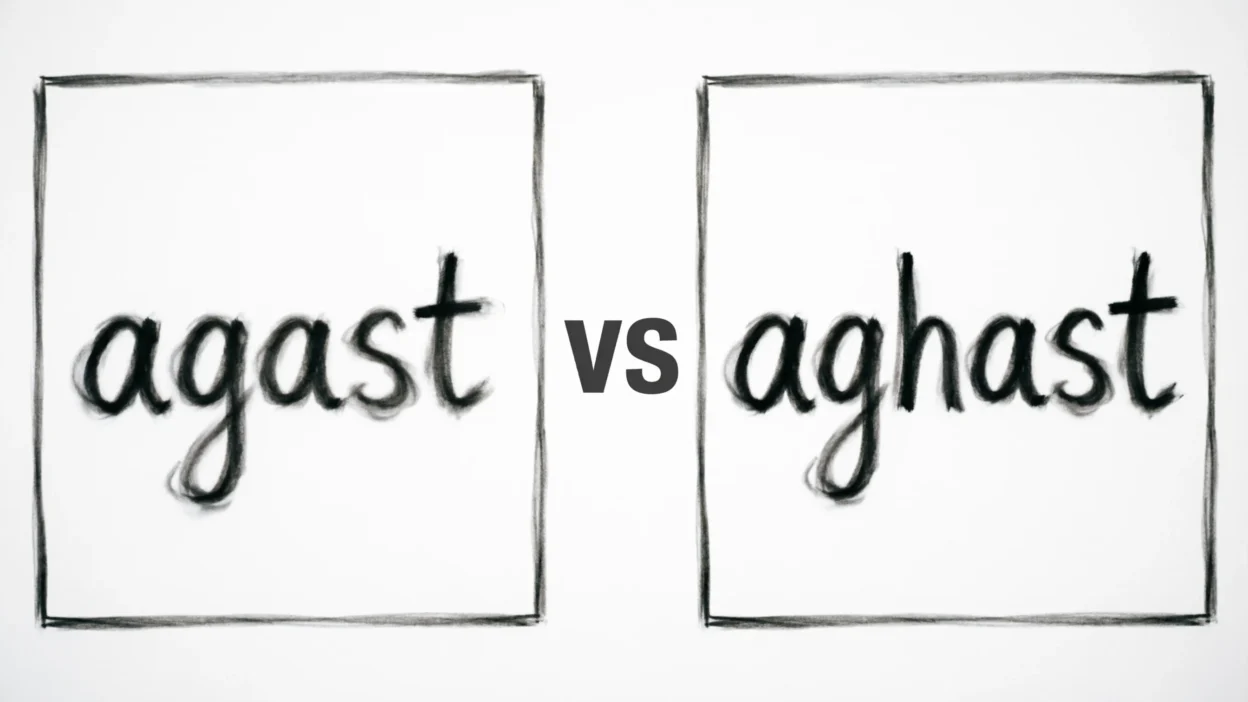
If you’ve ever written “agast” and wondered whether it’s correct, you’re definitely not alone. These two spellings look almost identical and sound very similar, which makes the confusion completely understandable.
But here’s the good news: once you learn the correct form, you’ll never second-guess it again. In this guide, we’ll break down agast vs aghast, explain the meaning, and show you how to use the right word with confidence.
Quick Answer
- ✅ Aghast = Correct spelling
- ❌ Agast = Incorrect spelling
Always use “aghast” in modern English.
What Does “Aghast” Mean?
The word aghast means to feel shock, horror, or extreme surprise—usually in reaction to something unexpected or disturbing.
Common meanings:
- Shocked or horrified
- Deeply surprised
- Emotionally stunned
Examples:
- She was aghast at the news.
- He looked aghast when he saw the damage.
- The audience sat aghast in silence.
It’s often used in storytelling, formal writing, and expressive speech.
Why “Agast” Is Incorrect
“Agast” might seem like a simpler version, but it’s actually a misspelling of “aghast.”
Here’s why:
- The correct historical and modern spelling is “aghast.”
- The “gh” is part of the original word and must be included.
- “Agast” is not accepted in standard English dictionaries.
Correct vs incorrect:
- ❌ agast
- ✅ aghast
Agast vs Aghast: Key Differences
| Feature | Aghast ✅ | Agast ❌ |
|---|---|---|
| Correct spelling | Yes | No |
| Dictionary status | Valid | Invalid |
| Usage | Standard English | Avoid completely |
| Meaning | Shocked or horrified | Same idea (incorrect form) |
| Professional use | Recommended | Not acceptable |
Common Mistakes to Avoid
Let’s look at why this mistake happens and how to prevent it:
1. Dropping the “gh”
Writers often simplify spelling by removing silent letters.
- ❌ agast
- ✅ aghast
2. Writing Based on Sound
“Aghast” is pronounced like “uh-gast,” so it’s easy to miss the “gh” when spelling.
3. Typing Quickly
Fast typing or autocorrect errors can lead to “agast” without noticing.
Examples of “Aghast” in Sentences
Here are some real-world examples to help you use “aghast” naturally:
Everyday Use:
- I was aghast when I heard the story.
- She looked aghast at the unexpected bill.
Storytelling:
- He stood aghast, unable to speak.
- The villagers were aghast at the sudden event.
Formal/Professional:
- The board was aghast at the financial losses.
- Investors were aghast by the sudden market crash.
American vs British English
There is no difference in spelling between American and British English.
- 🇺🇸 American English: aghast
- 🇬🇧 British English: aghast
Both use the same correct form.
Synonyms of “Aghast”
To enrich your writing, you can also use:
- Shocked
- Horrified
- Stunned
- Appalled
- Astonished
- Dismayed
Example:
- She was shocked by the news.
- She was aghast by the news.
“Aghast” often carries a stronger emotional impact.
When to Use “Aghast” (Quick Tips)
Use aghast when you want to:
- Express strong shock or disbelief
- Describe emotional reactions in stories
- Emphasize dramatic or serious situations
Memory trick:
👉 Think: “Aghast has a ‘gh’—just like ‘ghost’ (something shocking)”
FAQs About Agast vs Aghast
1. Is “agast” ever correct?
No, “agast” is not correct in modern English. Always use “aghast.”
2. Why does “aghast” have “gh”?
It comes from older forms of English where “gh” was commonly used in spelling.
3. Is “aghast” formal or informal?
It works in both, but it’s more common in formal or descriptive writing.
4. Can I use “aghast” in everyday conversation?
Yes, especially when expressing strong surprise or shock.
5. What part of speech is “aghast”?
It is an adjective.
6. Are there similar confusing words?
Yes—words like “ghost vs gost” or “though vs tho” can also cause confusion.
7. Does pronunciation change with spelling?
No, both would sound similar, which is why the mistake happens.
8. How can I remember the correct spelling?
Remember that “aghast” always includes “gh.”
Final Summary
The difference between agast vs aghast is simple but important. “Aghast” is the correct spelling, used to describe shock, horror, or strong surprise. “Agast,” on the other hand, is just a misspelling and should be avoided in all forms of writing.
Even though the pronunciation may trick you, remembering the correct spelling ensures your writing remains clear and professional.
Actionable Takeaway
Next time you want to describe shock or disbelief:
👉 Always write “aghast” with “gh”
To improve your spelling:
- Watch out for silent letters
- Double-check uncommon words
- Practice correct usage in sentences
With a little practice, you’ll never confuse this pair again.

Joy Root is a content writer at Whygenix.com, creating clear, engaging articles that explain complex ideas simply, helping readers understand why topics matter in everyday life and personal growth.