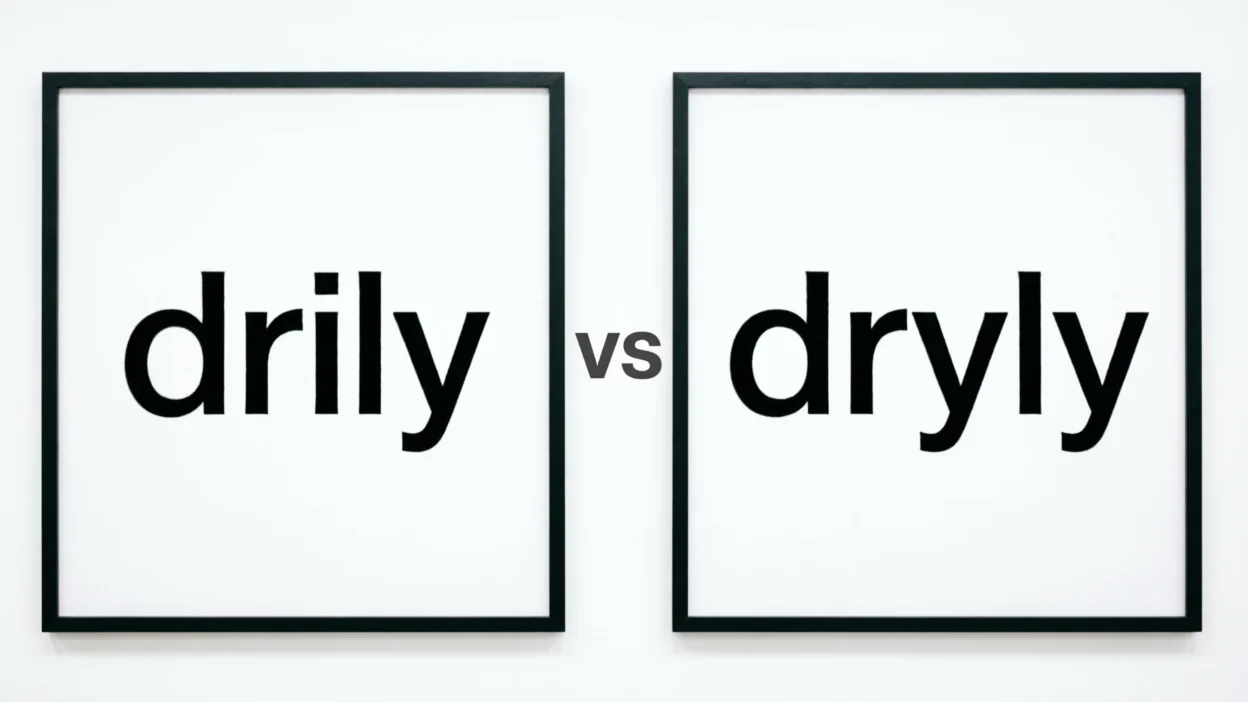
Have you ever paused while writing and wondered whether to use drily or dryly? You’re not alone. These two spellings look almost identical, and both appear in writing—making the choice feel confusing.
The good news is that this isn’t a right-or-wrong situation like many spelling debates. Instead, it’s about understanding subtle differences in usage, tone, and regional preference.
In this guide, we’ll break it down clearly so you can choose the best option with confidence.
Quick Answer: Drily vs Dryly
- ✅ Both are correct: Drily and dryly
- 🇺🇸 American English prefers: Dryly
- 🇬🇧 British English often prefers: Drily
Both words mean the same thing, so you can use either depending on your audience and style.
What Do “Drily” and “Dryly” Mean?
Both drily and dryly are adverbs derived from the adjective dry. They describe a way of speaking or acting that is:
- Lacking emotion
- Subtly humorous (often sarcastic)
- Matter-of-fact or blunt
Simple definition:
- Drily / Dryly = in a dry, understated, or slightly sarcastic manner
Example sentences:
- “He dryly remarked that the meeting could have been an email.”
- “She drily noted the obvious mistake.”
- “He dryly responded, ‘Well, that went well.’”
In all these cases, the tone is calm, slightly ironic, and often humorous.
Why Are There Two Spellings?
The difference comes from how English forms adverbs from adjectives ending in “-y.”
Two accepted patterns:
- Keep the “y” → add “-ly” → dryly
- Change “y” to “i” → add “-ly” → drily
Both forms developed over time and became accepted in standard English.
Similar examples:
- shy → shyly
- sly → slyly
But “dry” is unusual because it allows both dryly and drily.
Drily vs Dryly: Side-by-Side Comparison
| Feature | Dryly ✅ | Drily ✅ |
|---|---|---|
| Correct spelling | Yes | Yes |
| Meaning | Same | Same |
| American English | Preferred | Less common |
| British English | Common | Preferred |
| Usage frequency | More common | Less common |
Which One Should You Use?
Use dryly if:
- You’re writing for an American audience
- You want the more modern, widely used spelling
- You prefer simpler, more intuitive forms
Use drily if:
- You’re writing in British English
- You prefer a slightly traditional or literary tone
- You want stylistic variation
In most cases, dryly is the safer, more universally understood option.
Real-Life Usage in Context
In casual writing:
- “He dryly joked about the situation.”
In literature:
- “She drily observed the irony of the moment.”
In professional communication:
- “He dryly pointed out the error without criticism.”
In humor:
- “Oh great,” she said dryly.
Both forms work perfectly—the difference is mainly stylistic.
Common Mistakes to Avoid
1. Thinking one is incorrect
- ❌ “Drily is wrong.”
- ✅ Both are correct
2. Mixing styles inconsistently
If you choose one spelling, stick with it throughout your document.
3. Overusing the word
“Dryly” and “drily” are effective but should be used sparingly for impact.
4. Confusing tone
“Dryly” implies subtle humor or understatement—not rudeness.
Related Terms and Synonyms
To expand your vocabulary, here are similar expressions:
- Wryly
- Sarcastically
- Ironically
- Matter-of-factly
- Deadpan
- Subtly
- Understated
These words can help convey similar tones depending on context.
American vs British English Differences
This is where the distinction becomes useful:
- 🇺🇸 American English: strongly favors dryly
- 🇬🇧 British English: often uses drily, though dryly is also accepted
So while both are correct globally, your choice can reflect regional style.
When Should You Use Drily or Dryly?
Use either form when describing:
- Subtle humor
- Sarcastic remarks
- Emotionless or flat delivery
- Clever understatement
Avoid using them when:
- You need a clear emotional tone (e.g., happy, angry)
- The audience may not understand nuanced humor
FAQs About Drily vs Dryly
1. Is “drily” a real word?
Yes, it’s a correct and accepted spelling, especially in British English.
2. Is “dryly” more common?
Yes, dryly is more widely used, especially in American English.
3. Do they have different meanings?
No, both words mean exactly the same thing.
4. Which spelling should I use in formal writing?
Either is acceptable, but dryly is safer for global audiences.
5. Is one more modern than the other?
Yes, dryly is considered more modern and commonly used today.
6. Can I use both in the same article?
It’s better to stick to one for consistency.
7. Why does “dry” have two adverb forms?
Because English allows multiple patterns for forming adverbs from “-y” endings.
Final Summary
The debate between drily vs dryly isn’t about right or wrong—it’s about preference and context. Both spellings are correct, share the same meaning, and are widely accepted in English. The main difference lies in usage: dryly is more common, especially in American English, while drily has a slightly more traditional or British feel.
For most writers, especially in global or professional contexts, dryly is the safest and most natural choice. However, if you’re writing in British English or aiming for a literary tone, drily works just as well.
Actionable Takeaway
- Use dryly for modern, widely accepted usage
- Use drily for British or stylistic preference
- Stick to one spelling for consistency
- Use these words to convey subtle humor or understatement
Mastering small distinctions like this helps your writing feel more polished, intentional, and engaging.

Joy Root is a content writer at Whygenix.com, creating clear, engaging articles that explain complex ideas simply, helping readers understand why topics matter in everyday life and personal growth.