
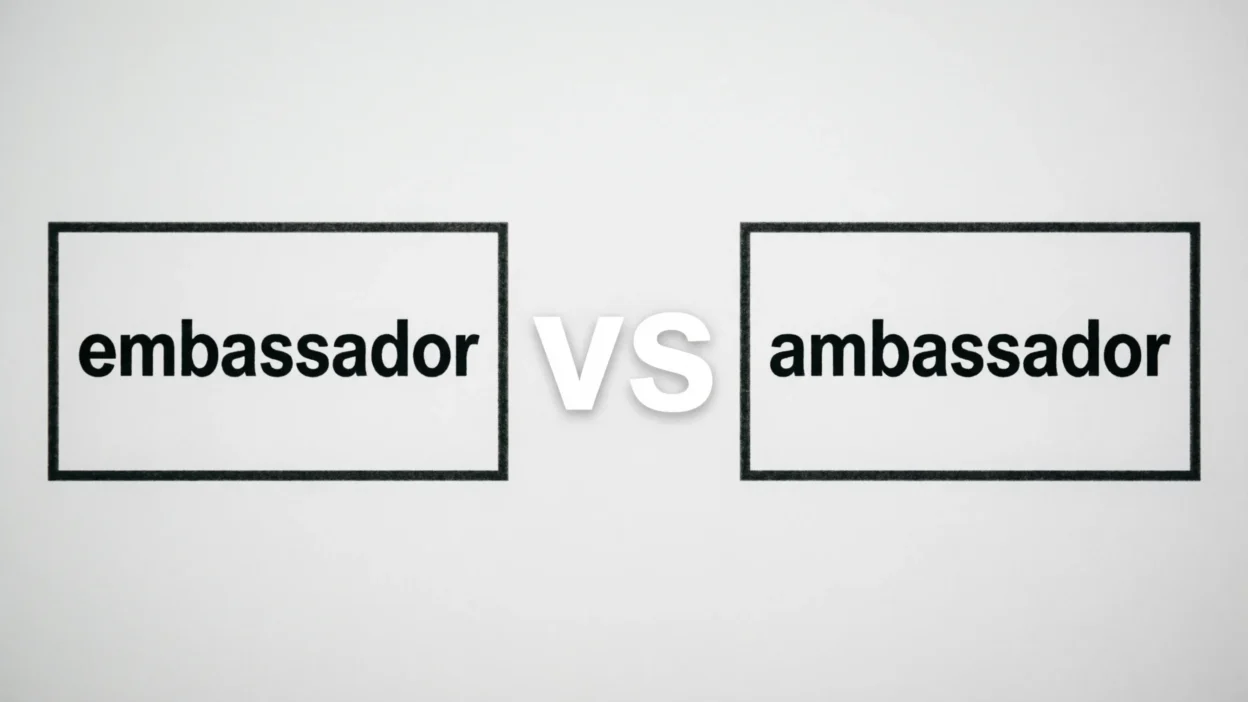
If you’ve ever written “embassador” and wondered if it’s correct, you’re not alone. This is a very common spelling confusion, especially because English pronunciation doesn’t always match how words are written.
In this guide, we’ll break down embassador vs ambassador, explain the correct spelling, and help you use it confidently in both formal and everyday writing.
Quick Answer: Embassador vs Ambassador
- ❌ Incorrect spelling: Embassador
- ✅ Correct spelling: Ambassador
“Ambassador” is the correct word and refers to an official representative or someone who promotes something.
“Embassador” is a misspelling and should not be used.
What Does “Ambassador” Mean?
The word ambassador is a noun with both formal and informal meanings.
Simple Definition:
A person who represents a country, organization, or brand.
Common Uses:
- A diplomatic ambassador (represents a country)
- A brand ambassador (promotes a company)
- A goodwill ambassador (supports a cause)
Example Sentences:
- She was appointed as an ambassador to France.
- He works as a brand ambassador for a fashion company.
- The celebrity became a goodwill ambassador for education.
Why Do People Write “Embassador”?
The confusion between embassador vs ambassador is quite understandable.
Common Reasons:
- Pronunciation confusion: The word is often pronounced like em-bass-uh-der.
- “Em” sound influence: Many words start with “em-,” leading people to assume this spelling.
- Typing habits: People spell it the way it sounds.
Embassador vs Ambassador: Side-by-Side Comparison
| Feature | Embassador ❌ | Ambassador ✅ |
|---|---|---|
| Spelling status | Incorrect | Correct |
| Meaning | None | Official representative |
| Dictionary entry | Not recognized | Recognized word |
| Usage | Should be avoided | Standard English |
| Example | ❌ He is an embassador | ✅ He is an ambassador |
How to Remember the Correct Spelling
Here’s a simple trick to help you remember.
Easy Memory Tip:
Think of “ambassador” starting with:
Or just remember:
- It starts with “am”, not “em.”
Visual Cue:
- ambassador ✔
- embassador ✘
Common Mistakes with “Ambassador”
Even when spelled correctly, there are a few usage mistakes to watch out for.
1. Capitalization Errors
- ❌ He is an Ambassador to Canada.
- ✅ He is an ambassador to Canada.
Tip: Only capitalize when it’s part of a formal title:
- Ambassador John Smith ✔
2. Confusing with “Embassy”
- ❌ He works as an embassy.
- ✅ He works as an ambassador.
Tip:
- Embassy = place
- Ambassador = person
3. Overusing in Informal Contexts
While “ambassador” is widely used, in casual contexts you might prefer simpler words like representative.
Examples of “Ambassador” in Different Contexts
Diplomatic Context:
- The ambassador met with foreign leaders.
Business & Marketing:
- She became a brand ambassador for a global company.
Social Causes:
- He is a goodwill ambassador for climate awareness.
Everyday Use:
- Teachers often act as ambassadors of knowledge.
Synonyms and Related Words
Using related terms can make your writing more varied and precise.
Synonyms:
- representative
- envoy
- delegate
- spokesperson
- promoter
Related Terms:
- diplomat
- emissary
- advocate
Nuance Differences:
- Envoy → formal diplomatic role
- Spokesperson → speaks on behalf of others
- Advocate → supports a cause
American vs British English
There is no spelling difference between American and British English.
- 🇺🇸 American English: ambassador
- 🇬🇧 British English: ambassador
Both use the same spelling and meaning.
When Should You Use “Ambassador”?
Use ambassador when referring to:
- A diplomatic representative
- A brand or company promoter
- Someone representing a cause or idea
Ideal Use Cases:
- Government and politics
- Business and marketing
- Social and charitable roles
Avoid Using It When:
- You mean a location (use embassy)
- You’re unsure about spelling (avoid “embassador”)
Real-Life Examples to Build Confidence
- ❌ She is an embassador of the brand.
- ✅ She is an ambassador of the brand.
- ❌ The embassador attended the meeting.
- ✅ The ambassador attended the meeting.
- ❌ He became an embassador for charity.
- ✅ He became an ambassador for charity.
FAQs About Embassador vs Ambassador
1. Is “embassador” ever correct?
No, “embassador” is not a correct English word.
2. What does “ambassador” mean?
It refers to someone who represents a country, brand, or cause.
3. Why is “ambassador” spelled with “am” instead of “em”?
Because of its origin and standard spelling rules in English.
4. Is “ambassador” a formal word?
Yes, but it’s also commonly used in business and marketing contexts.
5. Can “ambassador” be used in casual writing?
Yes, especially in contexts like brand promotion or social roles.
6. Are there regional spelling differences?
No, both American and British English use the same spelling.
7. What’s the difference between “ambassador” and “embassy”?
An ambassador is a person; an embassy is a place.
8. How can I avoid spelling mistakes like this?
Practice writing, use spell check tools, and remember the “am” rule.
Final Summary
The difference between embassador vs ambassador is clear: only “ambassador” is correct. “Embassador” is a common misspelling caused by pronunciation and familiarity with “em-” words, but it should always be avoided in proper writing.
By remembering that “ambassador” starts with “am” and practicing its usage in sentences, you can confidently use it in both formal and informal contexts. Over time, the correct spelling will become second nature.
Actionable Takeaway
Before you write, do a quick mental check:
👉 Does it start with “am”?
If yes, you’re on the right track with ambassador. Small spelling improvements like this can make your writing look more polished and professional.

Joy Root is a content writer at Whygenix.com, creating clear, engaging articles that explain complex ideas simply, helping readers understand why topics matter in everyday life and personal growth.


