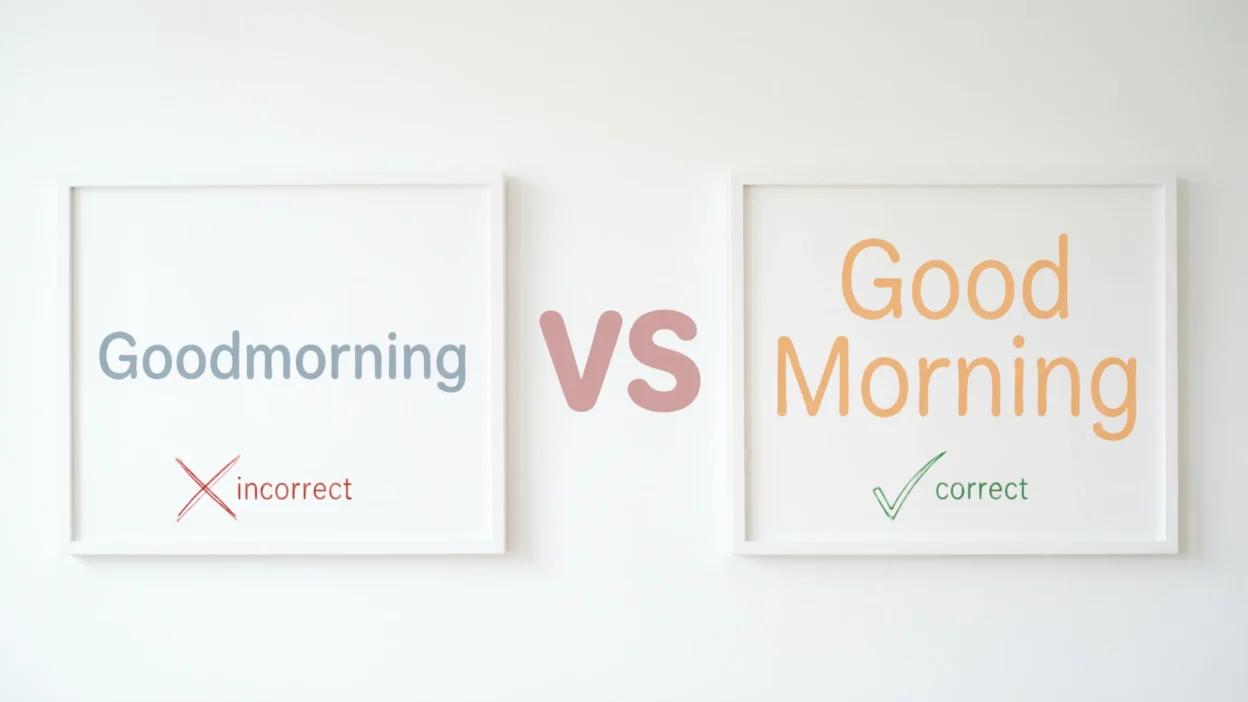
Have you ever hesitated before typing a greeting and wondered whether it should be “goodmorning” or “good morning”? It’s a small detail, but it can make a big difference—especially in professional emails, messages, or formal writing.
You’re not alone in this confusion. Many people assume both forms might be acceptable, but in reality, only one is correct. Let’s clear it up once and for all so you can greet people with confidence.
Quick Answer
- ✅ Good morning = Correct
- ❌ Goodmorning = Incorrect
👉 Always write “good morning” as two separate words.
Understanding “Goodmorning vs Good Morning”
This is a classic spacing mistake in English. Unlike some compound words (like “notebook” or “sunflower”), “good morning” is not a single word.
The Correct Form: Good Morning
“Good morning” is a standard English greeting used to wish someone well at the start of the day.
Examples:
- Good morning, how are you today?
- She said good morning to everyone in the office.
- Good morning! I hope you slept well.
The Incorrect Form: Goodmorning
“Goodmorning” (one word) is not recognized as correct in standard English.
Incorrect examples:
- ❌ Goodmorning, sir.
- ❌ I texted her goodmorning.
Why Do People Write “Goodmorning”?
This mistake usually happens because:
- Many English words combine over time (like “goodbye”)
- Fast typing or texting habits
- Influence from informal writing or social media
👉 However, “good morning” has not become a compound word, so it must remain separate.
Grammar Rule Explained
English greetings like this follow a simple structure:
👉 Adjective + noun = written separately
- good + morning → good morning
- good + evening → good evening
- good + afternoon → good afternoon
These are phrases, not compound words.
Comparison Table: Goodmorning vs Good Morning
| Feature | Goodmorning ❌ | Good Morning ✅ |
|---|---|---|
| Correct spelling | No | Yes |
| Word type | Invalid | Standard greeting |
| Usage | Informal/incorrect | Formal & informal |
| Professional use | Not acceptable | Fully acceptable |
Real-Life Usage Examples
Correct Sentences
- Good morning, everyone!
- I always say good morning to my neighbors.
- She sent a cheerful good morning message.
Incorrect Sentences
- ❌ Goodmorning, team!
- ❌ He texted me goodmorning.
Common Mistakes to Avoid
Here are some related errors people often make:
- Writing greetings as one word:
- ❌ goodafternoon → ✅ good afternoon
- ❌ goodevening → ✅ good evening
- Capitalization confusion:
- “good morning” (correct in general sentences)
- “Good morning” (correct at the beginning of a sentence or in emails)
Example:
- Good morning, John. (Correct in email)
- I said good morning to John. (Correct in sentence)
American vs British English
There’s no difference between American and British English here.
- Both use “good morning” (two words)
- Both consider “goodmorning” incorrect
👉 This rule is universal across English dialects.
Synonyms and Related Greetings
If you want to vary your tone, you can use:
- Hello
- Hi
- Greetings
- Morning! (informal)
- Good day (formal)
Memory Trick to Remember
Here’s a simple tip:
👉 If it’s a time-of-day greeting, keep it as two words.
- good morning ✅
- good evening ✅
- good afternoon ✅
FAQs About Goodmorning vs Good Morning
1. Is “goodmorning” ever correct?
No, “goodmorning” is always incorrect in standard English.
2. What is the correct way to write it?
The correct form is “good morning” (two words).
3. Can I use “goodmorning” in casual texting?
Even in casual writing, it’s better to use “good morning” to maintain clarity and correctness.
4. Should “good morning” be capitalized?
- Yes, at the start of a sentence or email
- No, in the middle of a sentence
5. Is “good morning” formal or informal?
It works in both formal and informal contexts.
6. Why is “goodbye” one word but “good morning” is two?
Language evolves over time. “Goodbye” became a compound word historically, but “good morning” has not.
7. Can I say just “morning”?
Yes, in informal settings, “morning!” is acceptable.
8. Is this rule the same worldwide?
Yes, all English dialects follow this rule.
Final Summary
When comparing goodmorning vs good morning, the correct choice is clear: “good morning” is always written as two words. The one-word version is a common mistake, often influenced by fast typing or misunderstanding of compound words.
Using the correct form shows attention to detail and professionalism—whether you’re writing an email, sending a message, or greeting someone in person. It’s a small change that makes a big difference.
Actionable Takeaway
Before you hit send on your next message:
👉 Pause and check—are you writing a greeting?
👉 If yes, keep it as two words: good morning
Simple, correct, and always professional.

Sara Taylor is a content writer at Whygenix.com, creating clear, engaging articles that simplify complex ideas, helping readers understand the why behind topics in education, lifestyle, and personal development.