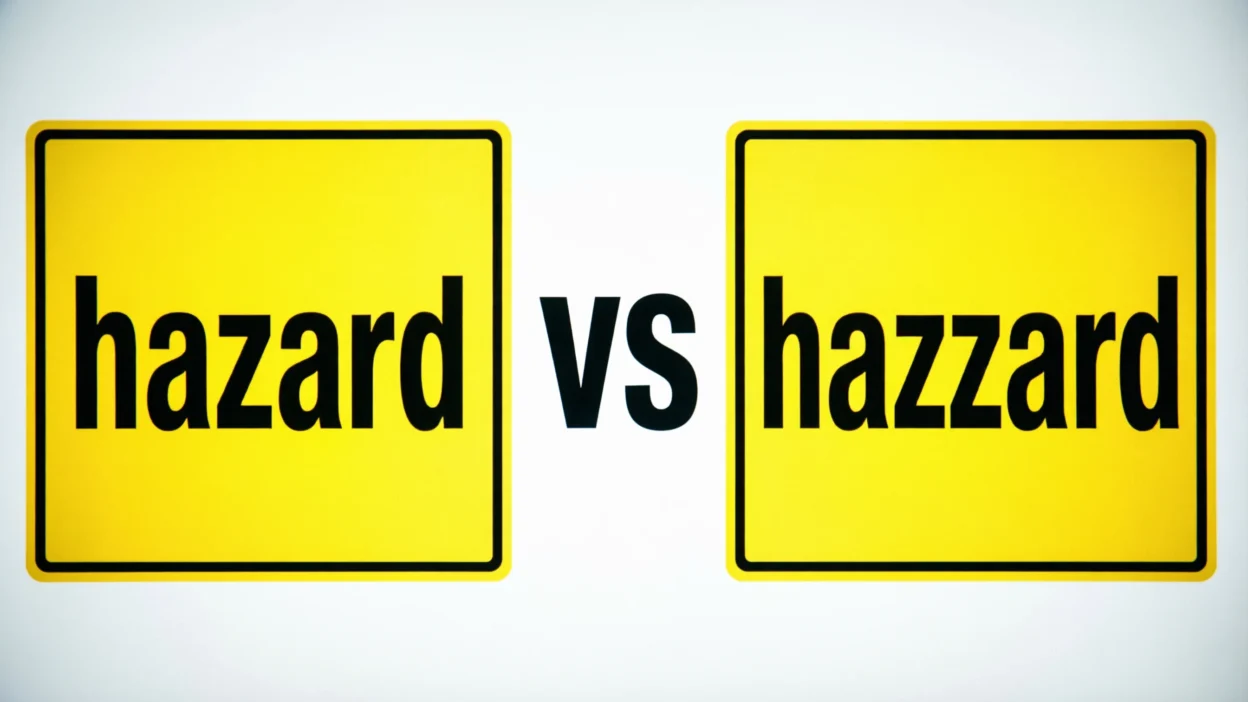
If you’ve ever wondered whether the correct spelling is hazard or hazzard, you’re not alone. Many writers accidentally add an extra “z” and end up with hazzard, especially when typing quickly. Because both spellings look similar, it’s easy to assume they might both be acceptable.
However, only one of these spellings is correct in standard English. Understanding the difference between hazard vs hazzard can help you avoid spelling mistakes and improve the clarity of your writing.
In this guide, we’ll explain the meanings, examples, common mistakes, and simple tricks to remember the correct spelling.
Quick Answer
The correct spelling is hazard.
- Hazard – Correct spelling meaning a danger, risk, or potential source of harm.
- Hazzard – Incorrect spelling in standard English.
Example:
- ✔ Wet floors can be a serious hazard.
- ✘ Wet floors can be a serious hazzard.
If you’re referring to risk, danger, or something potentially harmful, the correct word is always hazard.
What Does “Hazard” Mean?
The word hazard can be used as both a noun and a verb, though it most commonly appears as a noun.
Hazard as a noun
As a noun, hazard refers to a source of danger, risk, or potential harm.
Examples:
- Smoking is a major health hazard.
- Ice on the road is a driving hazard.
- Loose wires can create a serious safety hazard.
Hazard as a verb
As a verb, hazard means to risk something or guess something without certainty.
Examples:
- She hazarded a guess about the answer.
- I’ll hazard an opinion on this topic.
Common phrases with hazard
The word appears in many common expressions:
- Safety hazard
- Health hazard
- Environmental hazard
- Fire hazard
- Occupational hazard
These phrases are commonly used in workplaces, safety manuals, and everyday discussions.
What Does “Hazzard” Mean?
The spelling hazzard is generally incorrect in standard English.
Most of the time, people write hazzard by mistake when they actually mean hazard.
Why does the misspelling happen?
People often add an extra “z” because:
- English sometimes uses double letters (like buzz or jazz).
- The word’s pronunciation may sound stronger than its spelling.
- Typing errors or autocorrect mistakes occur.
Rare exceptions
Occasionally, Hazzard may appear as:
- A surname
- A fictional place name
But as a normal English word meaning danger or risk, the correct spelling is hazard.
Hazard vs Hazzard: Key Differences
Here’s a simple comparison to make the distinction clear.
| Feature | Hazard | Hazzard |
|---|---|---|
| Spelling status | Correct | Incorrect |
| Meaning | Danger or risk | Usually a misspelling |
| Part of speech | Noun and verb | Not standard |
| Common usage | Very common | Rare and incorrect |
Key takeaway:
If you’re referring to danger, risk, or potential harm, the correct word is always hazard.
Why People Confuse Hazard and Hazzard
Several factors contribute to the confusion between hazard vs hazzard.
1. Double-letter habits
English often uses double letters such as:
- buzz
- jazz
- puzzle
Because of this pattern, writers sometimes assume hazzard should have two “z” letters.
2. Pronunciation influence
When spoken, the middle sound in hazard can feel strong, leading people to think the spelling includes a double “z.”
3. Typing speed and spelling errors
Many spelling mistakes happen simply because of fast typing or lack of proofreading.
4. Lack of familiarity
People who don’t frequently write the word may guess the spelling incorrectly.
Common Mistakes to Avoid
Here are some common mistakes people make when using these words.
Mistake 1: Adding an extra “z”
✘ Wet paint is a hazzard.
✔ Wet paint is a hazard.
Mistake 2: Using hazzard in professional writing
✘ Fire hazzard signs must be visible.
✔ Fire hazard signs must be visible.
Mistake 3: Assuming both spellings are correct
✘ Some writers believe hazard and hazzard are interchangeable.
✔ Only hazard is correct in standard English.
Easy Trick to Remember the Correct Spelling
A simple memory trick can help you remember the correct spelling.
Hazard has only one “z,” just like “danger” has one “g.”
Both words describe risk, and neither uses double letters in the middle.
Another helpful tip:
- Hazard = danger
- Hazzard = spelling mistake
How “Hazard” Is Used in Everyday Language
The word hazard appears frequently in many areas of life.
Workplace safety
Many safety guidelines warn about potential hazards.
Examples:
- Chemical hazards
- Electrical hazards
- Slip-and-fall hazards
Environmental discussions
Environmental experts talk about:
- Natural hazards
- Climate-related hazards
- Pollution hazards
Health and medicine
Doctors often warn about health risks.
Examples:
- Smoking is a major health hazard.
- Air pollution can create respiratory hazards.
Sports and activities
Some activities naturally involve risks.
Example:
- Injuries are an occupational hazard for athletes.
Because the word appears in many contexts, learning its correct spelling is important.
American vs British English Usage
One helpful thing about hazard vs hazzard is that there is no spelling difference between American and British English.
Both forms of English use:
- Hazard – correct spelling
- Hazzard – incorrect spelling
Examples:
American English:
- That chemical is a serious hazard.
British English:
- That chemical is a serious hazard.
The spelling stays exactly the same.
Synonyms for Hazard
If you want to vary your writing, you can use synonyms for hazard.
Common synonyms
- Danger
- Risk
- Threat
- Peril
- Menace
- Unsafe condition
Example sentences
- Flooding can pose a serious risk to communities.
- Loose rocks create a climbing danger.
- Pollution is a growing environmental threat.
Using synonyms can help keep your writing natural and engaging.
Frequently Asked Questions
Is hazzard ever correct?
No. In standard English, hazzard is considered a misspelling of hazard.
What does hazard mean?
A hazard is something that can cause danger, harm, or risk.
Why do people spell hazard as hazzard?
People often assume the word contains a double “z” because many English words use double letters.
Is hazard a noun or verb?
It can be both. Most commonly, it’s used as a noun meaning danger.
Example:
- A slippery floor is a hazard.
What is a health hazard?
A health hazard is anything that can harm physical well-being, such as pollution, toxic chemicals, or smoking.
Is hazard used in professional writing?
Yes. The word appears frequently in safety guidelines, health regulations, and workplace manuals.
Are hazard and danger the same?
They are similar, but not identical.
A hazard is something that could cause danger, while danger refers to the risk itself.
Summary: Hazard vs Hazzard
The difference between hazard vs hazzard is straightforward once you understand the spelling rule. Hazard is the correct English word used to describe danger, risk, or something that could cause harm. It’s commonly used in discussions about safety, health, the environment, and everyday risks.
On the other hand, hazzard is not a standard spelling and usually appears because of typing mistakes or misunderstandings about double letters in English. In nearly all situations, when someone writes hazzard, they actually mean hazard.
Actionable Takeaway
Whenever you’re writing about danger, risk, or potential harm, remember that the correct spelling is hazard with only one “z.”
Before finishing your writing, quickly scan for common spelling errors. If you see hazzard, correct it to hazard to keep your writing accurate and professional.

Joy Root is a content writer at Whygenix.com, creating clear, engaging articles that explain complex ideas simply, helping readers understand why topics matter in everyday life and personal growth.