If you’ve ever paused while writing and wondered whether panic or panick is the correct spelling, you’re not alone.
Many people assume that adding a “k” at the end might make the word look more complete or grammatically correct. But English spelling rules can be tricky, and small changes can turn a correct word into a mistake.
Understanding the difference between panic vs panick helps you avoid spelling errors in emails, school assignments, professional writing, and everyday communication.
In this guide, we’ll explain the correct spelling, why the incorrect version appears, and how to remember the right form every time.
Quick Answer
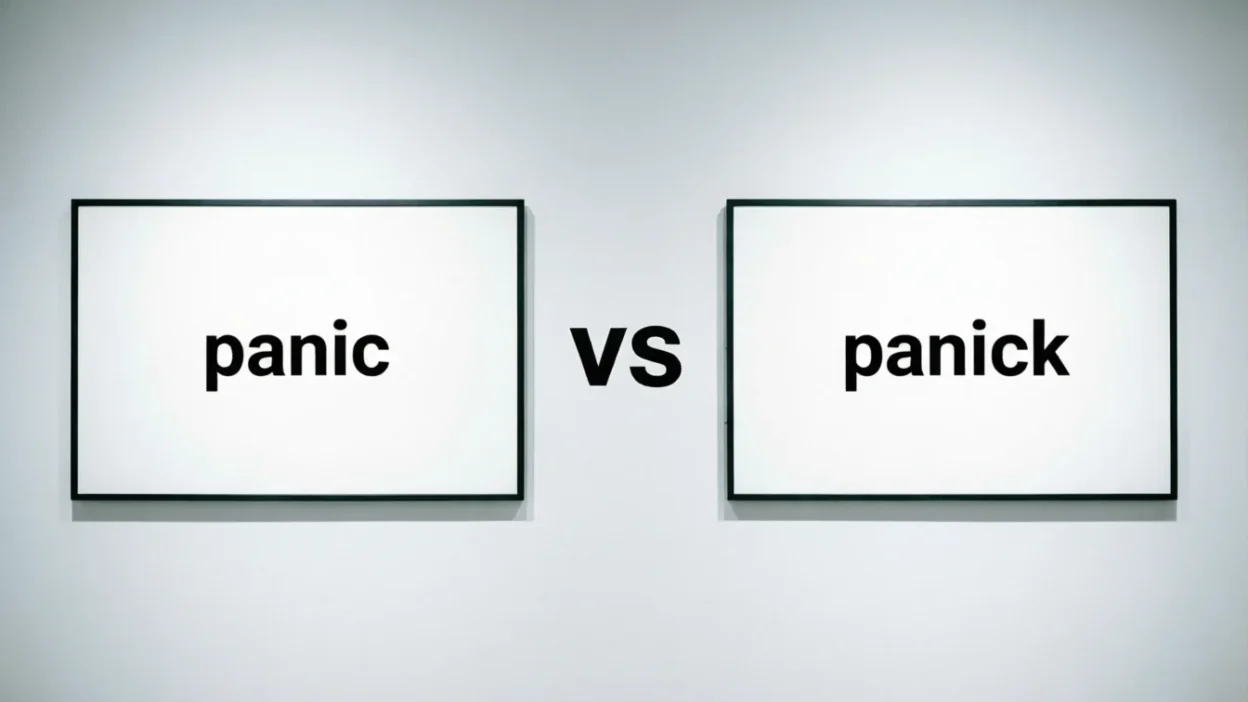
The correct spelling is panic.
- ✅ Correct: panic
- ❌ Incorrect: panick
The word panick is not a standard English word and is considered a spelling mistake.
What Does “Panic” Mean?
The word panic can function as both a noun and a verb. It describes a sudden feeling of intense fear or anxiety that causes people to act without thinking.
As a Noun
A panic is a sudden wave of fear or alarm.
Example:
- There was widespread panic after the announcement.
As a Verb
To panic means to react with sudden fear or anxiety.
Example:
- Don’t panic during an emergency.
The word is commonly used in everyday language, news reports, and psychology discussions.
Example Sentences
Here are a few examples of panic used correctly:
- She began to panic when she couldn’t find her phone.
- The crowd started to panic during the storm warning.
- Investors sometimes panic when the stock market drops.
- He tried not to panic during the exam.
In every case, the correct spelling remains panic.
Why “Panick” Is Incorrect
The spelling panick appears because people sometimes think English words ending with “c” should have a “k” added.
However, the base word panic already ends correctly with “c.” Adding a “k” creates a nonstandard form that dictionaries do not recognize.
So:
- panic → correct
- panick → incorrect
This mistake often happens when people confuse the base word with forms like panicked or panicking, which do use “ck.”
The Spelling Rule Behind “Panicked” and “Panicking”
Here’s where the confusion usually starts.
When adding -ed or -ing to verbs that end in “c,” English spelling rules often require adding a “k” first.
This helps preserve the correct pronunciation.
Examples
| Base Word | Correct Form |
|---|---|
| panic | panicked |
| panic | panicking |
| mimic | mimicked |
| picnic | picnicked |
Without the “k,” the pronunciation could change.
For example:
- panic + ed → panicked
- panic + ing → panicking
But the base word itself remains panic, not panick.
Panic vs Panick: Comparison Table
| Feature | Panic | Panick |
|---|---|---|
| Spelling correctness | ✅ Correct | ❌ Incorrect |
| Recognized by dictionaries | Yes | No |
| Used in professional writing | Yes | No |
| Base form of the word | Yes | No |
| Example | Don’t panic during emergencies. | ❌ Don’t panick during emergencies. |
This comparison clearly shows that panic is the only correct spelling.
American vs British English
In this case, American English and British English use the same spelling: “panic.”
Examples:
- American English: People panic during emergencies.
- British English: Drivers may panic in dangerous situations.
Unlike words such as organize/organise or color/colour, there is no regional spelling difference here.
Common Situations Where “Panic” Is Used
The word panic appears in many everyday contexts.
1. Emergencies
Example:
- People often panic during sudden disasters.
2. Financial Markets
Example:
- Investors sometimes panic when prices fall sharply.
3. Exams or Deadlines
Example:
- Students may panic before a big test.
4. Personal Stress
Example:
- Try not to panic when things go wrong.
Because it is used in serious situations, spelling the word correctly helps maintain clarity.
Common Mistakes People Make
Let’s look at the typical errors people make with panic vs panick.
1. Adding an Unnecessary “K”
Incorrect:
- Don’t panick during the presentation.
Correct:
- Don’t panic during the presentation.
2. Confusing It With “Panicked”
People see words like panicked or panicking and assume the base word should also contain “ck.”
But remember:
- panic
- panicked
- panicking
3. Overcorrecting Spelling
Sometimes writers try to “improve” the spelling by adding letters, which leads to incorrect forms like panick.
Helpful Memory Trick
Here’s a simple way to remember the correct spelling.
Panic ends with just “c.”
Think of it this way:
So remember:
panic → correct
panick → incorrect
Related Word Forms
Learning related forms of the word can help reinforce correct spelling.
| Word Form | Example |
|---|---|
| Panic | Don’t panic in stressful situations. |
| Panicked | She panicked when the lights went out. |
| Panicking | He is panicking about the deadline. |
| Panicky | The child sounded panicky on the phone. |
Notice how “k” appears only in certain forms, not in the base word.
Why Correct Spelling Matters
Correct spelling improves clarity and credibility.
Using panic correctly is important in:
- Academic writing
- News articles
- Workplace communication
- Professional emails
- Online content
Small spelling errors like panick can distract readers and reduce trust in your writing.
Being careful with spelling shows attention to detail.
Frequently Asked Questions
1. Is panic or panick correct?
The correct spelling is panic. The form panick is incorrect and not recognized in standard English.
2. Why do people write “panick”?
People often confuse the base word with forms like panicked and panicking, which include “ck.”
3. Is “panick” ever acceptable?
No. Standard dictionaries do not recognize panick as a correct word.
4. What is the past tense of panic?
The past tense is panicked.
Example:
- She panicked when the alarm sounded.
5. What is the -ing form of panic?
The present participle is panicking.
Example:
- He is panicking about the meeting.
6. Is the spelling different in British English?
No. Both American and British English use “panic.”
7. What are synonyms for panic?
Some common synonyms include:
- fear
- alarm
- anxiety
- distress
- hysteria
These words may replace panic depending on the context.
8. How can I remember the correct spelling?
Just remember that panic ends with “c,” not “ck.” The extra “k” only appears in forms like panicked or panicking.
Summary
The confusion between panic vs panick comes from misunderstanding English spelling patterns. The correct base word is panic, and panick is simply a spelling mistake. The word functions as both a noun and a verb and is widely used to describe sudden fear or anxiety.
The extra “k” only appears in forms like panicked and panicking, where spelling rules require it to preserve pronunciation. Understanding this rule makes it easier to avoid mistakes and use the word correctly in everyday writing.
Actionable Takeaway
Whenever you write this word, remember the pattern:
panic → panicked → panicking
If you ever see panick, correct it immediately. Keeping the base word simple with “panic” ensures your writing stays accurate, clear, and professional.

Sara Taylor is a content writer at Whygenix.com, creating clear, engaging articles that simplify complex ideas, helping readers understand the why behind topics in education, lifestyle, and personal development.