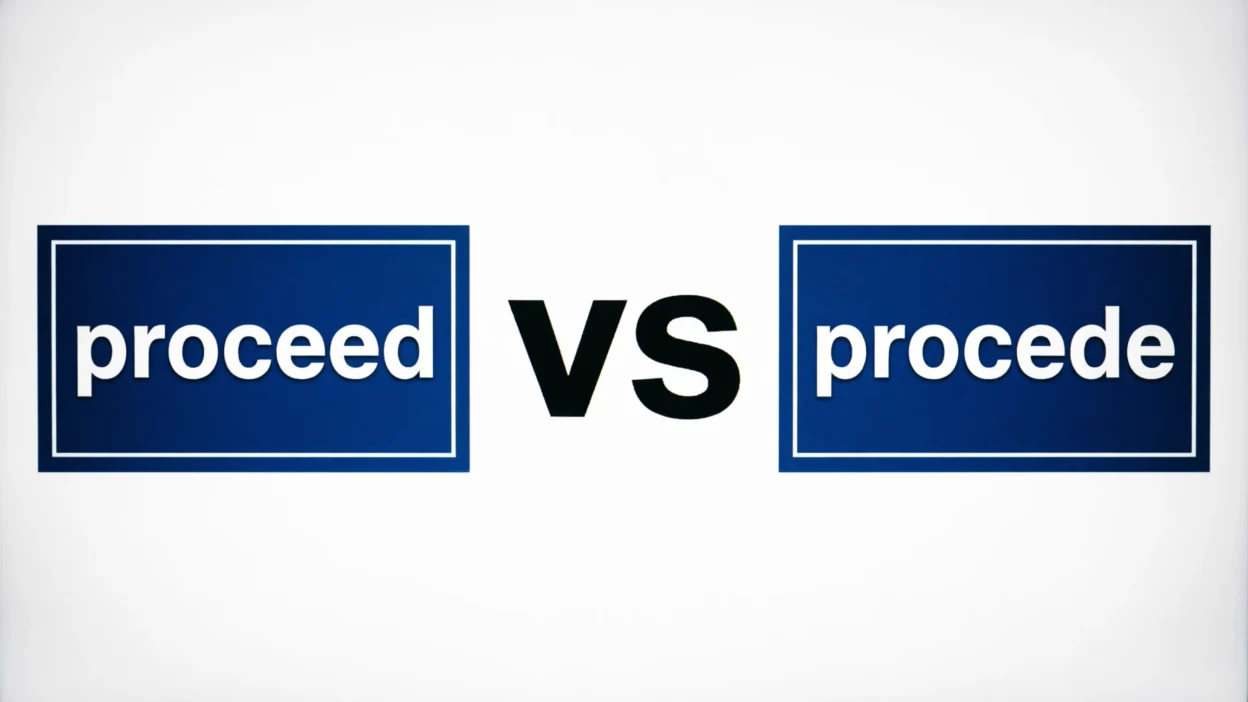
If you’ve ever paused while writing and wondered whether the correct spelling is proceed or procede, you’re not alone.
This is a common spelling confusion because both words look similar and sound almost the same when spoken quickly.
However, only one of these spellings is correct in modern English. Understanding the difference between proceed vs procede will help you write more confidently and avoid a frequent spelling mistake.
In this guide, we’ll explain the meanings, provide examples, highlight common errors, and give you simple tricks to remember the correct spelling.
Quick Answer
The correct spelling is proceed.
- Proceed – Correct spelling meaning to continue, move forward, or take the next step.
- Procede – Incorrect spelling in standard English.
Example:
- ✔ Please proceed to the next step of the application.
- ✘ Please procede to the next step of the application.
Whenever you mean to continue or move forward, the correct word is proceed.
What Does “Proceed” Mean?
The word proceed is a verb that means to continue with an action, move forward, or begin the next step in a process. It’s commonly used in everyday conversations, instructions, formal writing, and professional settings.
Main meanings of proceed
- To continue doing something
- To move forward
- To start the next step in a process
- To take action after something happens
Examples of proceed in sentences
- After the introduction, the speaker proceeded with the presentation.
- Please proceed to the checkout counter.
- The meeting will proceed as scheduled.
- Once approved, the project can proceed to the next phase.
Common forms of proceed
- Proceeds – third-person singular
- Proceeded – past tense
- Proceeding – present participle
The noun proceeds can also refer to money gained from a sale or event.
Example:
- The charity donated all proceeds from the event.
What Does “Procede” Mean?
The spelling procedе is generally incorrect in standard English. It is a common misspelling of proceed.
Writers often type procedе because:
- They forget that the word contains double “e.”
- They try to spell it based on pronunciation.
- It’s a quick typing error.
Example of the mistake
✘ We will procedе with the plan tomorrow.
✔ We will proceed with the plan tomorrow.
Outside of spelling errors, procedе does not have a recognized meaning in English.
Proceed vs Procede: Key Differences
Here’s a simple comparison to clarify the difference.
| Feature | Proceed | Procede |
|---|---|---|
| Spelling status | Correct | Incorrect |
| Meaning | Continue or move forward | Misspelling |
| Part of speech | Verb | Not standard |
| Common usage | Very common | Rare and incorrect |
Key takeaway:
If you want to say continue, move forward, or go on, always use proceed.
Why People Confuse Proceed and Procede
Several factors contribute to this spelling confusion.
1. Pronunciation differences
When spoken quickly, proceed may sound like proced, leading writers to drop one “e.”
2. Double-letter spelling patterns
English spelling often confuses writers when words contain double vowels.
Examples:
- succeed
- exceed
- proceed
Because of these patterns, people sometimes simplify the spelling incorrectly.
3. Typing and autocorrect errors
Fast typing can easily cause someone to miss one letter, creating procedе instead of proceed.
4. Influence of similar words
Words like procedure and process may make people assume procedе is correct.
Common Mistakes to Avoid
Here are some common errors people make when writing this word.
Mistake 1: Dropping one “e”
✘ You may procedе with the registration.
✔ You may proceed with the registration.
Mistake 2: Using procedе in formal writing
✘ The company will procedе with construction.
✔ The company will proceed with construction.
Mistake 3: Confusing proceed with procedure
Although they look similar, these words have different meanings.
- Proceed – continue or move forward
- Procedure – a specific method or process
Example:
- Please follow the safety procedure before you proceed.
Easy Trick to Remember the Correct Spelling
A simple memory trick can help you remember the correct spelling.
Proceed has “ceed,” just like succeed and exceed.
All three words share the same ending:
- succeed
- exceed
- proceed
If the word means continue or move forward, it ends with -ceed.
Another easy reminder:
“To continue, you must proCEED.”
How “Proceed” Is Used in Everyday Language
The word proceed appears frequently in everyday communication.
In instructions
Many instructions include this word.
Examples:
- Click “Next” to proceed.
- Please proceed to the payment page.
In business communication
Professionals often use the word in meetings and emails.
Examples:
- We will proceed with the proposal next week.
- The team decided to proceed with the new strategy.
In travel and public announcements
Airports, trains, and public places use the word frequently.
Example:
- Passengers may now proceed to boarding gate 12.
In formal writing
The word is also common in academic and legal contexts.
Example:
- The investigation will proceed once approval is granted.
American vs British English Usage
One helpful aspect of proceed vs procedе is that both American and British English use the same spelling.
Correct spelling in both forms of English:
- Proceed
Examples:
American English:
- You may proceed with the application.
British English:
- You may proceed with the application.
There are no spelling differences between the two varieties.
Synonyms for Proceed
Using synonyms can help make your writing more varied and natural.
Common synonyms
- Continue
- Advance
- Move forward
- Go ahead
- Carry on
- Progress
Example sentences
- The meeting will continue after lunch.
- The project will move forward next month.
- Please go ahead with the plan.
These alternatives can improve readability and avoid repetition.
Frequently Asked Questions
Is procedе a real word?
No. Procedе is not recognized as a standard English word. It’s a misspelling of proceed.
Which spelling is correct: proceed or procedе?
The correct spelling is proceed.
Why does proceed have double “e”?
The word comes from Latin roots, and the double “e” spelling remained in English.
What does proceed mean?
It means to continue, move forward, or take the next step.
What does “proceeds” mean?
Proceeds often refers to money earned from a sale or event.
Example:
- The proceeds from the concert were donated to charity.
Is proceed formal or informal?
The word works in both formal and everyday contexts, including business, instructions, and conversations.
Is proceed used in legal language?
Yes. Legal documents often use proceed to describe continuing a process or action.
Example:
- The court will proceed with the hearing tomorrow.
Summary: Proceed vs Procede
The difference between proceed vs procedе is simple once you know the rule. Proceed is the correct spelling and means to continue, move forward, or take the next step in a process. It’s widely used in everyday language, instructions, business communication, and formal writing.
On the other hand, procedе is simply a spelling mistake. It often appears when writers accidentally drop one of the two “e” letters or try to spell the word based on pronunciation. In standard English, procedе has no recognized meaning.
Actionable Takeaway
Whenever you want to say continue, go ahead, or move forward, always use proceed with double “e.”
Before submitting or publishing your writing, take a moment to check for common spelling mistakes. If you see procedе, replace it with proceed to ensure your writing stays clear, professional, and accurate.

Sara Taylor is a content writer at Whygenix.com, creating clear, engaging articles that simplify complex ideas, helping readers understand the why behind topics in education, lifestyle, and personal development.