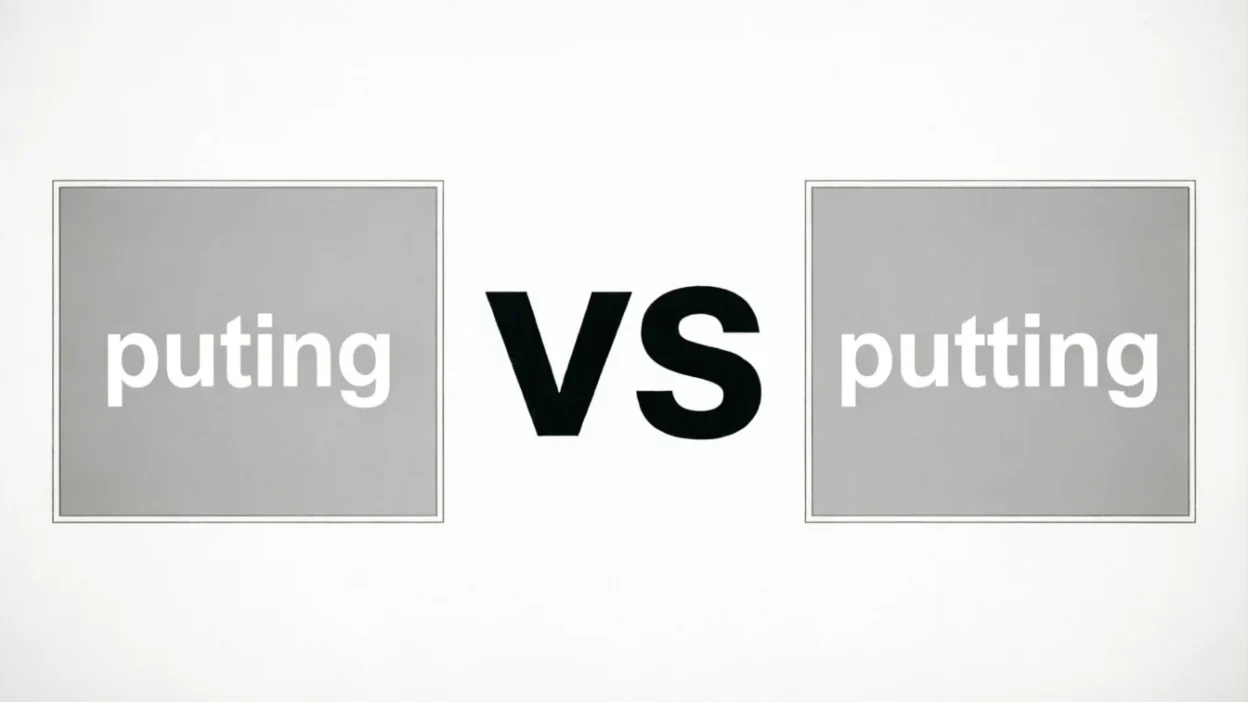
If you’ve ever written “puting” and wondered whether it’s correct, you’re not alone. Many English learners and writers get confused about whether the correct spelling is puting vs putting. Since both look similar, it’s easy to assume either spelling could work.
However, English spelling rules make the answer quite clear. Understanding the difference between puting and putting will help you avoid common mistakes and write more confidently in emails, school assignments, blog posts, and professional documents.
In this guide, we’ll explain the meaning, correct spelling, examples, common mistakes, and simple rules so you can always choose the right word.
Quick Answer
The correct spelling is putting.
Puting is incorrect and considered a spelling mistake in standard English.
Simple rule to remember:
- Putting → Correct spelling
- Puting → Incorrect spelling
The word putting comes from the verb put, which means to place something somewhere.
What Does Putting Mean?
Putting is the present participle and gerund form of the verb put.
The verb put means:
- to place something somewhere
- to move something into a position
- to set something in a particular place
When we add -ing to the verb put, the spelling changes to putting with a double “t.”
Examples of Putting in Sentences
Here are simple examples showing how the word is used:
- She is putting the books on the shelf.
- I am putting my phone in my bag.
- They are putting new lights in the house.
- He is putting the keys on the table.
- We are putting together a team for the project.
In each sentence, putting describes an action happening now or continuously.
What Does Puting Mean?
The word puting is not a correct English spelling.
It usually appears when someone:
- forgets to double the t
- types quickly
- misunderstands English spelling rules
Because of this, puting is considered a typo or spelling error.
Incorrect:
- She is puting the dishes away.
Correct:
- She is putting the dishes away.
In modern writing, puting should always be corrected to putting.
Puting vs Putting: Key Differences
Here is a simple comparison to make the difference clear.
| Feature | Putting | Puting |
|---|---|---|
| Correct spelling | Yes | No |
| Meaning | Present participle of “put” | None |
| Used in English | Very common | Incorrect |
| Grammar | Proper verb form | Spelling mistake |
| Recommended usage | Always use | Avoid |
Bottom line:
Use putting every time.
Why “Putting” Has Two T’s
English has a common spelling rule called the consonant doubling rule.
When a short verb ends in consonant + vowel + consonant, the final consonant is often doubled before adding -ing.
Example pattern:
| Base Verb | + ING Form |
|---|---|
| run | running |
| sit | sitting |
| get | getting |
| put | putting |
Since put follows this pattern, the t is doubled, creating putting.
This rule helps maintain correct pronunciation.
American vs British English
Unlike some words in English, putting is spelled the same in both American and British English.
| Version | Spelling |
|---|---|
| American English | putting |
| British English | putting |
There is no spelling difference between the two dialects.
So whether you’re writing in the US, UK, Canada, or Australia, putting remains the correct spelling.
Common Uses of the Word Putting
The word putting appears in many everyday situations.
1. Everyday Actions
Most commonly, it refers to placing something somewhere.
Examples:
- She is putting milk in the fridge.
- I’m putting my shoes by the door.
2. Work and Business Contexts
In professional settings, putting often describes organizing or arranging tasks.
Examples:
- We are putting together a new marketing plan.
- The company is putting more effort into customer service.
3. Sports (Golf)
In golf, putting has a special meaning.
It refers to hitting the ball gently toward the hole on the green.
Example:
- His putting skills helped him win the tournament.
Common Mistakes People Make
Confusion around puting vs putting often happens due to spelling habits.
Here are the most common mistakes.
Mistake 1: Forgetting the Double Letter
Incorrect:
- I’m puting my laptop in my bag.
Correct:
- I’m putting my laptop in my bag.
Mistake 2: Thinking All Words Add “-ing” the Same Way
Some writers assume every word simply adds -ing without changes.
However, many short verbs double the final consonant.
Examples:
- run → running
- sit → sitting
- get → getting
- put → putting
Mistake 3: Fast Typing Errors
Sometimes puting appears simply because someone typed too quickly and missed the second t.
Spell checkers usually fix this automatically.
Related Words and Synonyms
Although putting refers to placing something somewhere, similar words can sometimes replace it depending on the context.
Examples include:
- placing
- setting
- positioning
- arranging
- inserting
- depositing
Example comparison:
Instead of:
- She is putting flowers in the vase.
You could say:
- She is placing flowers in the vase.
Using synonyms can make writing more varied and engaging.
When Should You Use Putting?
You should use putting whenever you describe the action of placing or positioning something.
Common situations include:
Use putting when talking about:
- placing objects
- organizing items
- starting a plan
- assembling something
- golf strokes
Examples:
- I’m putting the groceries on the counter.
- They are putting the furniture in the living room.
- The manager is putting together a training program.
- She is putting the documents into a folder.
In all these situations, putting is the correct word.
FAQs About Puting vs Putting
1. Is puting a real word?
No. Puting is not a correct English word and is considered a spelling mistake.
2. What is the correct spelling: puting or putting?
The correct spelling is putting with two t’s.
3. Why does putting have two t’s?
English spelling rules require doubling the final consonant for many short verbs when adding -ing, such as put → putting.
4. Can puting ever be correct?
No. In modern English writing, puting should always be corrected to putting.
5. Is putting used in American and British English?
Yes. Both American and British English use the same spelling: putting.
6. What does putting mean in golf?
In golf, putting refers to hitting the ball gently across the green toward the hole.
7. What is the base verb of putting?
The base verb is put, which means to place something somewhere.
8. How can I remember the correct spelling?
Think of other words like running or sitting. These also double the consonant before adding -ing.
Final Thoughts on Puting vs Putting
The confusion between puting vs putting usually comes from forgetting a simple English spelling rule. While puting may look reasonable, it is actually a spelling mistake.
The correct form is putting, which is the -ing form of the verb “put.” The double t follows a common English pattern used in words like running, getting, and sitting.
Using the correct spelling makes your writing clearer, more professional, and easier for readers to understand.
Actionable Takeaway
Here’s the easiest rule to remember:
Always write “putting,” never “puting.”
Whenever you add -ing to the verb put, the t must be doubled.

Joy Root is a content writer at Whygenix.com, creating clear, engaging articles that explain complex ideas simply, helping readers understand why topics matter in everyday life and personal growth.