Bears are among the most powerful and symbolic animals on the planet. They play essential roles in ecosystems, culture, science, and even economies. Whether it’s the American black bear, the mighty brown bear, the polar bear, or the giant panda, each species contributes something irreplaceable to the natural world.
Understanding why bears are important helps us appreciate their value beyond their impressive size. From seed dispersal to climate research, bears quietly support the balance of life around us.
Below are 25 meaningful reasons that highlight their importance.
Maintain Healthy Ecosystems
Bears help regulate prey populations, ensuring no species becomes overly dominant in their habitat.
Disperse Seeds
By eating fruits and berries, bears spread seeds across long distances through their droppings.
Support Forest Growth
Their digging habits aerate soil and help new plants take root.
Control Insect Populations
Bears feed on ants, termites, and larvae, maintaining a natural balance of insects.
Keep Salmon Populations in Check
By hunting salmon, bears help maintain fish population health and nutrient cycling in rivers.
Enrich Soil Nutrients
Leftover salmon carcasses and organic waste fertilize forest soil.
Help Maintain Biodiversity
Their presence helps preserve the food chain—from plants to top predators.
Indicate Ecosystem Health
If bear populations decline, it signals environmental problems in forests or tundras.
Support Climate Research
Polar bears offer crucial information about climate change and melting Arctic ice.
Provide Medical Research Insights
Bear hibernation helps scientists study muscle retention, kidney function, and bone density.
Promote Tourism
Bear-watching attracts visitors worldwide, supporting local economies.
Inspire Conservation Efforts
Bears are flagship species that raise awareness about habitat protection.
Preserve Cultural Heritage
Bears appear in myths, folklore, and traditions across many cultures.
Protect Other Species
By maintaining ecological balance, bears indirectly protect smaller animals and plant species.
Improve Water Quality
Their movement influences riverside vegetation, helping prevent erosion.
Strengthen Predator-Prey Cycles
Bears help keep natural cycles functioning by feeding on weak or sick prey.
Regulate Carcass Decomposition
Bears feed on carrion, helping clean the environment and prevent disease spread.
Contribute to Scientific Understanding
Their physiology, strength, and adaptation offer insights into animal evolution.
Help Farmers Through Pest Control
By reducing certain pests, bears benefit surrounding farmlands.
Support Traditional Crafts
Indigenous communities historically used bear bones, hides, and symbols for cultural crafts.
Encourage Respect for Nature
Bears remind humans of the power and beauty of wild landscapes.
Teach Survival Lessons
Their behaviors inspire survival training, wildlife education, and outdoor safety programs.
Help Maintain Forest Balance
By marking trees and moving through dense vegetation, bears shape forest pathways.
Symbolize Strength and Protection
In global cultures, bears symbolize courage, wisdom, and resilience.
Promote Global Biodiversity Awareness
Their declining populations highlight the need for sustainable ecosystems worldwide.
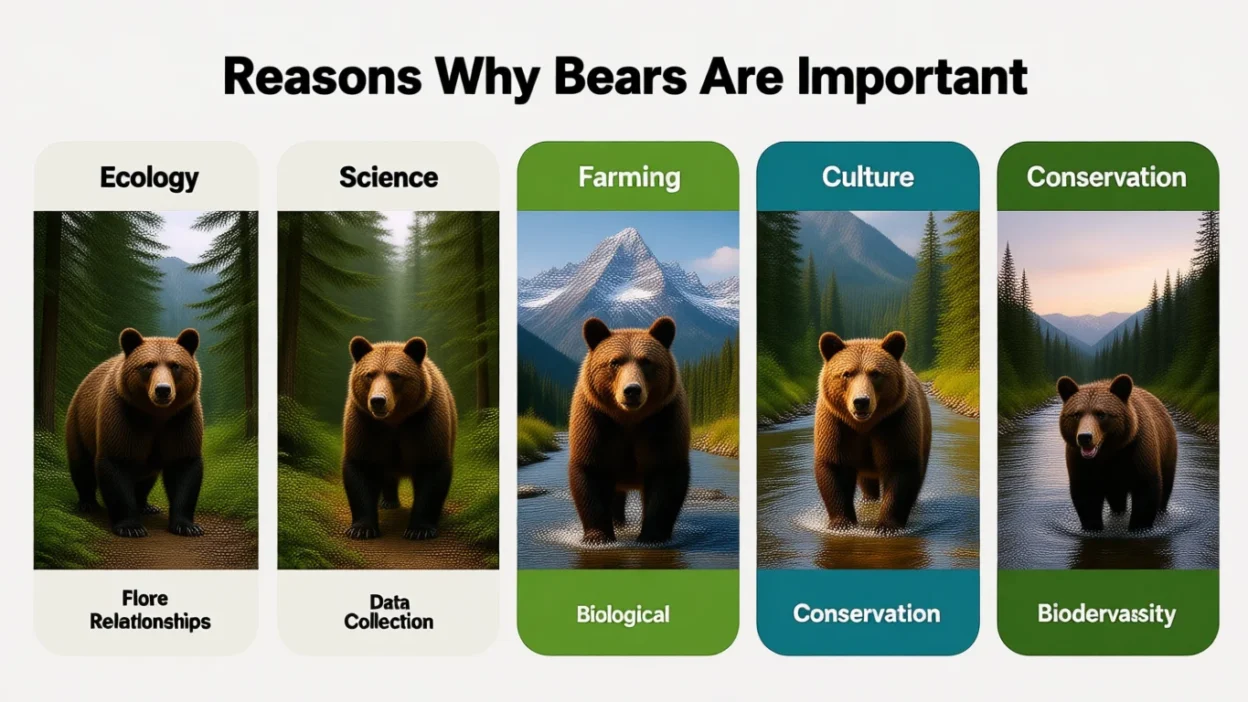
Quick Summary Table: Importance of Bears
| Category | Contribution | Example |
|---|---|---|
| Ecology | Seed dispersal, nutrient cycling | Bears spreading berry seeds |
| Science | Climate and medical research | Polar bear climate data |
| Culture | Symbolism & tradition | Indigenous folklore |
| Economy | Tourism & wildlife programs | Bear-watching tours |
| Conservation | Habitat protection | Bear-led conservation efforts |
Idioms & Expressions Related to Bears
| Idiom | Meaning | Example |
|---|---|---|
| Bear the burden | Carry responsibility | He had to bear the burden of leadership. |
| Grin and bear it | Endure something patiently | Just grin and bear it until things improve. |
| Bear in mind | Remember something important | Bear in mind that nature needs protection. |
| Loaded for bear | Fully prepared | The team came loaded for bear in the finals. |
| A bear hug | A very tight hug | She gave him a warm bear hug. |
Real-Life Examples Showing Bear Importance
- Bears control salmon populations in Alaska, helping rivers stay healthy.
- Panda bear conservation protects entire bamboo forests.
- Polar bears help scientists understand the effects of warming oceans.
- In Europe and North America, bears attract nature tourists, supporting local jobs.
- Indigenous cultures use bear stories to teach respect and bravery.
FAQs About Bears
Q1: Why are bears important to the ecosystem?
They regulate prey, disperse seeds, and support forest health.
Q2: Are bears good for biodiversity?
Yes. Their activities maintain balance in forests, mountains, and tundras.
Q3: How do bears help scientists?
Their physiology and behavior provide insights into climate change and medical research.
Q4: Why are polar bears important?
They show how climate change affects Arctic ecosystems.
Q5: How do bears support local economies?
Bear-watching and wildlife tourism generate income for communities.
Conclusion
Bears are more than powerful predators—they’re ecological engineers, climate indicators, cultural icons, and essential contributors to biodiversity. Protecting them ensures healthier forests, cleaner ecosystems, and deeper scientific knowledge. Understanding why bears are important encourages us to respect and conserve these incredible animals for future generations.

Bret Lee writes educational and research-based content for Whygenix.com, focused on clarity, accuracy, and explaining why concepts matter through simple, engaging, reader-friendly writing.