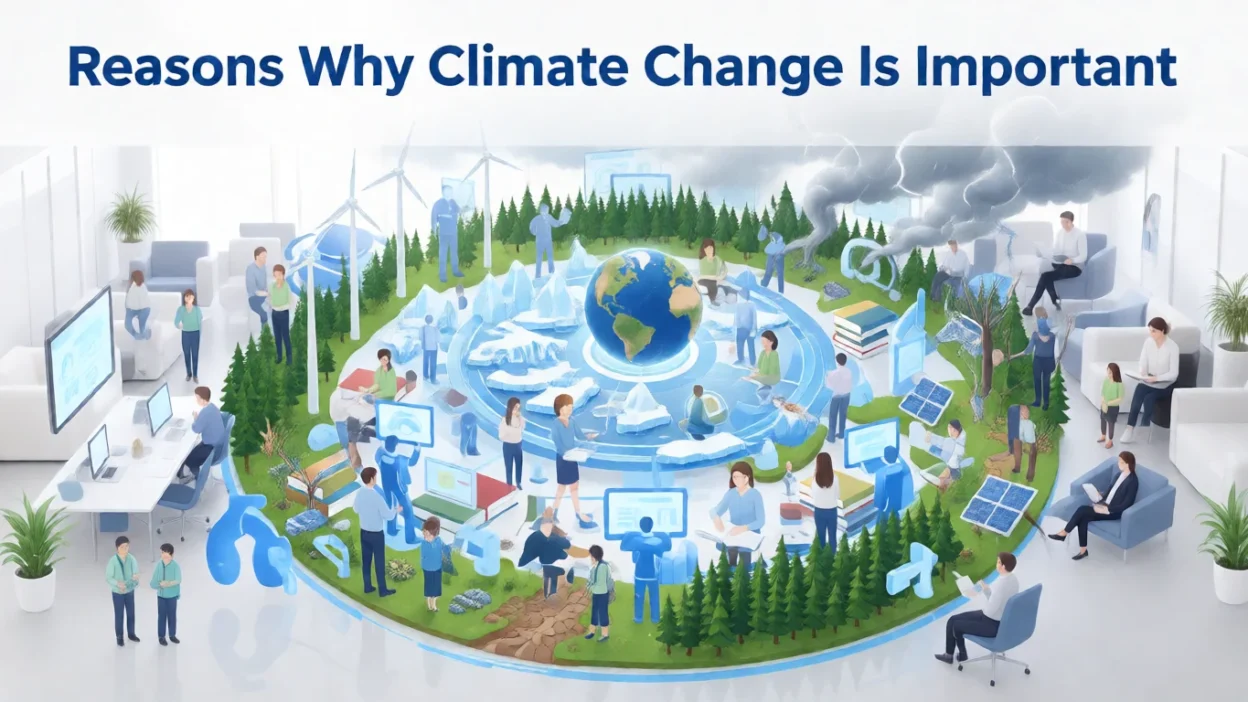
Climate change is one of the most significant challenges facing humanity today. It refers to long-term changes in temperature, weather patterns, and environmental conditions caused by natural processes and human activities.
Rising global temperatures, melting ice caps, extreme weather events, and shifting ecosystems are clear signs that the climate is changing.
Understanding why climate change is important helps individuals, communities, and governments take responsible action.
Climate change affects food security, health, economies, biodiversity, and future generations. Recognizing its importance is the first step toward protecting the planet and ensuring a sustainable future for all living beings.
Protects Human Health
Climate change influences air quality, heatwaves, and disease spread. Rising temperatures increase health risks. Addressing climate change helps protect lives.
Safeguards Food Security
Weather changes affect crops and farming. Droughts and floods reduce food production. Climate action ensures stable food supplies.
Preserves Water Resources
Climate change disrupts rainfall patterns. Water scarcity increases in many regions. Protecting climate protects freshwater availability.
Reduces Natural Disasters
Extreme weather events are becoming more frequent. Climate awareness helps reduce disaster risks. Preparedness saves lives.
Protects Ecosystems
Plants and animals depend on stable climates. Climate change disrupts habitats. Protecting ecosystems preserves biodiversity.
Slows Sea Level Rise
Melting ice raises ocean levels. Coastal communities face flooding risks. Climate action protects shorelines.
Supports Economic Stability
Climate disasters damage economies. Recovery costs are high. Climate planning reduces financial loss.
Protects Future Generations
Climate decisions today affect tomorrow. Sustainable choices ensure a livable planet. Responsibility extends to future lives.
Reduces Poverty
Climate impacts hit vulnerable populations hardest. Sustainable development supports equity. Climate action reduces inequality.
Preserves Biodiversity
Species face extinction due to climate shifts. Conservation protects life diversity. Biodiversity maintains ecological balance.
Supports Sustainable Agriculture
Climate-smart farming improves resilience. It reduces environmental damage. Sustainable agriculture feeds growing populations.
Improves Air Quality
Reducing emissions improves air. Cleaner air supports health. Climate action benefits daily life.
Protects Oceans
Oceans absorb heat and carbon. Climate change causes coral bleaching. Protection preserves marine life.
Encourages Renewable Energy
Climate awareness promotes clean energy. Renewable sources reduce pollution. Energy transition supports sustainability.
Prevents Extreme Heat
Heatwaves increase with climate change. Prevention protects workers and older people. Cooler environments save lives.
Supports Global Cooperation
Climate change is a global issue. Nations must work together. Cooperation strengthens peace.
Protects Wildlife
Animals depend on stable environments. Climate change disrupts migration and survival. Protection preserves wildlife.
Reduces Environmental Pollution
Climate action lowers emissions. Cleaner environments improve quality of life. Pollution reduction supports ecosystems.
Improves Urban Planning
Cities adapt to climate risks. Green spaces reduce heat. Planning improves livability.
Protects Forests
Forests absorb carbon dioxide. Climate change increases wildfires. Forest protection supports balance.
Strengthens Disaster Preparedness
Climate knowledge improves readiness. Early warning systems save lives. Preparedness reduces damage.
Supports Sustainable Development
Climate action aligns with development goals. Growth becomes responsible. Sustainability benefits economies.
Preserves Cultural Heritage
Rising seas threaten historic sites. Climate protection preserves heritage. Culture connects generations.
Encourages Environmental Responsibility
Climate awareness changes behavior. Responsible living reduces harm. Awareness creates action.
Maintains Planetary Balance
Climate stability supports life systems. Balance keeps Earth habitable. Protection ensures survival.
Summary Table: Why Climate Change Matters
| Area | Importance | Example |
|---|---|---|
| Health | Risk reduction | Cleaner air |
| Environment | Ecosystem protection | Wildlife survival |
| Economy | Stability | Disaster prevention |
| Society | Equity | Food security |
| Future | Sustainability | Climate policies |
Idioms Related to Climate and Change
| Idiom | Meaning | Example |
|---|---|---|
| Tip of the iceberg | Bigger issue exists | Climate impacts grow. |
| Wake-up call | Serious warning | Climate change is one. |
| At a crossroads | Important decision | Humanity stands here. |
| Weather the storm | Survive difficulty | Communities adapt. |
| Long-term vision | Future focus | Climate planning matters. |
Real-Life Examples of Climate Change Importance
• Heatwaves affecting health
• Floods damaging communities
• Droughts impacting agriculture
• Coral reef loss
• Renewable energy growth
FAQs
Q1: Why is climate change important to understand?
It affects health, food, environment, and future survival.
Q2: Is climate change caused by humans?
Human activity plays a major role.
Q3: Can climate change be slowed?
Yes, through sustainable practices.
Q4: Does climate change affect everyone?
Yes, directly or indirectly.
Q5: Why should individuals care?
Personal actions contribute to global impact.
Final Thought
Climate change is not a distant problem; it is a present reality shaping every aspect of life on Earth. From health and food security to ecosystems and economies, its effects are widespread and interconnected.
Understanding why climate change is important empowers people to make informed choices, support sustainable policies, and protect future generations. Caring for the climate is not just an environmental duty; it is a responsibility to humanity and the planet we all share.

Sara Taylor is a content writer at Whygenix.com, creating clear, engaging articles that simplify complex ideas, helping readers understand the why behind topics in education, lifestyle, and personal development.