Communication is the foundation of every relationship, organization, and society. It’s how we share ideas, express emotions, solve problems, and build understanding. Whether it’s a friendly chat, a business meeting, or a heartfelt message, effective communication connects people in meaningful ways.
Without communication, cooperation fails, misunderstandings grow, and progress slows down. That’s why learning why communication is important helps us appreciate its role in daily life, education, work, and beyond.
Here are 25+ reasons why communication is important — from personal relationships to global progress.
Builds Strong Relationships
Communication is the glue that holds relationships together. It helps people understand one another, express emotions, and resolve conflicts peacefully.
Encourages Understanding and Empathy
By listening and expressing ourselves clearly, we develop empathy — the ability to see the world through another person’s eyes.
Strengthens Teamwork
In workplaces, teams perform best when members communicate openly. It improves coordination, trust, and collective problem-solving.
Improves Decision-Making
Sharing information allows people to make informed choices. Clear communication prevents confusion and ensures everyone knows the plan.
Enhances Productivity
When instructions, goals, and expectations are communicated effectively, tasks are completed faster and with fewer mistakes.
Boosts Confidence and Self-Expression
Speaking clearly and listening actively helps individuals express their opinions confidently and feel valued in discussions.
Promotes Mental and Emotional Health
Talking about problems relieves stress, strengthens support systems, and improves emotional well-being.
Prevents Misunderstandings
Clear communication reduces confusion, prevents mistakes, and ensures that messages are interpreted correctly.
Encourages Learning and Growth
Education relies on communication — from teachers explaining lessons to students asking questions and sharing ideas.
Builds Trust
Open and honest dialogue is the foundation of trust in personal and professional relationships.
Helps in Conflict Resolution
Communication allows people to discuss differences calmly, find common ground, and reach peaceful solutions.
Strengthens Leadership
Good leaders inspire others through clear vision and persuasive communication. It helps motivate teams and guide progress.
Improves Customer Relationships
Businesses that communicate well build stronger customer loyalty, resolve complaints quickly, and improve brand reputation.
Promotes Cultural Understanding
Communication bridges cultural differences, helping people from diverse backgrounds collaborate and coexist peacefully.
Enhances Creativity
When people share ideas openly, creativity thrives. Collaboration often sparks innovative solutions.
Supports Change and Adaptation
Whether in organizations or communities, communication helps people understand and accept change through transparency and dialogue.
Builds Stronger Communities
Public discussions, media, and social interactions create shared understanding and unity among community members.
Encourages Accountability
When roles, goals, and responsibilities are clearly communicated, people stay accountable and perform more effectively.
Strengthens Education and Teaching
Teachers use communication to share knowledge, while students learn by asking questions and discussing ideas.
Promotes Professional Growth
Good communication skills enhance job performance, interview success, and workplace relationships.
Helps in Global Cooperation
In diplomacy and international business, communication fosters partnerships, resolves conflicts, and promotes peace.
Aids in Crisis Management
During emergencies, clear communication saves lives by spreading accurate and timely information.
Supports Technological Collaboration
Even in the digital age, effective communication remains essential for teamwork, innovation, and information exchange.
Encourages Active Listening
Communication isn’t just about talking — it’s about listening attentively to understand and respond appropriately.
Builds Personal and Social Identity
How we speak and communicate shapes how others perceive us — defining our personal, cultural, and social identity.
Enables Persuasion and Influence
From marketing to leadership, persuasive communication helps people share ideas that inspire action and change.
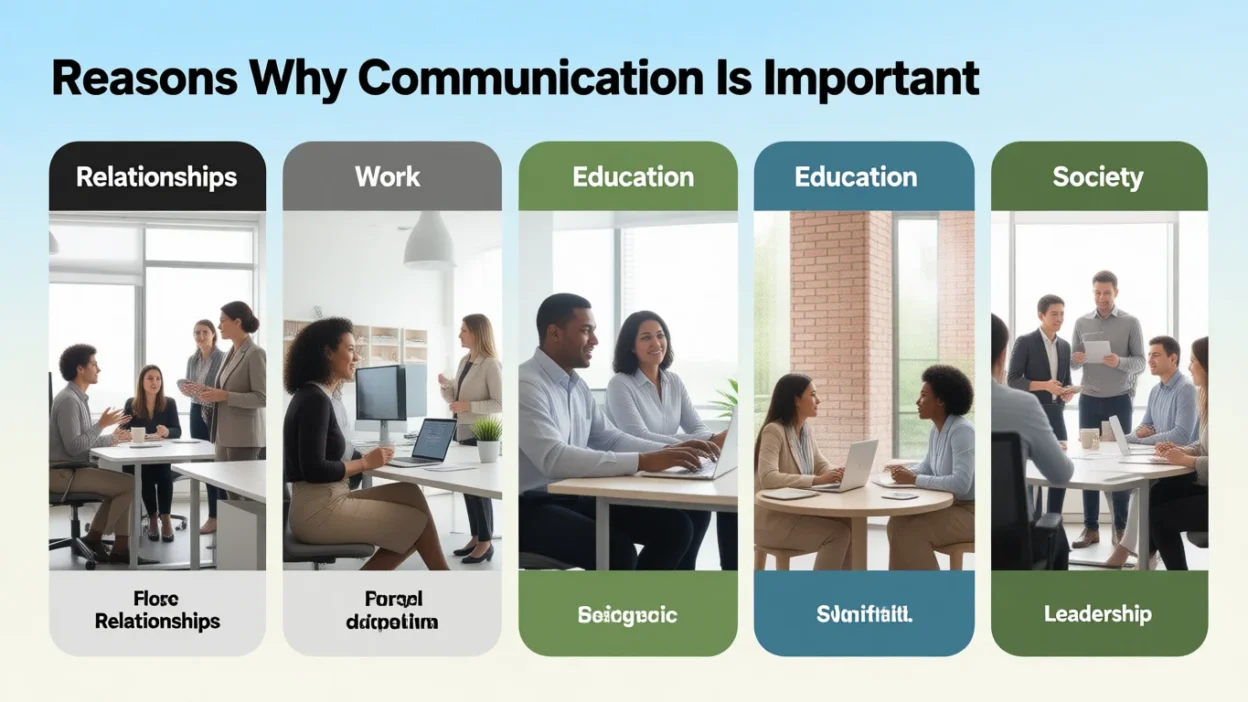
Quick Table: Importance of Communication
| Area | Impact | Example |
|---|---|---|
| Relationships | Builds trust and understanding | Couples resolving conflicts through dialogue |
| Workplace | Boosts teamwork and efficiency | Team collaboration in projects |
| Education | Encourages learning | Teachers explaining lessons clearly |
| Society | Promotes harmony and unity | Community meetings and discussions |
| Leadership | Inspires motivation | Leaders sharing a clear vision |
Common Idioms and Expressions About Communication
| Idiom / Phrase | Meaning | Example |
|---|---|---|
| “Get your point across” | Make someone understand you | He couldn’t get his point across in the meeting. |
| “Read between the lines” | Understand hidden meaning | You need to read between the lines to grasp her message. |
| “On the same wavelength” | Share similar thoughts | The team works well because they’re on the same wavelength. |
| “Break the ice” | Start a conversation easily | The host cracked a joke to break the ice. |
| “Word of mouth” | Spread information verbally | The restaurant became popular through word of mouth. |
Real-Life Examples of Communication’s Importance
- In healthcare: Doctors and nurses rely on accurate communication to treat patients safely.
- In aviation: Pilots and air traffic controllers use precise communication to avoid accidents.
- In families: Talking about feelings strengthens emotional bonds and understanding.
- In politics: Diplomats and leaders use communication to maintain peace and resolve disputes.
- In education: Classroom discussions promote curiosity and deeper learning.
FAQs About Communication
Q1: Why is communication important in everyday life?
It helps us connect, share ideas, solve problems, and build relationships.
Q2: How does communication help in the workplace?
It improves teamwork, productivity, and clarity in goals and responsibilities.
Q3: What happens when communication fails?
Misunderstandings, conflicts, and inefficiency often occur, damaging relationships and progress.
Q4: Is listening part of communication?
Yes, effective communication requires active listening to understand others fully.
Q5: How can someone improve their communication skills?
By practicing empathy, clarity, active listening, and feedback in daily conversations.
Conclusion
Communication is the foundation of human connection and progress. It shapes our relationships, strengthens communities, and drives innovation across every field. From expressing emotions to leading nations, communication makes everything possible.
When we speak clearly, listen actively, and understand deeply, we create bridges — not barriers. That’s why learning, improving, and valuing communication is essential for personal success and collective growth.

Joy Root is a content writer at Whygenix.com, creating clear, engaging articles that explain complex ideas simply, helping readers understand why topics matter in everyday life and personal growth.