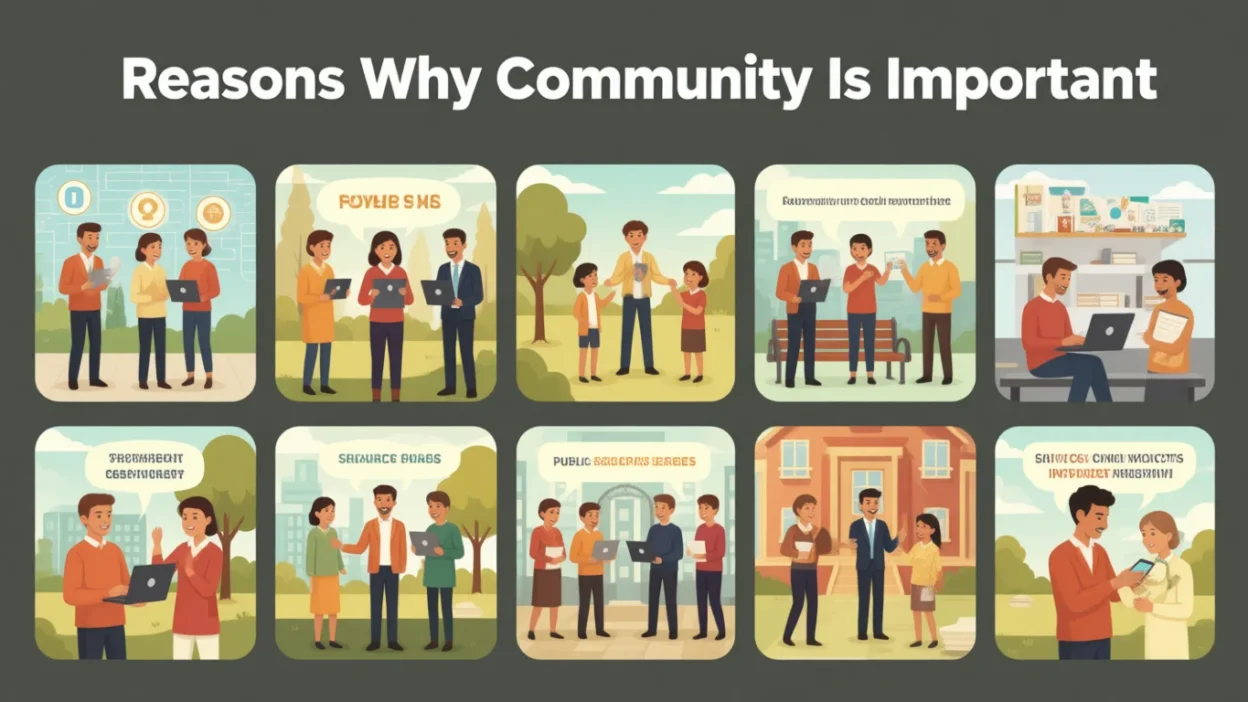
A community is more than a group of people living in the same place. It is a circle of belonging, shared values, support, connection, and cooperation. Strong communities shape identity, create safety, provide emotional strength, and build opportunities for growth.
This guide explains 25 meaningful reasons why community is important and how it influences everyday life.
Creates a Sense of Belonging
A community gives people a place where they feel recognized, valued, and connected.
Provides Emotional Support
During struggles, communities offer comfort, understanding, and encouragement.
Strengthens Social Connections
Communities help people form friendships, support networks, and meaningful relationships.
Encourages Cooperation
People in communities work together to solve problems and achieve shared goals.
Improves Mental Well-Being
Being part of a community reduces loneliness, anxiety, and social stress.
Builds Trust Among People
Shared experiences and communication help members trust one another.
Supports Cultural Identity
Communities preserve traditions, customs, and collective heritage.
Enhances Safety and Security
Neighbors looking out for one another create safer environments.
Provides Learning Opportunities
Communities share knowledge, skills, and resources that support personal growth.
Stimulates Economic Growth
Local businesses, jobs, and services thrive in active communities.
Encourages Civic Participation
People in strong communities engage in volunteering, voting, and local decision-making.
Strengthens Problem-Solving
Diverse perspectives within a community create better solutions.
Promotes Shared Responsibility
Members work together to maintain clean, safe, and organized surroundings.
Builds Confidence and Identity
Community involvement helps people develop a stronger sense of self.
Supports Families and Children
Communities offer childcare help, school support, and safe spaces for kids.
Helps in Times of Crisis
During emergencies, communities organize resources and assist affected individuals.
Encourages Personal Growth
Communities motivate people to develop skills, participate in activities, and become more confident.
Creates Opportunities for Collaboration
Teamwork, local projects, and group events strengthen unity.
Promotes Inclusivity
Communities bring together people from different backgrounds and encourage acceptance.
Enhances Quality of Life
Activities, public spaces, and shared experiences enrich daily living.
Spreads Awareness and Education
Communities help people stay informed through discussions, campaigns, and shared platforms.
Supports Local Leadership
Communities develop leaders who guide, mentor, and inspire others.
Fosters Creativity
Community events and projects encourage artistic expression and innovation.
Preserves the Environment
Community groups support cleanups, conservation programs, and sustainable living.
Builds Long-Term Stability
Strong community bonds create resilience, continuity, and lasting social stability.
Summary Table: Why Community Matters
| Category | Importance | Example |
|---|---|---|
| Social Well-Being | Belonging, support, friendships | Neighborhood gatherings |
| Safety | Trust and shared responsibility | Neighbors watching out for each other |
| Growth | Skill development and opportunities | Community workshops |
| Identity | Cultural preservation | Festivals and traditions |
| Stability | Long-term unity and resilience | Crisis support networks |
Common Idioms About Community & Togetherness
| Idiom | Meaning | Example |
|---|---|---|
| It takes a village | Big tasks need group effort | Raising a child truly takes a village. |
| In the same boat | Facing similar situations | We are all in the same boat during hardships. |
| Many hands make light work | Working together is easier | Community cleanups show that many hands help. |
| Shoulder to shoulder | Standing together | They worked shoulder to shoulder on the project. |
| A helping hand | Assist someone | The community offered a helping hand. |
Real-Life Examples of Community Importance
- Neighborhood groups supporting vulnerable people during natural disasters.
- Local businesses growing because community members buy locally.
- Schools improving through parent and community involvement.
- Cultural festivals preserving traditions and identity.
- Volunteers keeping parks, streets, and shared spaces clean.
FAQs
Q1: Why is community important in daily life?
It provides support, safety, connection, and shared resources that improve overall well-being.
Q2: How does community affect mental health?
Belonging to a community reduces loneliness and strengthens emotional resilience.
Q3: Can community improve economic conditions?
Yes. Local businesses and job opportunities grow in active, supportive communities.
Q4: What makes a community strong?
Trust, communication, cooperation, and inclusivity strengthen community bonds.
Q5: How can someone contribute to their community?
By volunteering, engaging in local events, helping neighbors, and supporting local initiatives.
Conclusion
Communities shape who we are, how we live, and how we grow. They provide safety, connection, emotional stability, learning opportunities, and cultural identity.
Understanding why community is important helps us value the people, places, and relationships that build a meaningful life.
Building strong communities strengthens entire societies, ensuring stability for generations to come.

Bret Lee writes educational and research-based content for Whygenix.com, focused on clarity, accuracy, and explaining why concepts matter through simple, engaging, reader-friendly writing.