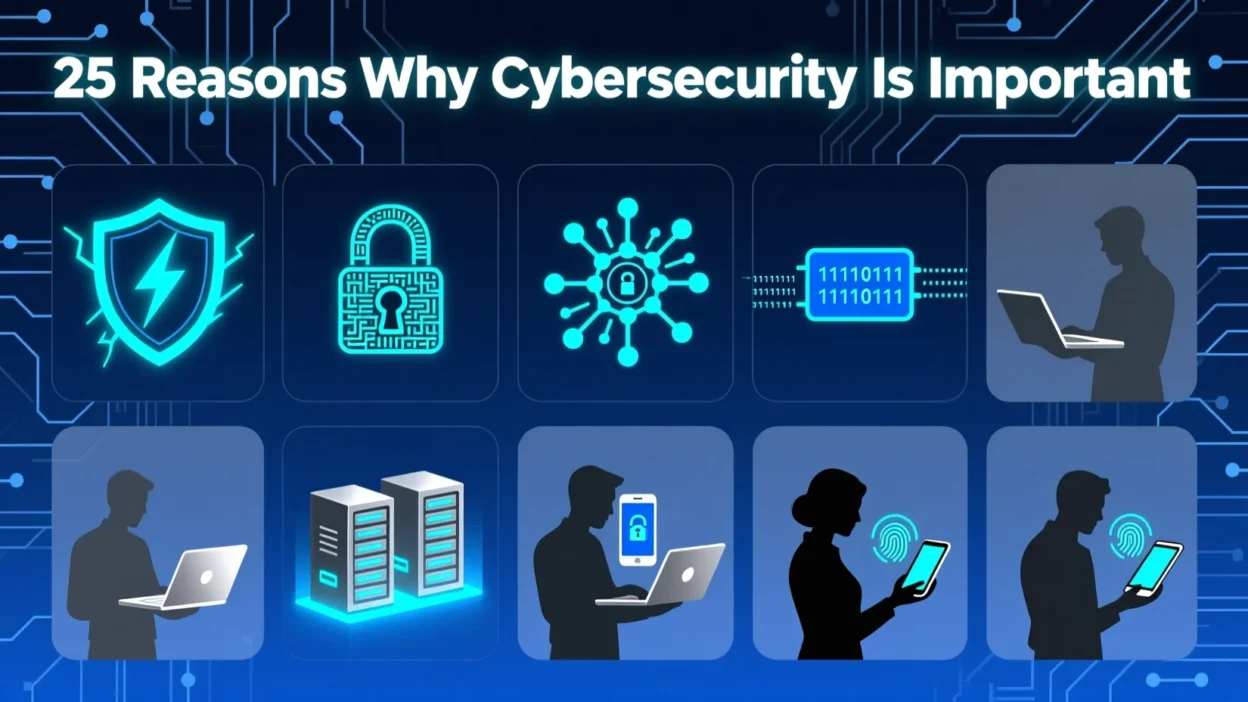
Cybersecurity has become one of the most essential protections in the modern world. Every day, people use phones, laptops, websites, apps, and digital services that store personal information. Without cybersecurity, all of this data would be exposed to hackers, cybercriminals, and harmful attacks.
From safeguarding sensitive information to keeping businesses running smoothly, cybersecurity plays a major role in maintaining trust, privacy, and safety in the digital age. Below are 25 detailed reasons why cybersecurity is important and why individuals, companies, and governments must prioritize it.
Protects Personal Information
Cybersecurity prevents unauthorized access to personal data such as passwords, bank details, ID numbers, and private photos.
Prevents Financial Loss
Cyberattacks can steal money, disrupt payments, or drain accounts. Strong security protects users from financial damage.
Safeguards Business Data
Companies store customer records, transactions, and sensitive files. Cybersecurity helps protect this information from breaches.
Builds Trust Between Users and Businesses
Customers feel safer when businesses secure their online platforms and protect their information.
Protects Against Identity Theft
Hackers use stolen personal information to impersonate individuals. Cybersecurity reduces this risk significantly.
Ensures Safe Online Transactions
Every online purchase, bank transfer, or digital payment relies on secure systems to prevent fraud.
Supports National Security
Governments use cybersecurity to defend against cyber warfare, espionage, and threats to public infrastructure.
Prevents Data Breaches
A strong cybersecurity system prevents unauthorized data access, leaks, or misuse.
Keeps Devices Free From Malware
Antivirus systems and firewalls protect devices from viruses, ransomware, and harmful software.
Protects Business Reputation
A single breach can damage a company’s credibility. Cybersecurity keeps businesses trustworthy and reliable.
Ensures Business Continuity
Cyber protection helps companies operate smoothly without interruptions caused by attacks or system failures.
Protects Intellectual Property
Ideas, inventions, trademarks, and confidential business plans require security from competitors and hackers.
Secures Cloud-Based Information
As more businesses move to the cloud, cybersecurity ensures their data remains safe in digital storage.
Strengthens Employee Awareness
Cybersecurity training teaches staff how to recognize threats, phishing attempts, and scams.
Controls System Access
Identity and access management ensures only authorized people can access sensitive information.
Helps Detect Threats Early
Cybersecurity tools monitor networks and detect suspicious activity before major damage occurs.
Reduces Risk of Ransomware Attacks
Ransomware locks systems and demands payment. Strong security minimizes this danger.
Protects Critical Infrastructure
Hospitals, power plants, water systems, and transport networks rely on cybersecurity to avoid disruptions.
Supports Digital Growth
Safe technology encourages innovation in e-commerce, banking, education, and communication.
Maintains Privacy
Cybersecurity helps individuals keep their digital lives private and free from intrusion.
Ensures Regulatory Compliance
Many industries require strict data protection laws. Cybersecurity helps organizations meet these legal requirements.
Protects Children Online
Cybersecurity tools help safeguard children from online predators, harmful content, and scams.
Enhances Workplace Safety
Modern workplaces depend on digital systems; secure networks keep operations safe and reliable.
Encourages Safe Communication
Encrypted communication systems protect messages, emails, and video calls from unauthorized access.
Supports a Safe Digital Future
Cybersecurity ensures that as technology evolves, people and businesses remain protected.
Summary Table: Why Cybersecurity Matters
| Category | Importance | Example |
|---|---|---|
| Personal Safety | Scam and data protection | Preventing identity theft |
| Business | Continuity, trust, reputation | Avoiding customer data leaks |
| National | Defense, secure infrastructure | Protecting power grids and hospitals |
| Financial | Fraud prevention | Safe online payments |
| Technology | Secure innovation | Cloud security and encrypted systems |
Common Idioms Related to Cybersecurity & Protection
| Idiom | Meaning | Example |
|---|---|---|
| Better safe than sorry | It’s better to be careful | Cybersecurity proves it’s better safe than sorry. |
| A step ahead | Stay more prepared | Companies must stay a step ahead of cybercriminals. |
| Lock and key | Keep something secure | Sensitive data must be kept under digital lock and key. |
| On guard | Stay alert | Users must stay on guard against online scams. |
| Red flag | Warning sign | Suspicious emails are a major red flag. |
Real-Life Examples Showing the Importance of Cybersecurity
- Banks rely on secure servers to protect millions of accounts.
- Hospitals use cybersecurity to protect patient records and medical equipment systems.
- Companies avoid devastating financial losses by blocking ransomware attacks.
- Students and professionals depend on safe Wi-Fi and secure cloud storage.
- Government agencies use cybersecurity to defend national infrastructure.
FAQs
Q1: Why is cybersecurity important in daily life?
Because it protects personal information, finances, and online activities from cybercriminals.
Q2: Does cybersecurity affect businesses?
Yes, it prevents data breaches, protects company reputation, and ensures secure operations.
Q3: What are the most common cyber threats?
Phishing, malware, ransomware, identity theft, and data breaches.
Q4: Can cyberattacks be prevented completely?
Not entirely, but strong cybersecurity greatly reduces the risks.
Q5: How can individuals stay safe online?
Use strong passwords, enable two-factor authentication, avoid suspicious links, and keep software updated.
Conclusion
Cybersecurity is essential in a world that depends heavily on digital systems. It protects personal information, financial transactions, national security, and business operations. Understanding why cybersecurity is important helps individuals and organizations take smart steps to stay secure. With strong cybersecurity, society can continue to grow safely in a rapidly advancing digital future.

Bret Lee writes educational and research-based content for Whygenix.com, focused on clarity, accuracy, and explaining why concepts matter through simple, engaging, reader-friendly writing.