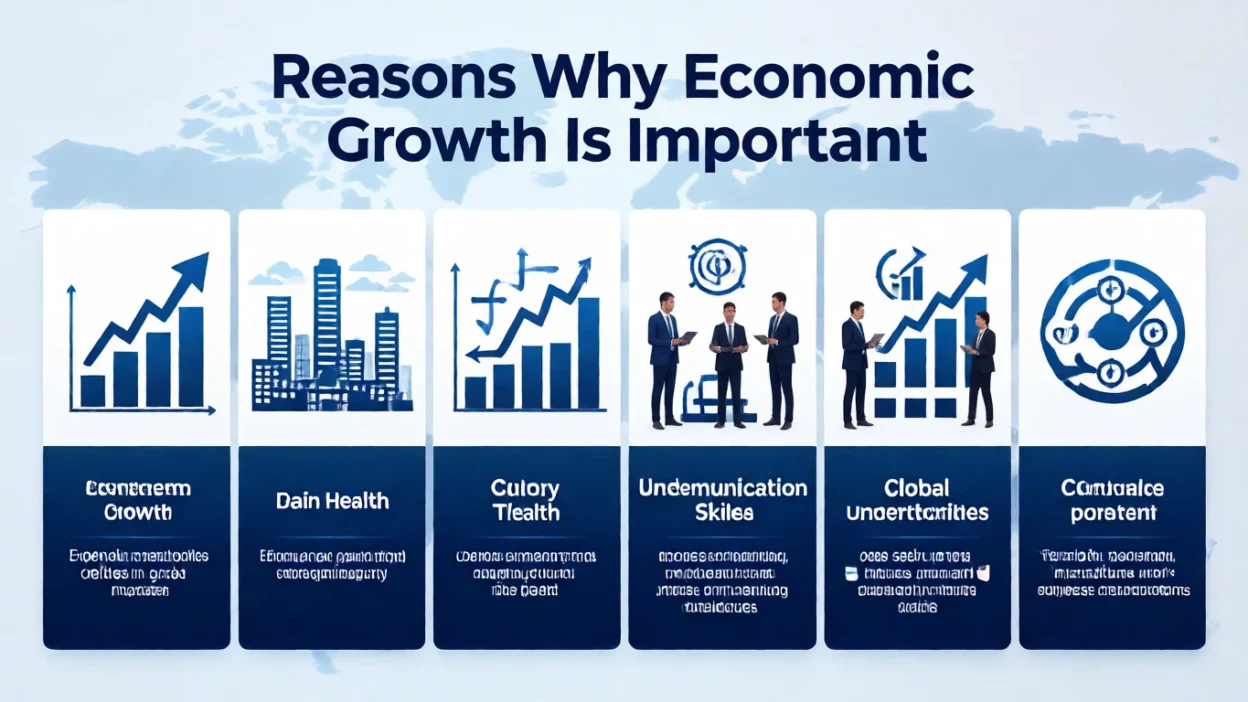
Economic growth is one of the most important indicators of a country’s progress and overall well-being. It refers to the increase in the production of goods and services over time, usually measured through GDP.
When an economy grows, it creates opportunities, improves living standards, and strengthens institutions.
Strong economic growth affects almost every aspect of life, from employment and education to healthcare and infrastructure.
It allows governments to invest in public services, businesses to expand, and individuals to improve their quality of life. Understanding the reasons why economic growth is important helps explain why nations prioritize development, innovation, and stability.
Creates More Employment Opportunities
Economic growth leads to business expansion. New companies emerge and existing ones hire more workers. This reduces unemployment and increases income security.
Improves Living Standards
As economies grow, people earn more. Higher income allows better housing, nutrition, and education. Quality of life improves overall.
Reduces Poverty
Economic growth increases job availability. More people gain access to income. Poverty levels gradually decline.
Increases Government Revenue
Growing economies generate higher tax income. Governments can fund social programs. Public services improve.
Supports Better Healthcare
Economic growth enables healthcare investment. Hospitals, technology, and staff improve. Public health outcomes become stronger.
Enhances Education Systems
More resources are allocated to education. Schools, universities, and training programs improve. Human capital strengthens.
Encourages Business Expansion
Businesses benefit from growing demand. Expansion leads to innovation. Economic activity increases further.
Promotes Technological Innovation
Economic growth supports research and development. New technologies emerge. Productivity improves across industries.
Strengthens Infrastructure Development
Growing economies invest in roads, energy, and transport. Infrastructure improves connectivity. Economic efficiency increases.
Improves Wages and Salaries
As productivity increases, wages rise. Workers gain purchasing power. Financial stability improves.
Increases Consumer Confidence
Economic growth boosts optimism. Consumers spend more freely. Market demand strengthens.
Attracts Foreign Investment
Investors prefer growing economies. Capital inflow increases. Economic stability strengthens further.
Supports Social Welfare Programs
Economic growth funds pensions and social aid. Vulnerable populations receive support. Social equality improves.
Encourages Entrepreneurship
Growth creates opportunities for startups. Innovation flourishes. Small businesses contribute to development.
Reduces Income Inequality
Inclusive growth spreads opportunity. More people benefit from progress. Social balance improves.
Improves National Security
Economic strength supports defense and stability. Governments maintain security. Internal stability increases.
Enhances Global Competitiveness
Growing economies compete internationally. Exports increase. Global influence strengthens.
Supports Sustainable Development
Economic growth enables environmental investment. Green technologies develop. Sustainability improves.
Improves Financial Stability
Stronger economies manage debt better. Financial systems stabilize. Economic shocks reduce.
Encourages Urban Development
Cities grow with infrastructure and services. Urban living standards improve. Economic hubs expand.
Strengthens Public Confidence
Growth builds trust in institutions. People feel optimistic. Social stability improves.
Improves Quality of Public Services
Economic growth funds utilities and services. Efficiency improves. Citizen satisfaction increases.
Encourages Skill Development
Growing economies demand skilled labor. Training programs expand. Workforce quality improves.
Supports Innovation Ecosystems
Economic growth nurtures creative industries. Research hubs expand. Innovation accelerates.
Builds Long-Term Stability
Sustained growth ensures resilience. Economies withstand crises better. Long-term planning improves.
Summary Table: Why Economic Growth Matters
| Area | Importance | Example |
|---|---|---|
| Employment | Job creation | Business expansion |
| Living Standards | Better quality | Higher income |
| Government | More revenue | Public services |
| Innovation | Technology growth | Research funding |
| Stability | Long-term resilience | Economic security |
Idioms Related to Growth and Economy
| Idiom | Meaning | Example |
|---|---|---|
| On the rise | Increasing | Economy growing |
| Fuel growth | Support progress | Investment helps |
| Economic engine | Driving force | Industry |
| Pay off | Bring benefit | Growth pays |
| Build momentum | Gain strength | Markets grow |
Real-Life Examples of Economic Growth Importance
• Countries reducing poverty through industrialization
• Job creation through manufacturing growth
• Technology-driven economies improving productivity
• Infrastructure development improving trade
• Expanding healthcare systems through public funding
FAQs
Q1: Why is economic growth important for a country?
It improves jobs, income, and public services.
Q2: Does economic growth reduce poverty?
Yes, it creates employment and income opportunities.
Q3: Can economic growth improve healthcare?
Yes, it funds better healthcare systems.
Q4: Is economic growth linked to education?
Yes, growth allows investment in education.
Q5: Can growth be sustainable?
Yes, with responsible planning and innovation.
Final Thought
Economic growth is the backbone of national development and social progress. It creates opportunities, improves living conditions, and strengthens institutions that support society.
While growth alone is not enough, inclusive and sustainable economic expansion helps nations reduce poverty, improve education and healthcare, and build long-term stability. In a changing global economy, economic growth remains essential for prosperity, resilience, and a better future for all.

Sara Taylor is a content writer at Whygenix.com, creating clear, engaging articles that simplify complex ideas, helping readers understand the why behind topics in education, lifestyle, and personal development.