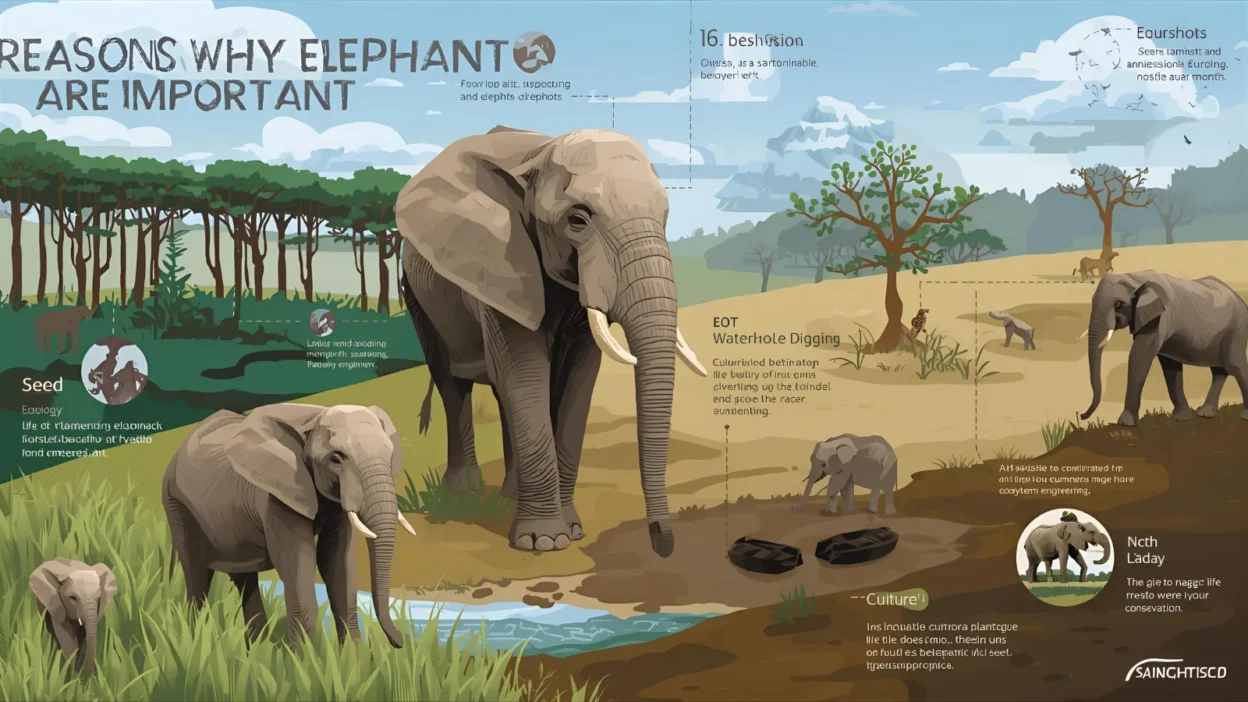
Elephants are more than just the largest land animals on Earth. They are gentle giants, ecosystem engineers, cultural symbols, and one of nature’s most essential protectors. Their presence shapes forests, grasslands, water systems, and even the survival of other species.
From environmental balance to tourism and community support, elephants play a remarkable role in helping both humans and the planet thrive. Here are 25+ powerful reasons why elephants are important.
Elephants Maintain Ecological Balance
Elephants shape the environment by knocking down trees, creating pathways, and maintaining grasslands. Their movement keeps ecosystems balanced and healthy.
They Help Disperse Seeds
Elephants travel long distances and spread seeds through their dung. Many plant species rely on them for reproduction and growth.
Example: Some African trees can only sprout after passing through an elephant’s digestive system.
Elephants Create Water Sources
In dry seasons, elephants dig waterholes with their tusks. These waterholes save countless animals who rely on them for drinking.
They Maintain Forest Health
By removing small trees and opening spaces, elephants allow sunlight to reach the ground, helping plants and grasses grow properly.
Elephants Reduce Overgrowth
Their feeding patterns prevent forests and savannas from becoming dense, reducing the risk of wildfires.
They Support Biodiversity
Hundreds of species benefit from elephant-created landscapes. Birds, insects, plants, and mammals thrive because of elephant activity.
Elephants Are Cultural Symbols
Across Africa and Asia, elephants symbolize strength, wisdom, loyalty, and prosperity. They hold deep cultural value in ceremonies and traditions.
They Boost Ecotourism
Elephants attract millions of tourists worldwide. This generates income for local communities and supports wildlife conservation.
Example: Safari tourism heavily relies on elephant sightings.
Elephants Strengthen Local Economies
Tourism linked to elephants funds jobs, parks, guides, conservation programs, and community development.
They Are Highly Intelligent
Elephants have strong memories, emotional awareness, and problem-solving abilities. Their intelligence helps researchers better understand animal cognition.
Elephants Build Social Bonds
Elephants form deep family structures, teach young ones, and care for injured herd members. Their social behavior is studied for insights into empathy and cooperation.
Elephants Detect Danger and Natural Disasters
Their sensitivity to vibrations allows them to detect distant storms or earthquakes. This instinct helps other animals stay safe.
They Inspire Conservation Movements
Elephants are flagship species. Protecting them automatically protects entire ecosystems.
Elephants Help Control Plant Growth
By feeding on shrubs and trees, they prevent certain species from overtaking balanced habitats.
They Enrich Soil Fertility
Elephant dung fertilizes soil, spreads nutrients, and improves the health of plant life.
Elephants Support Wetland Health
Their movements help shape rivers and marshes, improving water flow and maintaining wetland ecosystems.
They Influence Predator Behavior
Predators like lions and hyenas adjust their strategies based on elephant activity, creating natural balance in ecosystems.
Elephants Promote Tourism-Based Conservation Education
Many conservation centers use elephants to teach visitors about wildlife protection, environmental care, and ecosystem importance.
They Help Maintain Grassland Ecosystems
Elephants flatten tall grass, creating open areas that benefit grazing animals and birds.
Elephants Are Part of Human History
From ancient armies to traditional stories, elephants have influenced cultures, religions, and civilizations for thousands of years.
They Encourage Reforestation
By dispersing seeds across vast terrains, elephants naturally boost reforestation and plant diversity.
Elephants Influence Water Distribution
Their movement shapes water channels and ponds, making water accessible to other species.
They Reduce Invasive Species
Elephants help control harmful plants that can spread uncontrollably without natural grazers.
Elephants Serve as Flagship and Keystone Species
Protecting elephants means protecting countless other animals and plants. They represent the health of entire ecosystems.
Elephants Inspire Art, Literature, and Education
Poems, stories, statues, and paintings around the world reflect the wisdom and majesty of elephants.
Elephants Foster Global Awareness of Wildlife Protection
International campaigns and wildlife laws often start with elephant conservation, creating broader protection for nature.
Quick Table: Key Roles Elephants Play in Nature
| Elephant Role | Impact | Example |
|---|---|---|
| Seed disperser | Helps forests grow | Seeds travel miles through dung |
| Ecosystem engineer | Shapes habitats | Opens forest pathways |
| Water creator | Provides water during drought | Digs holes used by many animals |
| Soil enricher | Improves plant growth | Nutrient-rich dung |
| Tourism driver | Boosts economy | Safari income |
Idioms and Expressions Related to Elephants
| Expression | Meaning | Example |
|---|---|---|
| Elephant in the room | An obvious problem | We ignored the elephant in the room. |
| Memory like an elephant | Excellent memory | She remembers everything; she has a memory like an elephant. |
| White elephant | Expensive but useless possession | The stadium became a white elephant. |
| Gentle giant | Big but kind | Elephants are true gentle giants. |
FAQs About Elephants
Q1: Why are elephants considered keystone species?
Because their actions shape entire ecosystems and support biodiversity.
Q2: How do elephants help the environment?
They disperse seeds, create waterholes, enrich soil, and maintain grasslands.
Q3: Why are elephant populations declining?
Due to poaching, habitat loss, human-wildlife conflict, and climate change.
Q4: Are elephants dangerous to humans?
They are peaceful but can become aggressive when threatened or protecting calves.
Q5: What happens if elephants disappear?
Forests decline, seed distribution stops, many species lose habitats, and ecosystems collapse.
Conclusion
Elephants are essential to the balance of nature and human culture. Their presence influences forests, water systems, wildlife survival, and economic development. Losing elephants would mean losing one of Earth’s most important ecosystem engineers. Protecting them protects our future, our environment, and our connection to the natural world.
Elephants are not just animals; they are guardians of ecosystems and symbols of wisdom, unity, and strength.

Bret Lee writes educational and research-based content for Whygenix.com, focused on clarity, accuracy, and explaining why concepts matter through simple, engaging, reader-friendly writing.