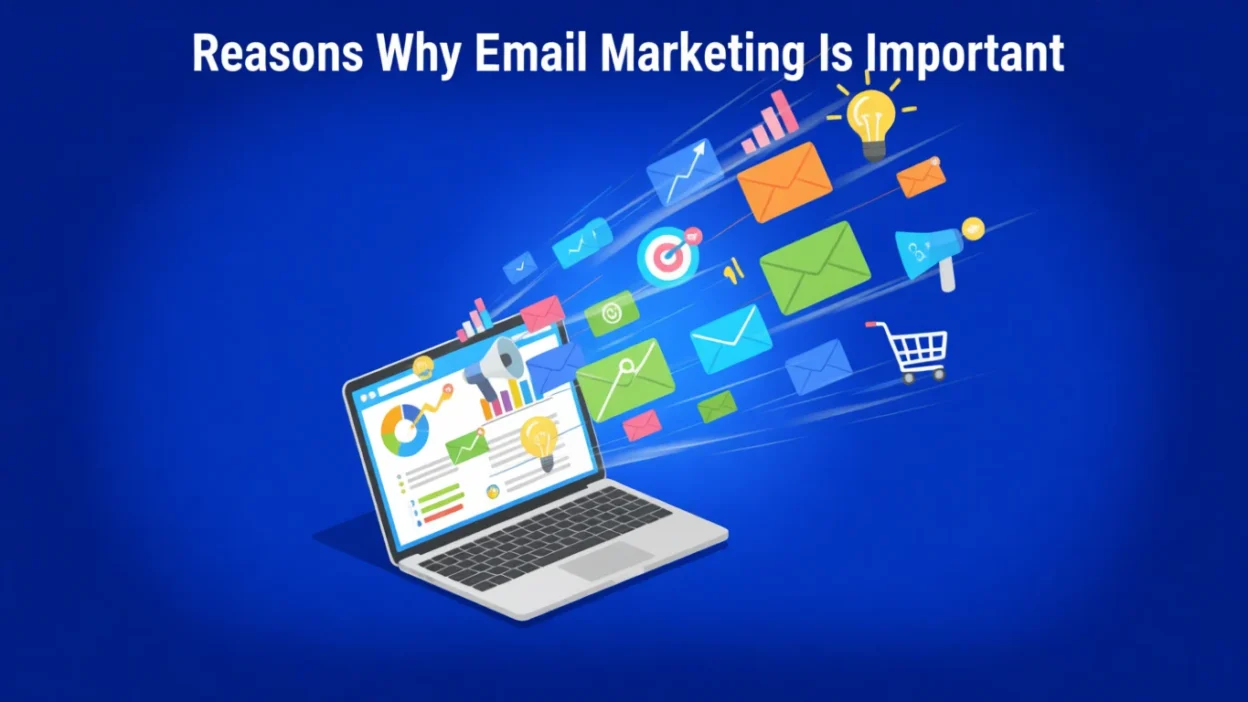
Email marketing remains one of the most powerful digital marketing tools in the world — even more effective than many social platforms. It allows businesses to reach customers directly, build trust, automate relationships, generate sales, and measure performance with precision.
Whether you’re a small startup or a multinational brand, email marketing plays a critical role in communication, engagement, and long-term growth.
Here are 25 detailed reasons why email marketing is important, supported with examples, a comparison table, FAQs, and more.
Reasons Why Email Marketing Is Important
1. Direct communication channel
Email goes straight to a user’s inbox — no algorithm interference.
Example: A product update reaches 100% of your subscribers instantly.
2. Highly cost-effective
It’s cheaper than ads, printing, or SMS.
Example: Sending 10,000 emails costs less than running a small PPC campaign.
3. Audience targeting is extremely precise
Segment lists by interests, age, behavior, or location.
Example: Fitness brands target “weight loss subscribers” separately for higher conversions.
4. Personalization increases engagement
Personalized emails increase open and click rates.
Example: “Hi Sara, your favorite products are back in stock!”
5. Drives repeat sales
Email nurtures customers and brings them back with offers and reminders.
Example: Amazon sends tailored product recommendations.
6. Builds long-term customer relationships
Subscribers feel connected and loyal to your brand.
Example: Weekly newsletters build trust and authority.
7. Automation saves time
Automations run 24/7 — onboarding, reminders, promotions.
Example: A welcome email series triggers automatically for new subscribers.
8. Increases website traffic
Emails drive consistent clicks to blogs, stores, or landing pages.
Example: “Read our new article” boosts blog visits instantly.
9. High ROI (Return on Investment)
Email offers up to $36 return for every $1 spent.
10. Perfect for nurturing leads
Move prospects from awareness to purchase with a strategic email sequence.
11. Ideal for remarketing
Recover abandoned carts or re-engage inactive users.
Example: “You left something in your cart!”
12. Builds brand authority
Regular value-based emails position you as an expert.
13. Helps collect customer feedback
Surveys and polls help improve your products and services.
Example: “Rate your last purchase.”
14. Easy to measure and track
Check open rates, clicks, conversions, and subscriber behavior.
15. Helps grow customer lifetime value (CLV)
The more emails they receive, the longer they stay with your brand.
16. Ideal for promotions and seasonal sales
Announce discounts, launches, and holiday deals.
17. Improves customer retention
Retention emails remind customers that you still care about them.
18. Reaches mobile users easily
Most people check email on their phones multiple times a day.
19. Builds community
Email lets you create a sense of belonging through updates and stories.
20. Scalable for any business
Works for freelancers, startups, eCommerce, and global companies.
21. Supports content marketing
Send blogs, videos, or resources directly to subscribers.
22. Helps tell your brand story
Share mission, journey, case studies, or behind-the-scenes content.
23. Reduces reliance on social media
If a platform shuts down or your account gets restricted, email still works.
24. Creates predictable revenue
Consistent newsletters and sequences bring stable conversions.
25. Builds ownership of audience data
You fully own your email list — unlike social followers.
Comparison Table: Email vs Social Media vs Paid Ads
| Feature | Email Marketing | Social Media | Paid Ads |
|---|---|---|---|
| Cost | Low | Free/Moderate | High |
| Control | Full | Algorithm-controlled | Partial |
| Personalization | Excellent | Limited | Moderate |
| ROI | Highest | Medium | High (expensive) |
| Long-term Value | High | Medium | Low |
| Automation | Yes | Limited | Yes (costly) |
Examples of Email Marketing in Action
Example 1: eCommerce
A clothing brand sends cart recovery emails → 25% customers return to purchase.
Example 2: Coaches & Consultants
A business coach uses automated sequences → converts leads into paid clients.
Example 3: SaaS Companies
A software brand sends onboarding tutorials → reduces cancellation and increases retention.
Popular Email Marketing Idioms
- “Hit their inbox at the right time.”
- “Keep the conversation warm.”
- “Stay top of mind.”
- “Don’t leave money on the table.”
- “The money is in the list.”
FAQs
1. Is email marketing still effective today?
Yes — it remains one of the most profitable digital marketing channels.
2. Does email marketing work for small businesses?
Absolutely. Even small lists generate strong engagement and revenue.
3. How often should I email my audience?
1–3 times a week is ideal depending on your niche.
4. What is the biggest benefit of email marketing?
Direct communication and high ROI.
5. Do I need expensive tools to start?
No — tools like Mailchimp, MailerLite, and ConvertKit are beginner-friendly.
Conclusion
Email marketing is a powerful and essential tool for any business. It helps you communicate directly, build trust, automate engagement, boost conversions, and grow long-term revenue.
Whether you’re promoting products, sharing updates, or nurturing your audience, email marketing remains a cornerstone of successful digital strategy.

Sara Taylor is a content writer at Whygenix.com, creating clear, engaging articles that simplify complex ideas, helping readers understand the why behind topics in education, lifestyle, and personal development.