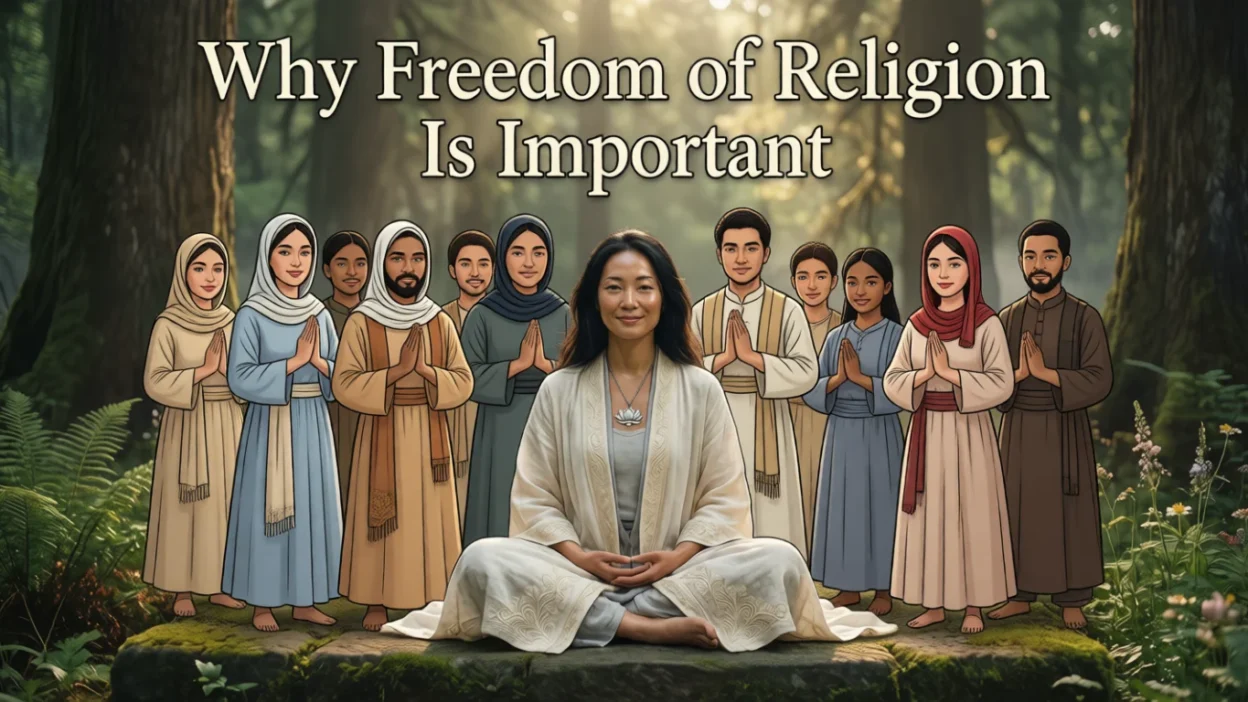
Freedom of religion is the fundamental right of individuals to choose, practice, change, or reject religious beliefs without fear of discrimination or punishment. It protects both belief and non-belief, allowing people to live according to their conscience.
Understanding why freedom of religion is important helps societies protect human dignity, promote tolerance, and maintain peace.
When religious freedom exists, diversity is respected, dialogue improves, and communities grow stronger together.
Protects Human Rights
Freedom of religion safeguards personal beliefs.
Human dignity is respected.
Ensures Personal Freedom
People choose beliefs freely.
Individual autonomy is protected.
Promotes Tolerance
Respect for different faiths grows.
Social harmony improves.
Prevents Religious Discrimination
Equal treatment is encouraged.
Bias is reduced.
Supports Peaceful Coexistence
Different religions live together peacefully.
Conflict decreases.
Encourages Mutual Respect
Understanding replaces fear.
Communities strengthen.
Protects Minority Religions
Smaller faith groups feel safe.
Diversity thrives.
Strengthens Democracy
Freedom of belief supports democratic values.
Citizens participate freely.
Encourages Open Dialogue
People discuss beliefs respectfully.
Misunderstandings decrease.
Reduces Extremism
Freedom lowers radicalization risks.
Balanced views grow.
Promotes Social Stability
Respectful societies remain peaceful.
Order improves.
Supports Moral and Ethical Values
Religion guides personal ethics.
Positive behavior increases.
Protects Freedom of Expression
Beliefs can be shared openly.
Voices are heard.
Encourages Cultural Diversity
Religion shapes traditions and culture.
Cultural richness grows.
Improves Mental Well-Being
Belief systems provide comfort.
Emotional resilience increases.
Allows Religious Practice
Worship and rituals continue freely.
Faith is preserved.
Promotes Equality
All beliefs receive equal protection.
Justice strengthens.
Prevents Religious Violence
Tolerance reduces conflict.
Peace prevails.
Supports Education and Awareness
Understanding religions promotes learning.
Prejudice decreases.
Encourages Community Service
Faith groups often help society.
Social support grows.
Protects Family Traditions
Religious customs are passed down.
Heritage remains strong.
Enhances National Unity
Respect binds diverse populations.
Unity strengthens.
Builds Trust in Institutions
Fair laws build confidence.
Social trust grows.
Encourages Ethical Leadership
Moral accountability increases.
Leaders act responsibly.
Strengthens Global Peace
Religious freedom reduces international tension.
Diplomacy improves.
Protects Freedom of Conscience
People live truthfully.
Inner peace grows.
Summary Table: Why Freedom of Religion Matters
| Area | Importance | Example |
|---|---|---|
| Rights | Personal belief | Worship freedom |
| Society | Tolerance | Peaceful coexistence |
| Law | Equality | Fair protection |
| Culture | Diversity | Traditions respected |
| Peace | Stability | Reduced conflict |
Idioms Related to Freedom and Belief
| Idiom | Meaning | Example |
|---|---|---|
| Live and let live | Mutual respect | Religious tolerance |
| Freedom of conscience | Moral choice | Belief protection |
| Agree to disagree | Respect differences | Peaceful dialogue |
| Walk in someone’s shoes | Empathy | Religious understanding |
| Bridge the gap | Build understanding | Interfaith dialogue |
Real-Life Examples of Religious Freedom Importance
- Countries protecting religious minorities
- Interfaith dialogue initiatives
- Peaceful coexistence in diverse societies
- Laws preventing religious discrimination
- Faith-based community services
FAQs
Q1: Why is freedom of religion important?
It protects human rights and promotes tolerance.
Q2: Does freedom of religion include non-belief?
Yes, it protects belief and non-belief equally.
Q3: Can religious freedom prevent conflict?
Yes, tolerance reduces religious violence.
Q4: Is freedom of religion a human right?
Yes, it is recognized internationally.
Q5: Does religious freedom strengthen democracy?
Yes, it supports open and fair societies.
Final Thought
Freedom of religion is essential for protecting human dignity, promoting peace, and encouraging mutual respect. It allows individuals to live according to their beliefs while respecting others.
By understanding why freedom of religion is important, societies can build inclusive, tolerant, and harmonious communities where diversity is celebrated rather than feared.

Bret Lee writes educational and research-based content for Whygenix.com, focused on clarity, accuracy, and explaining why concepts matter through simple, engaging, reader-friendly writing.