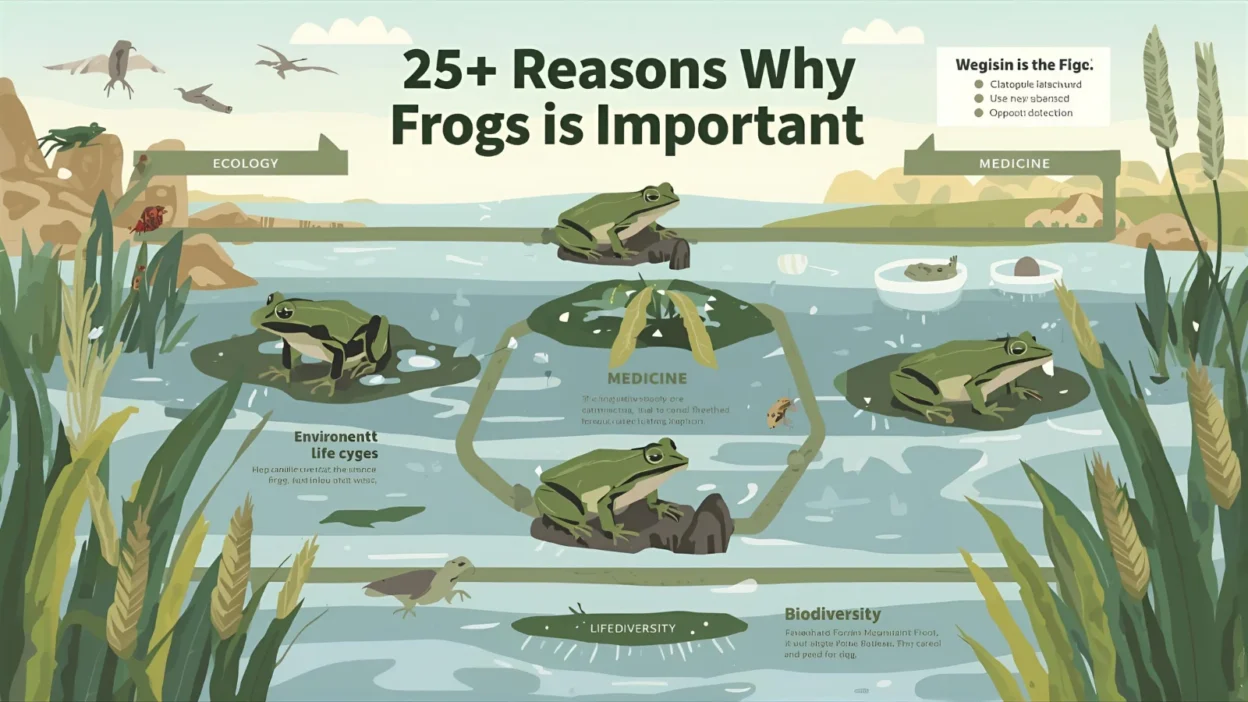
Frogs may look small and unassuming, but they play a surprisingly big role in keeping our planet healthy. From controlling pests to supporting ecosystems, frogs are essential to nature’s balance — and even to human life.
These amphibians bridge land and water, connecting ecosystems in unique ways. Let’s explore 25+ reasons why frogs are important for the environment, science, and our everyday world.
Frogs Maintain Ecological Balance
Frogs are vital for maintaining equilibrium in ecosystems. They occupy a middle link in the food chain, consuming insects and serving as prey for birds, snakes, and fish. Without frogs, entire ecosystems could collapse due to imbalances in population control.
Natural Pest Controllers
Frogs eat mosquitoes, flies, beetles, and other pests that harm crops and spread diseases. A single frog can eat hundreds of insects in one night, helping reduce the need for chemical pesticides.
Example: Farmers benefit when frogs thrive in rice paddies, as they help control pests naturally.
Indicators of Environmental Health
Frogs are bioindicators — meaning their presence or absence reveals the quality of the environment. Because they have permeable skin and live both on land and in water, they are highly sensitive to pollution, climate change, and habitat degradation.
Part of the Global Food Web
From dragonflies to snakes and herons, many species rely on frogs for food. Their eggs and tadpoles also sustain aquatic life. If frogs disappeared, countless other animals would struggle to survive.
Frogs Help with Medical Research
Compounds found in frog skin have been used in medical studies to develop painkillers, antibiotics, and even treatments for heart disease and infections. Frogs are also used in developmental biology to understand cell growth.
Keep Water Ecosystems Clean
Tadpoles feed on algae and detritus, preventing excessive algae growth in ponds and streams. This keeps water oxygenated and supports other aquatic life.
Control of Mosquito Populations
By consuming mosquito larvae and adult mosquitoes, frogs play a crucial role in preventing the spread of diseases like malaria, dengue, and Zika virus.
Source of Education and Research
Frogs have long been studied in schools and research labs to teach students about anatomy, life cycles, and environmental science. Their metamorphosis from tadpole to adult fascinates learners and illustrates evolution in action.
Contribute to Nutrient Cycling
When frogs and their eggs decompose, they return nutrients to the soil and water, enriching the environment and promoting plant growth.
Frogs as a Food Source
In many regions, frogs serve as a protein-rich food source. While overharvesting is discouraged, sustainable frog farming can provide nutrition and economic benefits.
Cultural and Symbolic Importance
Across cultures, frogs symbolize fertility, transformation, and good fortune. Ancient Egyptians associated frogs with rebirth, and in Chinese culture, they represent prosperity and harmony.
Indicators of Climate Change
Frogs respond quickly to environmental changes like temperature shifts or rainfall variations. Scientists track frog populations to monitor the effects of global warming.
Support Pollination and Seed Dispersal
Although frogs aren’t pollinators, they indirectly aid the process. By keeping insect populations balanced, they support pollinator health and plant reproduction.
Reduce Chemical Dependency
Frogs’ natural pest control abilities help farmers reduce pesticide use, keeping soil and water cleaner while cutting costs.
Protect Human Health
Since frogs consume disease-carrying insects, they indirectly help protect humans from infections like malaria and yellow fever.
Maintain Aquatic Biodiversity
Tadpoles and adult frogs share habitats with fish, insects, and plants, creating complex and balanced aquatic ecosystems that thrive with biodiversity.
Frogs Help with Scientific Discovery
The study of frog genetics, reproduction, and adaptation helps researchers understand evolutionary biology and the effects of pollutants on living organisms.
Act as Environmental Alarms
A sudden decline in frog populations often signals pollution, acid rain, or habitat destruction. Their disappearance can alert scientists to investigate ecosystem threats early.
Important for Amphibian Evolution
Frogs are ancient creatures — around for over 200 million years. Their survival across eras provides valuable insight into evolution, adaptation, and resilience.
Aid in Soil Fertility
When frogs burrow or move through soil, they help aerate it, supporting root health and plant growth. Their presence enhances soil ecosystems.
Spiritual and Artistic Inspiration
Frogs have inspired art, music, and folklore around the world. Their sounds are often associated with rain, renewal, and natural balance.
Regulate Insect Populations in Wetlands
In wetland ecosystems, frogs keep insect numbers under control, maintaining a healthy balance between aquatic plants and animal life.
Frogs Connect Water and Land Ecosystems
As amphibians, frogs live in both worlds — water and land. They transfer energy and nutrients between ecosystems, helping them function as one interconnected system.
Economic Value in Ecotourism
In some countries, frog-watching and amphibian tours attract tourists, promoting conservation awareness and local income.
Frogs Inspire Biotechnology
Their ability to absorb water through skin and regenerate tissue has influenced biomimetic research — inspiring designs in medicine, material science, and robotics.
Frogs Support Biodiversity Hotspots
Regions rich in frog species often coincide with areas of high overall biodiversity. Protecting frogs means safeguarding many other species that share their habitats.
Frogs as Natural Alarm Systems
Because frogs react immediately to toxins or pollution, their behavior can help scientists predict environmental hazards faster than traditional monitoring tools.
Quick Table: Frogs and Their Environmental Roles
| Frog Function | Benefit to Nature | Example |
|---|---|---|
| Pest control | Reduces mosquitoes and crop pests | Frogs eating insect larvae |
| Bioindicator | Tracks pollution and climate change | Decline alerts scientists |
| Medical source | Provides compounds for research | Painkillers from frog skin |
| Ecosystem link | Connects aquatic and land life | Tadpoles in ponds, adults on land |
| Education | Teaches biology and conservation | Frog life cycles in schools |
Common Idioms and Expressions About Frogs
| Idiom | Meaning | Example |
|---|---|---|
| “Frog in your throat” | Hoarse or unable to speak | She had a frog in her throat during the speech. |
| “Leap like a frog” | Move quickly or energetically | He leapt like a frog across the puddle. |
| “From tadpole to frog” | Sign of growth or maturity | The project grew from tadpole to frog in a year. |
FAQs About Frogs
Q1: Why are frogs disappearing worldwide?
Due to pollution, habitat loss, and disease like chytrid fungus, frog populations are declining globally.
Q2: How do frogs help humans?
They control pests, reduce disease spread, and contribute to medicine and environmental research.
Q3: What would happen if frogs went extinct?
Insect populations would surge, ecosystems would lose balance, and many animals relying on frogs would suffer.
Q4: How do frogs show environmental changes?
Their sensitive skin reacts quickly to toxins and pollutants, signaling ecosystem distress.
Q5: Are frogs protected by conservation programs?
Yes. Many organizations protect wetlands and breeding areas to preserve frog species worldwide.
Conclusion
Frogs are far more than just creatures that croak at night — they’re vital allies of nature. They protect ecosystems, balance insect populations, indicate environmental health, and even help humanity through science and medicine. Losing frogs would mean losing an essential link in the world’s natural balance.
When you hear a frog’s call next time, remember — it’s the sound of nature staying alive and well.

Joy Root is a content writer at Whygenix.com, creating clear, engaging articles that explain complex ideas simply, helping readers understand why topics matter in everyday life and personal growth.