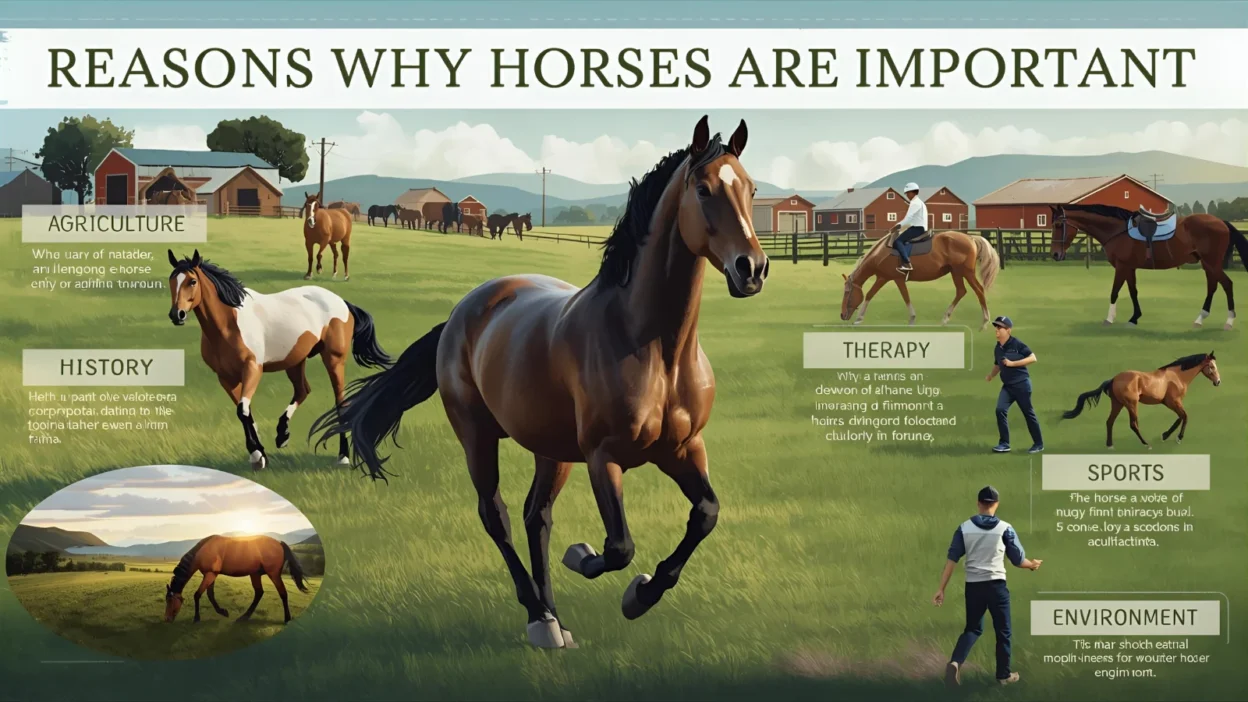
Horses have been by our side for thousands of years, shaping history, agriculture, travel, culture, and even medicine. Their strength, intelligence, and loyalty have helped humans build civilizations, explore new worlds, and grow food. Even today, horses continue to play a meaningful role in society, nature, and human development.
Here are 25+ powerful reasons why horses are important and why their contribution still matters.
Horses Support Agriculture
Historically, horses helped farmers plow fields, transport crops, and manage rural work. In many regions, they still support farming where machinery can’t reach.
They Provide Transportation in Rural Areas
Horses remain essential in places with difficult terrain, delivering goods and helping people travel where vehicles struggle.
Horses Contribute to Sports and Competitions
From racing to show jumping, polo to dressage, horses make international sports possible. These events support huge industries and communities.
They Reduce Environmental Impact
Horses offer clean, non-polluting transportation. Unlike machinery, they don’t rely on fuel or produce emissions.
Horses Support Mental Health
Horse-assisted therapy helps people with anxiety, trauma, autism, ADHD, and emotional challenges.
Example: Equine therapy is widely used to build trust, calmness, and self-confidence.
They Teach Responsibility
Caring for horses requires patience, routine, and discipline, making them excellent teachers for children and adults.
Horses Boost Physical Fitness
Riding strengthens core muscles, balance, coordination, and posture. It’s a full-body workout.
They Contribute to Local Economies
Horse-related industries such as tourism, riding schools, feed production, vets, and saddlery boost employment and income.
Horses Promote Outdoor Activity
Living and working with horses encourages people to spend more time outside, improving health and emotional well-being.
They Are Important to History
Horses helped humans explore territories, fight battles, deliver messages, and build trade routes. The world as we know it was shaped with their help.
Horses Strengthen Cultural Identity
In many cultures, horses symbolize courage, freedom, and nobility. Festivals, traditions, and ceremonies often highlight them.
They Support Search and Rescue Units
Mounted units can cover rough terrain, find missing people, and reach places inaccessible to vehicles.
Horses Improve Soil Health
Their manure enriches fields, gardens, and crops with natural nutrients, reducing the need for chemical fertilizers.
They Help With Livestock Management
Horses are excellent for herding cattle and sheep, especially in large open areas where machines cannot maneuver well.
Horses Encourage Social Interaction
Riding clubs, stables, and equestrian centers create communities where people build friendships and share interests.
Horses Inspire Art and Literature
Paintings, poems, stories, and films around the world feature horses as symbols of beauty, strength, and freedom.
They Provide Therapy for Veterans
Veterans with PTSD often benefit from horse therapy programs that help rebuild trust, reduce stress, and strengthen emotional resilience.
Horses Improve Balance and Coordination
Riding demands precise movements, making it ideal for physical rehabilitation.
Horses Support Police Units
Mounted police help control crowds, patrol public areas, and manage large events with better visibility.
They Promote Wildlife Conservation
In some areas, horse grazing helps maintain grasslands and prevents overgrowth, supporting diverse species.
Horses Serve as Companions
Many people keep horses for companionship, bonding deeply with them due to their emotional sensitivity.
They Help Control Vegetation
Horses graze on grasses and shrubs, maintaining fields and preventing overgrown areas.
Horses Encourage Discipline and Focus
Training, grooming, and riding require concentration, making horses excellent partners for developing self-control.
They Are Highly Intelligent Animals
Horses can learn commands, recognize human emotions, and respond to subtle cues. Their intelligence strengthens the human-animal connection.
Horses Contribute to Therapeutic Riding
Programs for disabled children and adults use horses to improve motor skills, confidence, and emotional regulation.
Quick Table: Key Contributions of Horses
| Role | Impact | Example |
|---|---|---|
| Agricultural partner | Helps farming | Plowing, transporting crops |
| Emotional therapy | Supports mental health | Equine-assisted therapy |
| Sports partner | Drives global industries | Racing, polo |
| Transportation | Eco-friendly travel | Rural areas, mountains |
| Police work | Public safety | Crowd control |
Idioms and Expressions Related to Horses
| Expression | Meaning | Example |
|---|---|---|
| Hold your horses | Slow down | Hold your horses, let’s think first. |
| Wild horses couldn’t drag me | Impossible to convince | Wild horses couldn’t drag me to that meeting. |
| Horsepower | Strength or engine power | This car has high horsepower. |
| Get back in the saddle | Try again after failure | After a tough week, he got back in the saddle. |
| Straight from the horse’s mouth | Direct information | I heard it straight from the horse’s mouth. |
FAQs About Horses
Q1: Why are horses important to humans?
They support agriculture, therapy, sports, transportation, and historical culture.
Q2: Do horses still help in farming today?
Yes. In many rural regions, horses are still used for plowing and carrying goods.
Q3: How do horses help with mental health?
Their calm nature and sensitivity make them ideal for emotional therapy and rehabilitation.
Q4: Are horses environmentally friendly?
Yes. They help with grazing, soil enrichment, and serve as pollution-free transport.
Q5: What makes horses unique?
Their strength, intelligence, loyalty, and deep connection with humans.
Conclusion
Horses have shaped human history and continue to influence our world through agriculture, therapy, sports, culture, and environmental care. Their importance goes beyond transportation or labor—they inspire, heal, and connect people. Protecting and respecting horses means preserving a long-standing bond that has supported humanity for thousands of years.
Horses remain symbols of freedom, partnership, and resilience. Their value is timeless.

Bret Lee writes educational and research-based content for Whygenix.com, focused on clarity, accuracy, and explaining why concepts matter through simple, engaging, reader-friendly writing.