Legs are so deeply woven into our daily lives that most people hardly notice how essential they truly are. From movement and posture to circulation and balance, our legs carry us through life—literally. They support our independence, mobility, strength, and connection to the world around us.
Below are 25+ powerful reasons why legs are important, backed by everyday examples and clear explanations.
Legs Support Body Weight
Our legs bear almost all our body weight, allowing us to stand, walk, and remain upright without collapsing.
They Provide Mobility
Walking, running, climbing, jumping, and even standing rely on strong, functional legs. Without them, movement becomes highly restricted.
Legs Help Maintain Balance
Muscles and joints in the legs constantly adjust to keep the body stable during motion and stillness.
They Enable Independence
Legs give us the freedom to move on our own without depending on others for basic tasks.
Legs Improve Blood Circulation
The leg muscles act like pumps, helping blood return to the heart and reducing the risk of blood pooling.
They Strengthen Core and Posture
Leg movement supports the spine and helps maintain proper alignment while sitting, standing, and walking.
Legs Boost Athletic Performance
Sports like football, hockey, cricket, basketball, and running depend heavily on strong and coordinated legs.
They Support Everyday Activities
From walking to the kitchen to carrying groceries, almost every daily movement involves leg work.
Legs Absorb Shock
Joints such as knees and ankles act as shock absorbers when we walk or run, protecting the rest of the body.
They Help Burn Calories
Leg muscles are among the largest in the body, meaning they burn more calories and support weight control.
Legs Enhance Speed and Agility
Leg strength determines how fast and agile a person can move, whether in sports or quick reactions.
They Provide Stability on Uneven Ground
Strong legs help us navigate slopes, stairs, hills, and slippery surfaces safely.
Legs Improve Flexibility
Healthy leg muscles allow smoother movement and reduce stiffness throughout the body.
They Support Coordination
Walking, dancing, hiking, and cycling require precise coordination of leg muscles and joints.
Legs Allow Different Body Positions
Sitting, standing, crouching, kneeling, and squatting — all depend on leg mobility.
They Aid Emotional Expression
Legs help us pace, dance, stomp, walk away, or run toward something—reflecting emotions and energy.
Legs Contribute to Strength Training
Many powerful exercises like squats, lunges, and deadlifts depend entirely on the legs.
They Enhance Longevity
People who walk regularly tend to have better heart health, stronger bones, and a longer life expectancy.
Legs Help Maintain Bone Density
Weight-bearing activities strengthen bones in the hips, knees, and legs, reducing the risk of fractures.
Legs Support Healthy Joints
Movement keeps the joints lubricated and prevents stiffness or joint degeneration.
They Assist in Proper Gait
The legs create a natural walking rhythm that affects the entire body’s movement efficiency.
Legs Improve Reaction Time
Quick leg movements help avoid accidents, slips, or sudden obstacles in daily life.
Legs Help With Lifting and Carrying
Proper use of legs prevents injury while lifting heavy objects by taking pressure off the back.
They Make Travel Possible
Whether by foot, bicycle, motorcycle, or even boarding transport, legs play a critical role in travel.
Legs Connect Us to the Environment
Walking outdoors increases awareness, reduces stress, and strengthens the bond with nature.
They Reflect Health Condition
Weakness, swelling, or pain in the legs often signals larger health issues needing attention.
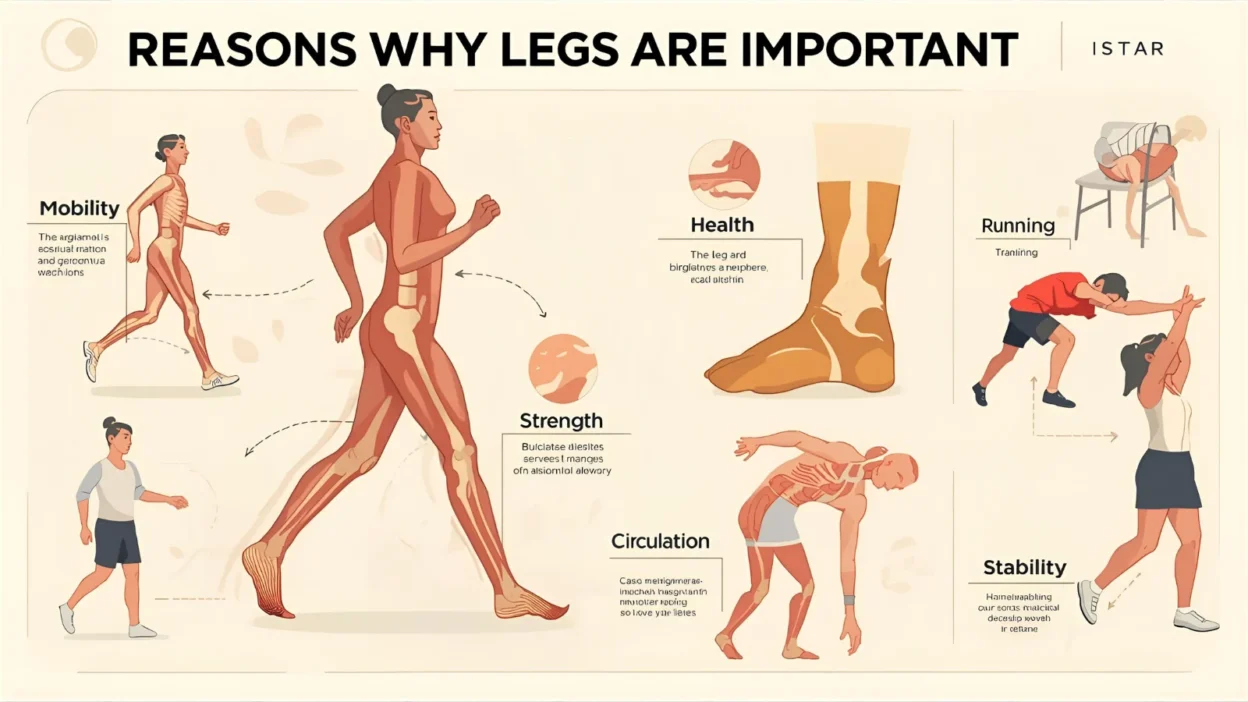
Quick Table: Importance of Legs
| Category | Importance | Example |
|---|---|---|
| Mobility | Movement and independence | Walking, running |
| Health | Blood flow and strength | Leg muscles pump blood |
| Stability | Balance and posture | Standing upright |
| Safety | Quick reactions | Avoiding falls |
| Fitness | Calorie burning and endurance | Cardio, sports |
Idioms & Expressions Related to Legs
| Idiom | Meaning | Example |
|---|---|---|
| Break a leg | Good luck | He told her to break a leg before the performance. |
| Shake a leg | Hurry up | Shake a leg or we’ll be late. |
| Pull someone’s leg | To joke | I was just pulling your leg. |
| Stand on your own two feet | Be independent | She finally learned to stand on her own two feet. |
| Sweep someone off their feet | Impress someone | His kindness swept her off her feet. |
FAQs About Legs
Q1: Why are legs important for everyday life?
Because they enable movement, balance, and independence in daily activities.
Q2: How do legs help with blood circulation?
The leg muscles push blood upward toward the heart with every step.
Q3: Why do athletes need strong legs?
Strong legs improve speed, power, and endurance in almost every sport.
Q4: How can I keep my legs healthy?
Regular walking, stretching, hydration, and strength training help maintain leg health.
Q5: Why do my legs hurt after long sitting?
Lack of movement reduces circulation, causing stiffness and discomfort.
Conclusion
Legs are more than just limbs for walking—they are essential for mobility, independence, posture, balance, strength, and overall health. They help us work, travel, play, and connect with the world. Strong, healthy legs contribute to a better quality of life and greater physical confidence. Appreciating their role encourages us to take better care of them every day.

Bret Lee writes educational and research-based content for Whygenix.com, focused on clarity, accuracy, and explaining why concepts matter through simple, engaging, reader-friendly writing.