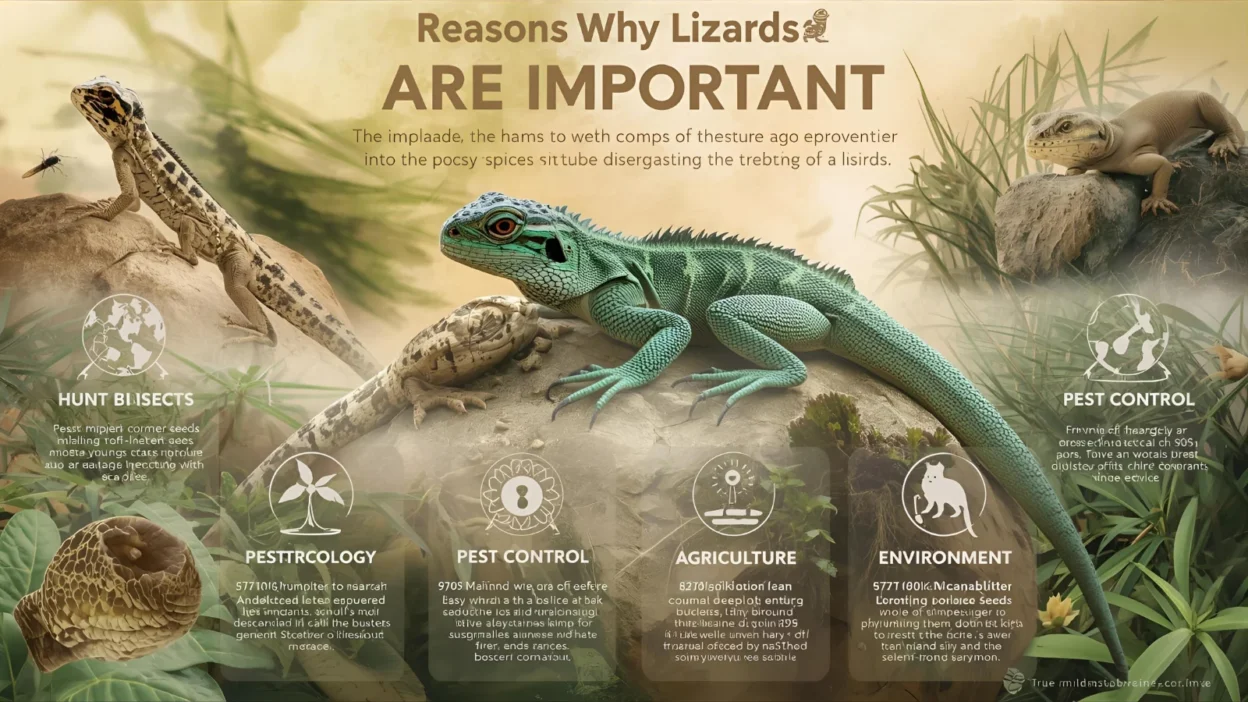
Lizards are often overlooked in nature, but they play essential roles in ecosystems, agriculture, and even human well-being. These adaptable reptiles help control pests, support food chains, assist scientific research, and maintain ecological balance. From deserts to forests and even urban settings, lizards contribute quietly but powerfully to environmental stability.
Here are 25+ important reasons why lizards matter more than most people realize.
Lizards Control Insect Populations
Lizards eat mosquitoes, flies, beetles, and many crop-damaging insects. They act as natural pest controllers, reducing the need for chemicals.
They Support the Food Chain
Lizards serve as prey for birds, snakes, mammals, and larger reptiles. Their existence keeps predator populations stable.
Lizards Protect Crops
By feeding on insects that destroy crops, lizards indirectly help farmers maintain healthy harvests.
They Maintain Ecological Balance
Lizards regulate populations of insects, spiders, and even small rodents, preventing ecological imbalance.
Lizards Are Indicators of Environmental Health
A decline in lizard populations often signals pollution, habitat loss, or climate problems. They help scientists detect ecosystem changes early.
They Help Control Disease-Carrying Pests
Mosquitoes and flies can spread diseases. Lizards help reduce these pests naturally, supporting healthier environments.
Lizards Contribute to Biodiversity
They belong to diverse species groups found in forests, deserts, wetlands, and grasslands. High biodiversity strengthens ecosystems.
They Assist in Seed Dispersal
Some lizards eat fruits and help spread seeds, supporting plant reproduction and forest regeneration.
Lizards Are Important for Scientific Research
Their regenerative abilities, especially regrowing tails, help scientists study tissue regeneration, healing, and genetics.
They Support Soil Health
By burrowing or digging, some lizards aerate the soil, improving moisture flow and nutrient distribution.
Lizards Help Reduce Chemical Use
Since they naturally control pests, farmers can reduce pesticide usage, protecting soil and water quality.
They Reduce Household Pests
In many regions, house lizards eat insects inside homes, helping keep living spaces cleaner.
Lizards Adapt to Harsh Environments
Studying lizards helps researchers understand evolution, survival strategies, and climate adaptation.
They Inspire Biomimicry
Scientists study lizard movement and skin texture for innovations such as climbing robots and water-collecting surfaces.
Lizards Help Maintain Predator Populations
Their stable food availability supports a variety of predators, strengthening entire food webs.
They Teach About Animal Behavior
Lizards help researchers understand feeding habits, territory behavior, communication, and reproduction.
Lizards Help Control Spiders and Scorpions
Many lizards eat venomous spiders and scorpions, reducing risks for humans.
They Contribute to Cultural Beliefs
In many cultures, lizards symbolize renewal, transformation, and adaptability.
Lizards Promote Healthy Gardens
Garden lizards keep plant-eating insects in check, supporting healthier flowers, fruits, and vegetables.
They Are Educational for Children
Lizards help children learn about biology, reptiles, ecosystems, and wildlife care.
Lizards Support Tourism and Nature Exploration
Many people travel to observe rare species in rainforests, deserts, or islands, contributing to local economies.
They Show Evolutionary Success
With over 6,000 species, lizards demonstrate remarkable survival abilities across climates and habitats.
Lizards Help With Pollination
Some lizards feed on nectar and unintentionally assist pollination, helping flowers and plants reproduce.
They Encourage Conservation Awareness
Lizard conservation teaches people about habitat protection, biodiversity preservation, and climate challenges.
Lizards Help Reduce Waste in Nature
By feeding on dead insects and small animals, some lizard species help clean the environment.
Quick Table: Benefits of Lizards
| Benefit Area | How Lizards Help | Example |
|---|---|---|
| Pest Control | Eat insects | House lizards eating mosquitoes |
| Agriculture | Protect crops | Reducing beetles and leaf pests |
| Research | Regeneration studies | Tail regrowth research |
| Ecosystems | Maintain balance | Food chain stability |
| Soil & Plants | Seed dispersal | Fruit-eating species |
Idioms and Expressions Related to Lizards
| Expression | Meaning | Example |
|---|---|---|
| Cold-blooded | Calm or unemotional | He stayed cold-blooded during the debate. |
| Shed your skin | Transform or change | She shed her skin and started a new chapter. |
| Quick as a lizard | Fast reaction | He moved quick as a lizard to catch the ball. |
| Scale up | Increase growth | They scaled up the project quickly. |
| Hard to catch | Difficult to control | The idea is like a lizard, hard to catch. |
FAQs About Lizards
Q1: Are lizards helpful to humans?
Yes. They control pests, protect crops, and support ecosystem health.
Q2: Are lizards dangerous?
Most lizards are harmless and avoid humans. Only a few species are venomous.
Q3: Why do lizards live in houses?
They come inside to eat insects and look for cooler or warmer spots depending on the season.
Q4: How do lizards help the environment?
They maintain food chains, disperse seeds, control insects, and signal ecosystem changes.
Q5: Why are lizards studied in science?
Their regeneration abilities, immune systems, and adaptability provide valuable research insights.
Conclusion
Lizards play an essential role in nature by controlling pests, supporting food chains, protecting crops, and contributing to scientific progress. Their presence reflects ecosystem health, biodiversity, and environmental balance. Far from being simple reptiles, lizards are powerful contributors to agriculture, research, conservation, and household environments. Protecting lizards means protecting the systems that keep nature functioning smoothly.

Bret Lee writes educational and research-based content for Whygenix.com, focused on clarity, accuracy, and explaining why concepts matter through simple, engaging, reader-friendly writing.