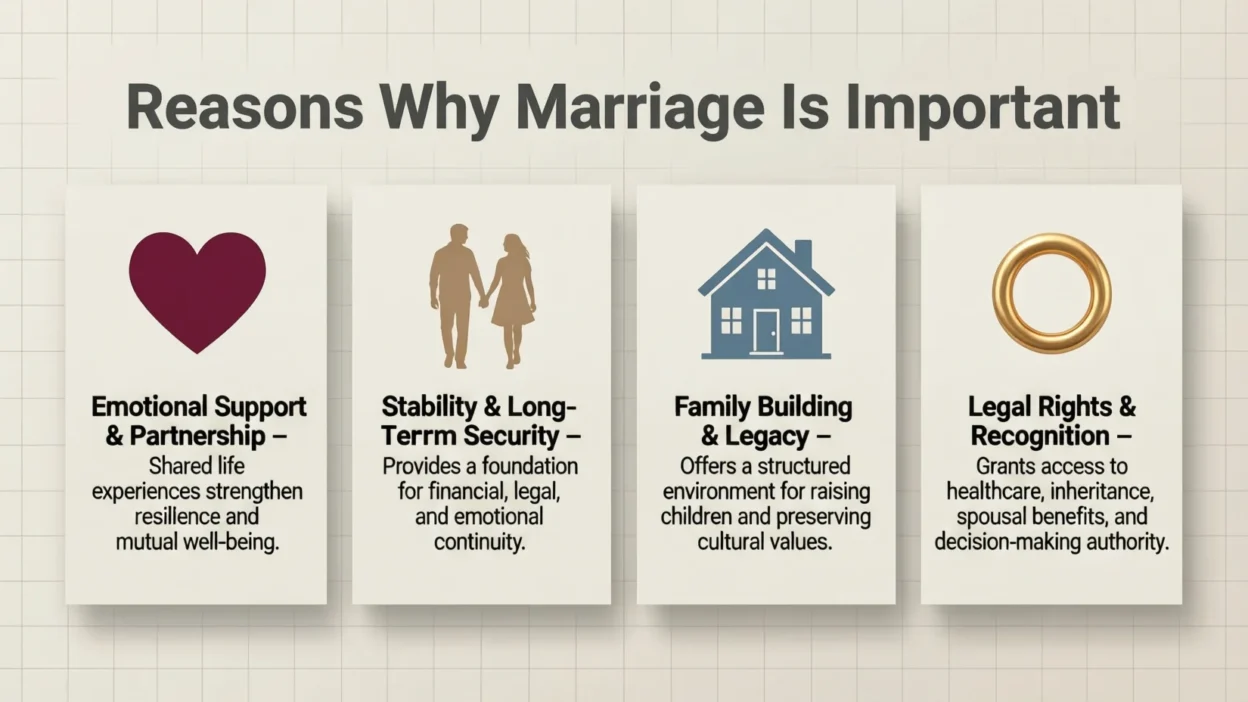
Marriage is more than a social contract or a legal formality. It’s a bond that shapes lives, builds families, and strengthens communities.
Across cultures and generations, marriage has provided emotional support, financial stability, companionship, and a framework for raising children.
While every relationship is unique, understanding why marriage is important helps people appreciate its value—not just as a personal milestone, but as a cornerstone of social structure.
From emotional well-being to societal benefits, marriage offers numerous advantages that impact individuals and communities alike.
Provides Emotional Support
Marriage creates a safe space for emotional sharing. Partners support each other through joys and challenges. Mental health improves with reliable companionship.
Example: Couples often report reduced stress when they have a partner to share daily struggles and successes.
Builds Companionship
Humans thrive on connection. Marriage ensures a lifelong companion to share life’s journey. Loneliness decreases. Happiness increases.
Strengthens Family Bonds
Marriage often forms the foundation for building families. It nurtures relationships between parents, children, and extended family.
Example: Children in stable marriages often benefit from consistent support and guidance.
Encourages Personal Growth
Partners challenge and inspire each other to grow. Marriage encourages self-improvement and lifelong learning.
Example: A spouse’s encouragement can motivate someone to pursue a dream career or adopt healthier habits.
Provides Financial Stability
Pooling resources, sharing expenses, and planning together makes financial management easier. Marriage often strengthens long-term economic security.
Example: Couples filing joint taxes or saving for a home experience shared financial benefits.
Promotes Physical Health
Married individuals often enjoy better health outcomes, including lower blood pressure and reduced risk of chronic illnesses.
Research shows: People in supportive marriages tend to adopt healthier lifestyles.
Reduces Stress and Anxiety
Knowing someone has your back during tough times reduces stress. Emotional support buffers against anxiety.
Encourages Responsible Behavior
Marriage often promotes accountability and responsibility, both in personal and social contexts.
Example: Partners motivate each other to avoid risky behaviors or maintain a balanced lifestyle.
Strengthens Social Connections
Marriage links two families, expanding social networks. These connections provide emotional and practical support.
Provides Legal and Social Protection
Marriage provides legal rights regarding inheritance, healthcare decisions, and social security benefits.
Supports Child Development
Children raised in stable marriages often experience consistent care, emotional security, and better educational outcomes.
Encourages Commitment
Marriage reinforces loyalty and long-term commitment. Partners are motivated to work through challenges together.
Enhances Happiness
Shared experiences and companionship often increase overall life satisfaction.
Example: Celebrating milestones together fosters joy and strengthens bonds.
Promotes Conflict Resolution Skills
Living closely with a partner requires compromise, patience, and communication skills. Marriage improves these life skills.
Builds Trust
Trust is cultivated through consistent support and honesty. Strong trust improves both marital and social relationships.
Strengthens Community
Marriages create stable family units that contribute to societal stability and social cohesion.
Supports Mental Health
Emotional intimacy reduces depression and provides psychological resilience.
Encourages Shared Goals
Married couples often pursue joint goals, from buying a home to raising children, fostering teamwork.
Provides Lifelong Friendship
Beyond romance, marriage often develops deep, enduring friendships between partners.
Offers Security in Old Age
Spouses care for each other as they age, reducing loneliness and vulnerability in later life.
Reinforces Values and Traditions
Marriage passes cultural, moral, and family traditions across generations.
Promotes Forgiveness and Compassion
Navigating marital challenges teaches empathy, patience, and forgiveness.
Enhances Sexual Health
A committed relationship promotes sexual health and intimacy in a safe, consensual context.
Encourages Spiritual Growth
Many marriages inspire shared spiritual practices or religious engagement.
Builds Legacy
Marriage provides a structure for leaving a lasting legacy, whether through children, community, or shared achievements.
Supports Economic Growth (Household Level)
Married couples often contribute more consistently to savings, investments, and community economy.
Summary Table: Why Marriage Matters
| Area | Importance | Example |
|---|---|---|
| Emotional | Support & happiness | Reduced stress, companionship |
| Family | Child care & bonds | Stable upbringing, strong family ties |
| Social | Community stability | Expanded social network |
| Financial | Security & planning | Joint savings, shared expenses |
| Health | Physical & mental | Lower stress, healthier lifestyle |
| Personal Growth | Development & skills | Better conflict resolution, personal improvement |
| Legal | Protection & rights | Inheritance, healthcare decisions |
Idioms Related to Marriage
| Idiom | Meaning | Example |
|---|---|---|
| Tie the knot | Get married | They decided to tie the knot last summer. |
| Match made in heaven | Perfect couple | Everyone says they’re a match made in heaven. |
| Two peas in a pod | Very similar partners | They’ve been like two peas in a pod since college. |
| Ball and chain | Humorous for spouse | He jokingly called his wife the ball and chain. |
| Wear the pants | Decision-maker in marriage | She wears the pants in their household. |
Real-Life Examples of Marriage Importance
- Sharing life challenges and achievements
- Providing stability for children
- Offering emotional and financial support
- Building lifelong companionship and friendship
- Strengthening social networks and community cohesion
FAQs
Q1: Why is marriage important?
Marriage offers emotional support, companionship, financial security, and societal stability.
Q2: Does marriage improve health?
Yes, supportive marriages correlate with better mental and physical health outcomes.
Q3: How does marriage benefit children?
Children in stable marriages often enjoy consistent care, emotional security, and better education.
Q4: Can marriage improve personal growth?
Yes, it teaches communication, conflict resolution, trust, and shared goal-setting.
Q5: Is marriage still relevant today?
Absolutely. Despite changing societal norms, marriage continues to provide emotional, social, and practical benefits.
Final Thought
Marriage is more than a legal or social contract; it’s a partnership that nurtures growth, emotional support, and societal stability.
While every relationship requires effort and understanding, the benefits extend beyond the couple—impacting families, communities, and future generations.
Understanding why marriage is important helps couples appreciate their bond, fostering stronger, happier, and healthier lives together

Sara Taylor is a content writer at Whygenix.com, creating clear, engaging articles that simplify complex ideas, helping readers understand the why behind topics in education, lifestyle, and personal development.