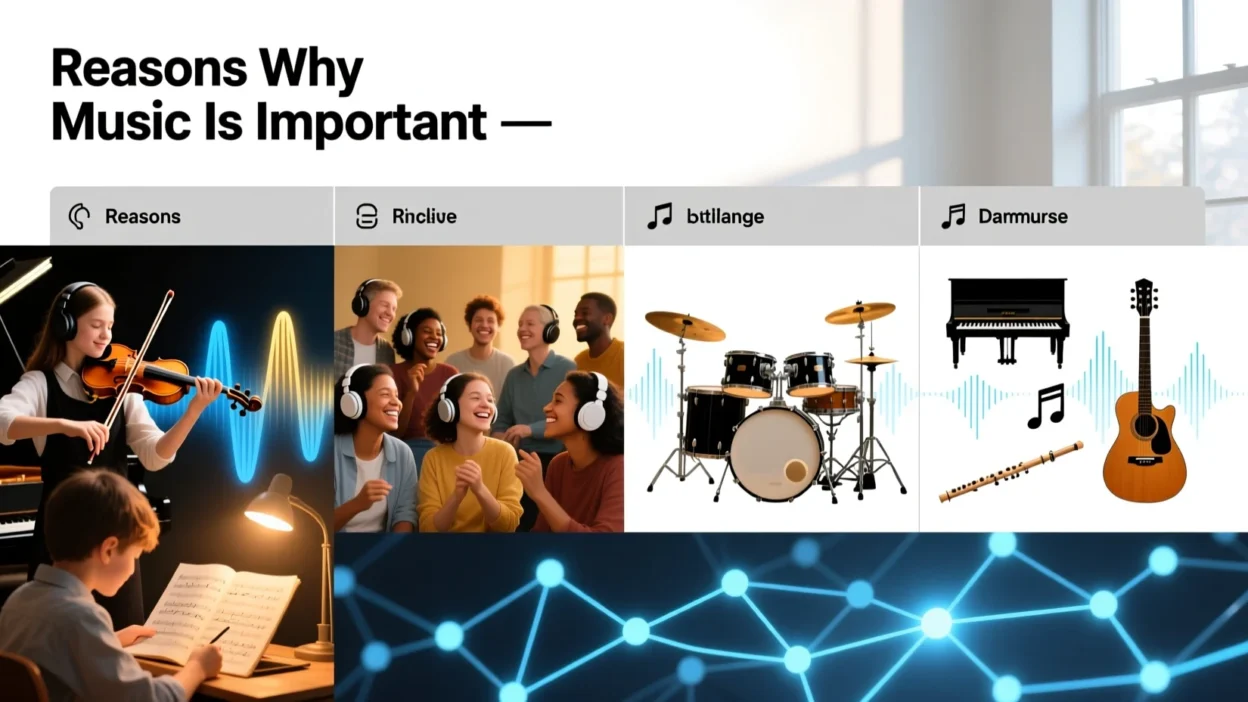
Music is a universal language. It crosses borders, cultures, and generations, touching people in ways few things can.
Whether it’s a soothing melody, a powerful rhythm, or a meaningful lyric, music influences emotions, memory, creativity, learning, and social connection.
This guide explores 25 meaningful reasons why music is important and how it shapes human life.
Helps Express Emotions
Music allows people to express feelings they cannot put into words, such as joy, sadness, excitement, or nostalgia.
Reduces Stress
Listening to calm music lowers heart rate and reduces anxiety, helping people relax after a long day.
Improves Mood
Upbeat music can instantly lift the mood and boost energy levels.
Enhances Memory
Music strengthens memory, especially for learning languages, remembering events, or recalling emotions tied to songs.
Boosts Creativity
Artists, writers, and designers often use music to inspire new ideas and imaginative thinking.
Strengthens Cultural Identity
Traditional music helps communities preserve their culture, language, and values.
Builds Social Connections
Music brings people together at concerts, events, celebrations, and gatherings.
Helps with Learning
Students who study with soft background music often concentrate better and remember more.
Supports Physical Exercise
Music improves workout performance by increasing motivation and reducing tiredness.
Encourages Self-Expression
People express personality through the music they listen to or create.
Supports Mental Health
Music therapy is used to treat anxiety, depression, trauma, and emotional difficulties.
Improves Sleep
Slow, gentle melodies help people fall asleep faster and enjoy deeper rest.
Enhances Communication
Songs tell stories, convey messages, and communicate ideas in powerful ways.
Helps with Pain Management
Hospitals use music therapy to reduce pain and discomfort for patients.
Inspires Motivation
People use music to stay motivated during work, study, or sports activities.
Builds Discipline and Patience
Learning an instrument requires practice, structure, and persistence.
Strengthens Language Skills
Lyrics help improve vocabulary, pronunciation, and understanding of different languages.
Encourages Creativity in Children
Music boosts a child’s imagination and supports emotional and cognitive development.
Enhances Focus
Instrumental music helps people focus during work or reading tasks.
Helps People Bond
Singing, dancing, and listening together create shared experiences.
Supports Spiritual and Religious Practices
Many spiritual traditions use music for reflection, worship, and meditation.
Improves Coordination
Playing instruments involves hand-eye coordination and fine motor skills.
Boosts Confidence
Performing music builds self-esteem and reduces fear of public speaking.
Offers Entertainment
Music is a major source of enjoyment through concerts, films, festivals, and personal listening.
Preserves History
Songs capture stories, traditions, and social events, keeping history alive through generations.
Summary Table: Why Music Matters
| Category | Importance | Example |
|---|---|---|
| Emotional | Reduces stress, improves mood | Calming music after work |
| Cognitive | Enhances memory and focus | Studying with soft music |
| Cultural | Preserves traditions | Folk songs |
| Social | Builds connections | Concerts and celebrations |
| Personal Growth | Strengthens skills and confidence | Learning an instrument |
Common Idioms Related to Music
| Idiom | Meaning | Example |
|---|---|---|
| Face the music | Accept consequences | He had to face the music after breaking rules. |
| Music to my ears | Good news | The promotion was music to her ears. |
| Change your tune | Change attitude or opinion | He changed his tune after hearing the details. |
| Play it by ear | Act without planning | They decided to play it by ear on the trip. |
| Strike a chord | Create an emotional impact | The song struck a chord with many listeners. |
Real-Life Examples of Music’s Importance
- Therapists use music to calm anxious patients.
- Athletes listen to energetic music before competitions.
- Teachers use songs to help children learn languages.
- People use playlists to focus while working or studying.
- Traditional songs help preserve cultural identity in communities.
FAQs
Q1: Why is music important in life?
Because it improves emotional, mental, cultural, and social well-being.
Q2: How does music help mental health?
It reduces stress, boosts mood, and provides emotional comfort.
Q3: Why is music important in education?
It strengthens memory, improves concentration, and supports language learning.
Q4: Is music beneficial for children?
Yes. It develops creativity, cognitive skills, and emotional growth.
Q5: How does music bring people together?
Shared experiences—like concerts or singing—create connection and unity.
Conclusion
Music shapes the human experience in countless ways. It reduces stress, improves mood, strengthens cultural identity, supports learning, and builds social bonds.
Whether used for healing, entertainment, education, or emotional expression, music remains a powerful force in everyday life. Understanding why music is important helps us appreciate its impact and use it more meaningfully.

Joy Root is a content writer at Whygenix.com, creating clear, engaging articles that explain complex ideas simply, helping readers understand why topics matter in everyday life and personal growth.