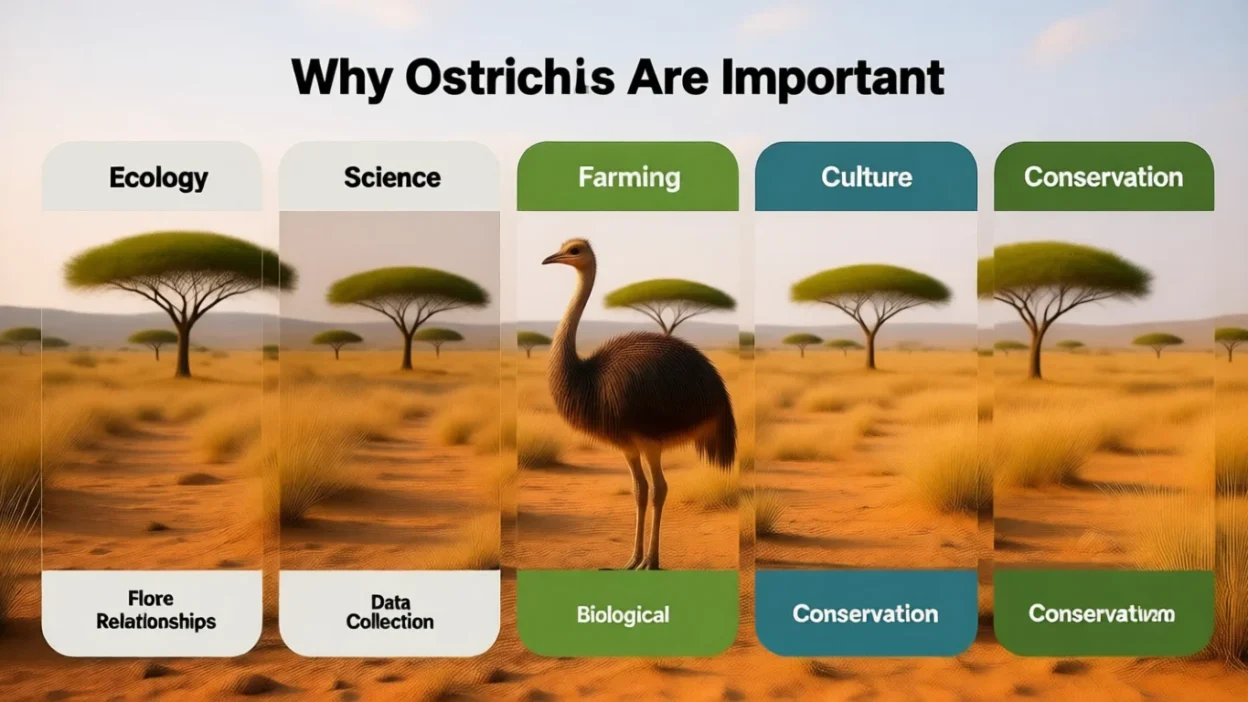
Ostriches are extraordinary birds known for their speed, strength, and unique biological features. Although they cannot fly, they play a crucial role in nature, agriculture, and human culture. Their behavior, physical traits, and ecological contributions make them one of the most fascinating and important birds on Earth.
Understanding why ostriches are important helps us appreciate their value for ecosystems, biodiversity, farming, economics, and scientific research. Here are 25 meaningful reasons that highlight their significance.
Support Ecosystem Balance
Ostriches help maintain the balance of grassland and savanna ecosystems by spreading seeds and feeding on excess vegetation.
Aid Plant Regeneration
Their digestive system breaks down seeds, allowing them to germinate more effectively after being dispersed.
Serve as Prey Indicators
Ostriches alert other animals to danger due to their excellent eyesight, helping maintain safety within their habitat.
Maintain Insect Populations
They consume insects, helping regulate populations and reducing the spread of pests.
Contribute to Soil Fertility
Their natural droppings enrich soil with organic nutrients, supporting plant growth.
Boost Biodiversity
By dispersing seeds and shaping vegetation, ostriches indirectly promote biodiversity within their environment.
Offer Valuable Research Insights
Scientists study ostriches for insights into evolution, bone structure, speed, and large-bird physiology.
Help Climate Adaptation Studies
Their ability to survive harsh climates helps researchers understand desert and savanna survival strategies.
Produce High-Quality Feathers
Ostrich feathers are used in fashion, cleaning tools, and decorative crafts due to their softness and durability.
Provide Nutritious Meat
Ostrich meat is high in protein, low in fat, and considered a healthy alternative to red meat.
Supply Durable Leather
Ostrich leather is known for its strength, flexibility, and distinctive pattern, making it valuable for luxury goods.
Support the Farming Industry
Ostrich farming contributes to livelihoods and rural economies through meat, leather, feathers, and eggs.
Produce Large and Strong Eggs
Ostrich eggs are nutritious, decorative, and culturally significant in many regions.
Promote Tourism
People visit wildlife reserves and ostrich farms, boosting ecotourism and economic development.
Inspire Cultural Symbolism
Ostriches appear in folklore, stories, and symbols representing speed, strength, and resilience.
Offer Educational Value
They teach students about evolution, bird anatomy, and adaptation, enriching wildlife education programs.
Strengthen Predator Populations
Young, sick, or weak ostriches serve as prey for predators, supporting the food chain naturally.
Enhance Genetic Diversity
Their survival and reproduction help maintain genetic diversity within bird populations.
Improve Grassland Health
By grazing and trampling vegetation, ostriches help shape the landscape and prevent overgrowth.
Encourage Scientific Curiosity
Their unique traits — long neck, fast running, large eyes — make them fascinating subjects for study.
Contribute to Traditional Craftsmanship
Their eggshells are used for carving, painting, and making cultural art pieces.
Support Local Economies
Many rural communities rely on ostrich products for income and trade.
Inspire Athletic Studies
Their incredible running speed inspires human athletic research, biomechanics, and sports training techniques.
Serve as Flagship Species
Ostriches represent African wildlife and help raise awareness about conservation efforts.
Promote Wildlife Conservation
Ostriches remind us of the importance of protecting natural habitats and preserving animal species.
Quick Table: Importance of Ostriches
| Area | Contribution | Example |
|---|---|---|
| Ecology | Seed dispersal | Maintaining grassland balance |
| Economy | Farming resources | Meat, feathers, leather |
| Science | Research insights | Physiology, speed, evolution |
| Culture | Symbolism & arts | Eggshell crafts |
| Conservation | Wildlife awareness | Habitat protection |
Idioms & Expressions Related to Ostriches / Birds
| Expression | Meaning | Example |
|---|---|---|
| Bury your head in the sand | Avoiding a problem | Don’t bury your head in the sand — solve the issue. |
| Spread your wings | Become independent | Students spread their wings after graduation. |
| Feather in your cap | A big achievement | Winning the award was a feather in her cap. |
| Birds of a feather | People who are alike | Friends often are birds of a feather. |
| Take flight | To start progressing | His career began to take flight after training. |
Real-Life Examples Showing Ostrich Importance
- African savannas rely on ostriches to spread seeds across large distances.
- Ostrich farms support thousands of jobs worldwide.
- Scientists use ostriches to study bone strength and running mechanics.
- Tourists visit Africa specifically to see ostriches in the wild.
- Cultural art made from ostrich eggshells preserves heritage in many regions.
FAQs About Ostriches
Q1: Why are ostriches important to the ecosystem?
They disperse seeds, regulate vegetation, and support biodiversity.
Q2: Why are ostriches farmed?
For meat, leather, feathers, and eggs, which are high-value products.
Q3: Are ostriches good for the economy?
Yes, they support tourism, farming, and local trade.
Q4: Why are ostriches studied by scientists?
Their speed, physiology, and climate adaptation provide valuable insights.
Q5: Are ostriches endangered?
Some subspecies are threatened due to habitat loss and hunting. Conservation efforts are important.
Conclusion
Ostriches are much more than large flightless birds — they are vital contributors to ecosystems, valuable resources for farming, and essential subjects for science and culture. Their presence enriches biodiversity, supports economies, and enhances understanding of wildlife and evolution.
From nature to industry, ostriches continue to play a meaningful role in sustaining life, knowledge, and culture across the world.

Bret Lee writes educational and research-based content for Whygenix.com, focused on clarity, accuracy, and explaining why concepts matter through simple, engaging, reader-friendly writing.