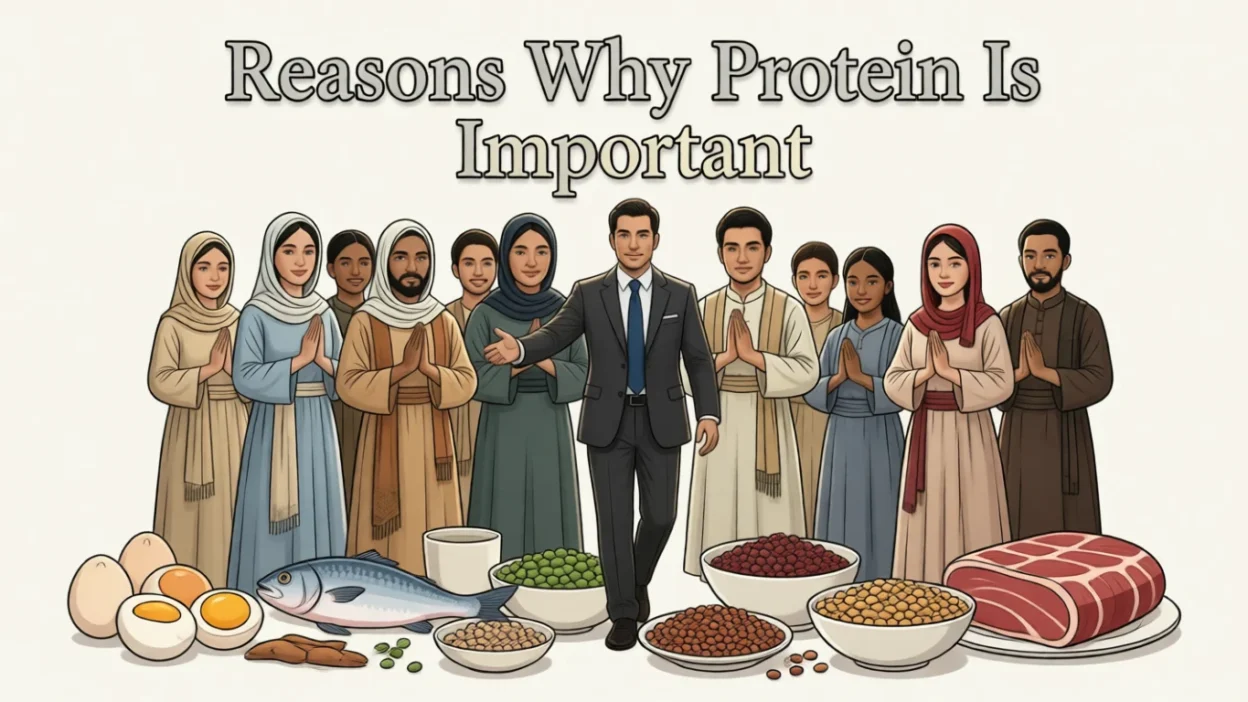
Protein is one of the three essential macronutrients, alongside carbohydrates and fats. It plays a central role in building, repairing, and maintaining the body.
From muscles and bones to hormones and enzymes, protein supports nearly every biological process.
Understanding the reasons why protein is important helps people make better dietary choices.
Whether you’re an athlete, a student, a growing child, or an older adult, protein is essential for strength, immunity, metabolism, and overall well-being.
Builds and Repairs Muscles
Protein repairs muscle tissue after activity.
Strength and recovery improve.
Supports Growth and Development
Protein is essential for children and teenagers.
Healthy growth is supported.
Maintains Body Tissues
Skin, hair, and nails rely on protein.
Physical appearance improves.
Boosts Immune System
Antibodies are made from protein.
Illness resistance increases.
Supports Enzyme Production
Enzymes help chemical reactions in the body.
Digestion and metabolism improve.
Helps Produce Hormones
Hormones regulate body functions.
Balance and stability improve.
Supports Healthy Metabolism
Protein increases calorie burning.
Energy use becomes efficient.
Helps with Weight Management
Protein keeps you full longer.
Overeating reduces.
Preserves Muscle Mass During Weight Loss
Protein prevents muscle breakdown.
Fat loss becomes healthier.
Improves Bone Health
Protein supports bone density.
Fracture risk reduces.
Enhances Muscle Strength
Adequate protein improves power.
Physical performance increases.
Supports Brain Function
Neurotransmitters need protein.
Focus and memory improve.
Promotes Faster Healing
Protein repairs damaged cells.
Wounds heal quicker.
Helps Regulate Blood Sugar
Protein slows sugar absorption.
Energy levels stabilize.
Supports Heart Health
Protein can improve cholesterol balance.
Cardiovascular health improves.
Improves Athletic Performance
Athletes rely on protein for recovery.
Training results improve.
Supports Healthy Aging
Protein prevents age-related muscle loss.
Mobility remains strong.
Aids in Nutrient Transport
Proteins carry vitamins and minerals.
Nutrient absorption improves.
Encourages Lean Body Composition
Protein supports muscle over fat.
Body composition improves.
Supports Digestive Health
Digestive enzymes rely on protein.
Gut function improves.
Reduces Cravings
Protein controls hunger hormones.
Snack urges decrease.
Improves Energy Levels
Balanced protein intake sustains energy.
Fatigue reduces.
Supports Healthy Pregnancy
Protein supports fetal development.
Maternal health improves.
Enhances Skin Health
Collagen and elastin need protein.
Skin remains firm.
Supports Hair Growth
Hair structure is protein-based.
Hair strength improves.
Helps Maintain Nitrogen Balance
Protein regulates body balance.
Muscle health remains stable.
Supports Overall Longevity
Protein contributes to healthy aging.
Life quality improves.
Summary Table: Why Protein Matters
| Area | Importance | Example |
|---|---|---|
| Muscles | Growth & repair | Strength training |
| Immunity | Defense | Antibodies |
| Metabolism | Energy use | Weight management |
| Bones | Density | Aging support |
| Brain | Focus | Neurotransmitters |
Idioms Related to Strength and Nutrition
| Idiom | Meaning | Example |
|---|---|---|
| Building block | Foundation | Protein builds muscle |
| Fuel the body | Provide energy | Protein intake |
| Strong as an ox | Very strong | Protein-rich diet |
| Power up | Gain strength | Eat protein |
| Backbone of health | Core support | Protein nutrition |
Real-Life Examples of Protein Importance
- Athletes building muscle
- Older people preventing muscle loss
- Children supporting growth
- Patients healing after surgery
- Individuals managing weight
FAQs
Q1: Why is protein important for the body?
Protein builds tissues, supports immunity, and fuels essential functions.
Q2: How much protein do people need daily?
Needs vary, but most adults require adequate daily intake based on body weight.
Q3: Is protein important for weight loss?
Yes, it promotes fullness and preserves muscle.
Q4: Can plant-based diets provide enough protein?
Yes, with balanced food choices.
Q5: Is protein important as we age?
Absolutely. It prevents muscle loss and supports mobility.
Final Thought
Protein is a cornerstone of good health. It supports strength, immunity, metabolism, and recovery at every stage of life.
By understanding the reasons why protein is important, people can make smarter nutrition choices that promote energy, resilience, and long-term well-being.

Sara Taylor is a content writer at Whygenix.com, creating clear, engaging articles that simplify complex ideas, helping readers understand the why behind topics in education, lifestyle, and personal development.