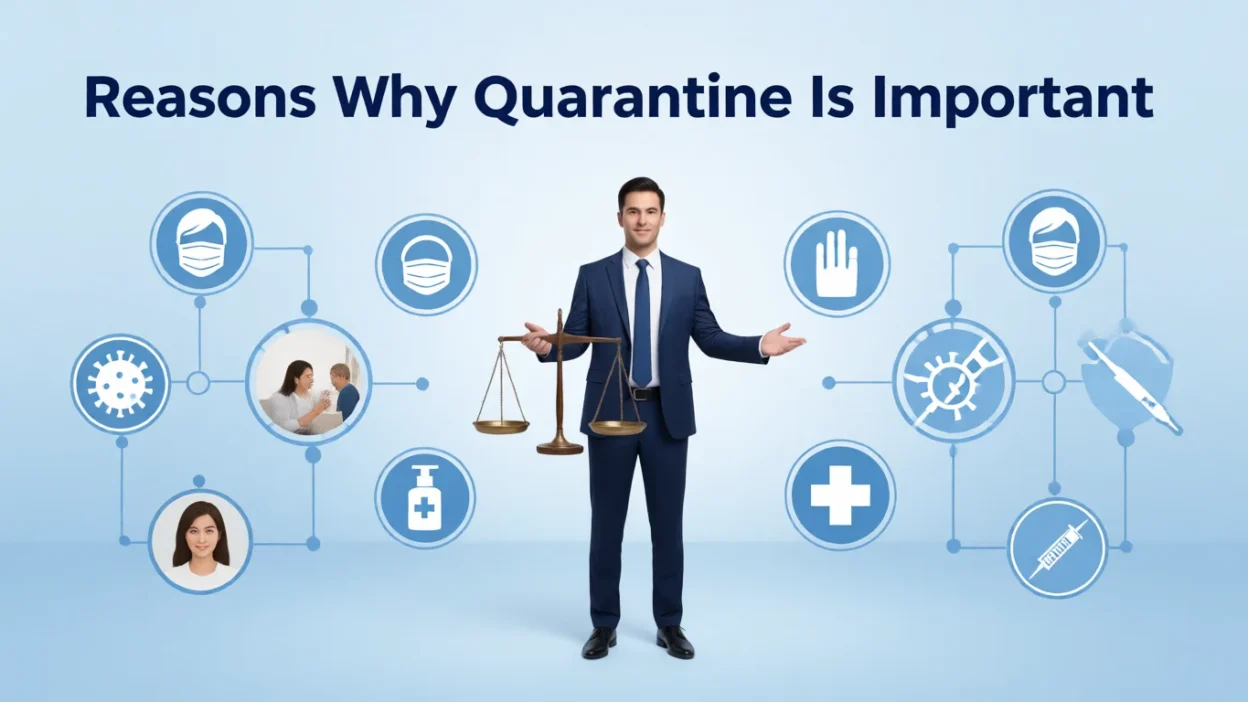
Quarantine is a public health measure used to prevent the spread of contagious diseases by separating individuals who may have been exposed to an infection.
Although quarantine can feel restrictive and challenging, it plays a critical role in protecting communities, healthcare systems, and vulnerable populations.
Throughout history, quarantine has helped control outbreaks and save lives. It reduces transmission, allows health authorities to respond effectively, and gives medical systems time to manage cases.
Understanding the reasons why quarantine is important helps people see it not as a punishment, but as a responsible and necessary action for collective safety.
Protects Public Health
Quarantine limits contact between infected and healthy individuals. This reduces the spread of disease. Public health outcomes improve significantly.
Prevents Disease Transmission
Separating exposed individuals breaks transmission chains. Fewer people become infected. Outbreaks are controlled faster.
Protects Vulnerable Populations
Older people individuals and those with weak immunity are protected. Quarantine reduces their exposure. Lives are safeguarded.
Reduces Pressure on Healthcare Systems
Slowing infection rates prevents hospitals from becoming overwhelmed. Medical staff manage cases better. Healthcare quality improves.
Buys Time for Medical Response
Quarantine allows time for diagnosis and treatment. Authorities prepare resources. Emergency planning improves.
Helps Identify Infected Individuals
Observation during quarantine reveals symptoms. Early detection becomes possible. Treatment begins sooner.
Limits Community Spread
Reduced movement slows disease spread. Communities remain safer. Infection clusters are controlled.
Supports Contact Tracing
Quarantine makes tracing contacts easier. Exposure chains are identified. Containment becomes effective.
Prevents New Outbreaks
Quarantine stops imported cases from spreading. New outbreaks are avoided. Community safety increases.
Protects Healthcare Workers
Reducing spread lowers risk for doctors and nurses. Healthcare workers stay safer. Workforce stability improves.
Allows Scientific Research
Quarantine periods help scientists study diseases. Data is collected safely. Better treatments develop.
Encourages Responsible Behavior
Quarantine promotes social responsibility. Individuals act for community welfare. Awareness increases.
Reduces Mortality Rates
Slower transmission leads to better care. Fatality rates decrease. Lives are saved.
Helps Governments Plan
Controlled spread allows effective planning. Resources are allocated wisely. Crisis management improves.
Supports Vaccination Efforts
Quarantine slows spread while vaccines are developed. Immunization strategies are prepared. Long-term protection improves.
Protects Essential Services
Quarantine keeps essential workers safer. Service disruption reduces. Societal functions continue.
Minimizes Economic Damage Long-Term
Short-term restrictions prevent larger shutdowns. Recovery becomes faster. Economic stability improves.
Reduces Panic and Fear
Clear quarantine measures provide structure. Public confidence increases. Fear decreases.
Encourages Hygiene Awareness
Quarantine reinforces hygiene practices. Health education spreads. Long-term habits improve.
Supports International Health Control
Quarantine limits cross-border spread. Global health risks reduce. International cooperation improves.
Improves Emergency Preparedness
Experience with quarantine strengthens readiness. Future outbreaks are managed better. Systems improve.
Protects Schools and Workplaces
Quarantine prevents mass exposure. Institutions remain safer. Learning and work continue with precautions.
Reduces Mutation Spread
Slower transmission reduces mutation chances. Virus control improves. Health risks decrease.
Saves Lives
Ultimately, quarantine prevents infections. Fewer people suffer severe illness. Lives are protected.
Builds Collective Responsibility
Quarantine emphasizes community care. Collective action strengthens society. Unity improves.
Supports Long-Term Health Security
Quarantine contributes to disease control strategies. Health systems become resilient. Security improves.
Summary Table: Why Quarantine Matters
| Area | Importance | Example |
|---|---|---|
| Public Health | Disease control | Reduced spread |
| Healthcare | Capacity protection | Hospital readiness |
| Safety | Vulnerable protection | older People safety |
| Economy | Long-term stability | Faster recovery |
| Society | Responsibility | Community care |
Idioms Related to Health and Prevention
| Idiom | Meaning | Example |
|---|---|---|
| Better safe than sorry | Prevention first | Quarantine helps |
| Break the chain | Stop spread | Isolation works |
| On the safe side | Extra caution | Health measures |
| Under control | Managed situation | Outbreak slowed |
| Take precautions | Prevent harm | Quarantine rules |
Real-Life Examples of Quarantine Importance
• Controlling viral outbreaks
• Protecting healthcare systems
• Reducing community transmission
• Allowing vaccine development
• Preventing international spread
FAQs
Q1: Why is quarantine important?
It prevents disease spread and protects public health.
Q2: Is quarantine effective?
Yes, it reduces transmission significantly.
Q3: Does quarantine protect healthcare systems?
Yes, it prevents overload.
Q4: Is quarantine temporary?
Yes, it is time-limited and preventive.
Q5: Does quarantine save lives?
Yes, by reducing exposure and spread.
Final Thought
Quarantine is one of the most effective tools for controlling infectious diseases and protecting communities.
While it may require personal sacrifice, its benefits extend far beyond individuals to entire societies. By slowing transmission, protecting vulnerable populations, and giving healthcare systems time to respond, quarantine saves lives and prevents greater harm.
Understanding its importance encourages cooperation, responsibility, and collective action during public health crises.

Sara Taylor is a content writer at Whygenix.com, creating clear, engaging articles that simplify complex ideas, helping readers understand the why behind topics in education, lifestyle, and personal development.