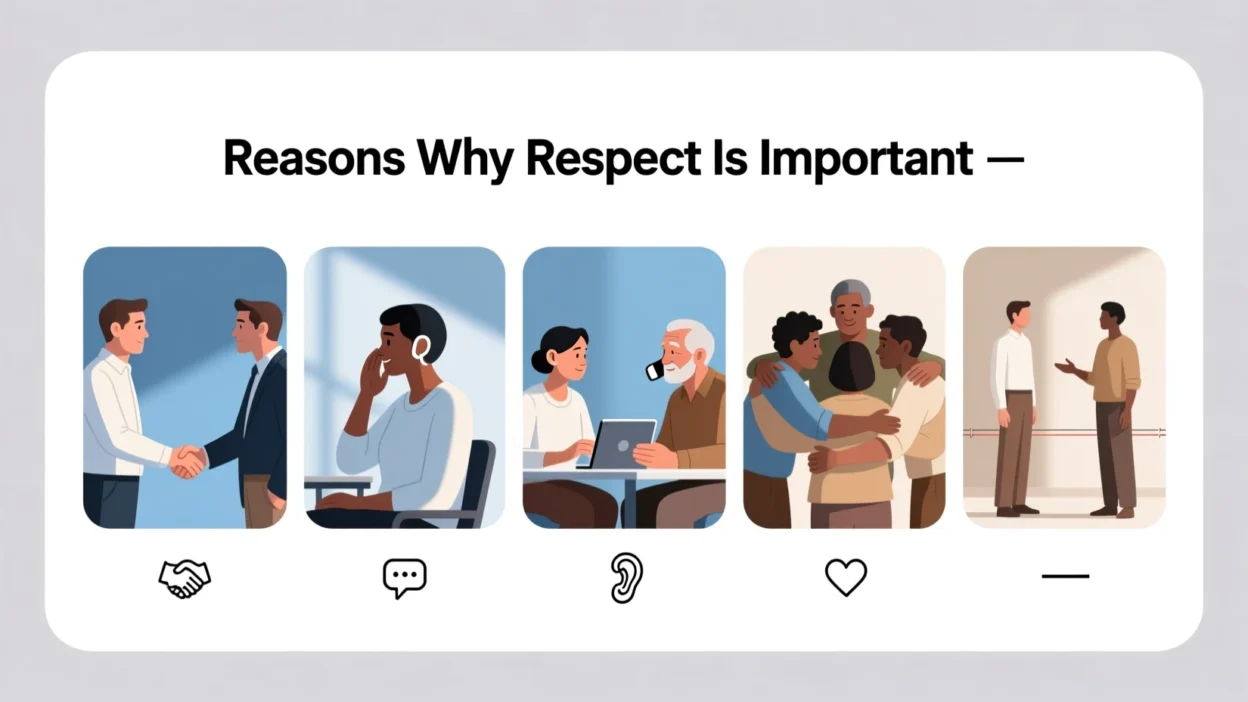
Respect is the foundation of healthy relationships, peaceful societies, personal growth, and effective communication. It builds trust, strengthens bonds, reduces conflict, and creates environments where people feel valued. Whether at home, school, work, or in the community — respect shapes how we treat others and how they treat us in return.
Here are 25 meaningful reasons why respect is important, explained in your clean, friendly, SEO-optimized style.
1. Builds Trust
Respect creates honesty, reliability, and confidence in relationships.
2. Strengthens Relationships
Families, friendships, and partnerships thrive when mutual respect is present.
3. Encourages Good Communication
Respectful conversations lead to clearer understanding and fewer arguments.
4. Reduces Conflicts
Respect helps people listen, tolerate, and resolve issues peacefully.
5. Promotes Emotional Safety
People open up more when they feel respected and not judged.
6. Improves Self-Esteem
Respect boosts confidence and personal identity.
7. Supports Teamwork
Groups work better when members treat each other respectfully.
8. Builds Positive Workplaces
Respect leads to productive, cooperative, and motivated teams.
9. Enhances Learning
Students learn more effectively in respectful environments.
10. Encourages Kindness
Respect inspires empathy and thoughtful behavior.
11. Strengthens Leadership
Great leaders earn respect and give respect to guide effectively.
12. Promotes Fairness
Respect ensures equal treatment without discrimination.
13. Helps Maintain Boundaries
Respecting boundaries prevents emotional and physical harm.
14. Reduces Bullying
Respect discourages harmful behavior and encourages inclusion.
15. Supports Cultural Harmony
Respecting differences strengthens diverse communities.
16. Improves Decision Making
Respect allows people to share ideas freely without fear.
17. Encourages Personal Growth
Respectful environments motivate individuals to improve themselves.
18. Builds Strong Communities
Communities thrive when people treat each other with dignity.
19. Promotes Peace
Respect reduces hostility and encourages harmony.
20. Creates Role Models
Respectful behavior teaches children how to treat others.
21. Strengthens Morals & Values
Respect reinforces honesty, integrity, and responsibility.
22. Improves Mental Health
Feeling respected lowers stress and improves emotional well-being.
23. Enhances Reputation
Respectful people gain trust, admiration, and loyalty.
24. Makes Collaboration Easier
Respect helps people work together despite differences.
25. Builds a Better Society
Respect is essential for justice, unity, and long-term social progress.
Summary Table: Why Respect Matters
| Category | Importance | Example |
|---|---|---|
| Relationships | Trust, communication, harmony | Families and friends getting along |
| Personal Growth | Confidence, learning, values | Students sharing ideas freely |
| Society | Peace, unity, fairness | Communities respecting each other’s rights |
| Workplace | Teamwork, productivity | Teams cooperating effectively |
| Mental Health | Emotional security, well-being | Respect reducing stress and conflict |
Idioms Related to Respect & Behavior
| Idiom | Meaning | Example |
|---|---|---|
| Earn someone’s respect | Gain admiration through actions | She worked hard and earned everyone’s respect. |
| Treat with kid gloves | Handle someone carefully | He treated the situation with kid gloves. |
| Hold in high regard | Deeply respect someone | The team holds their leader in high regard. |
| Give someone space | Respect boundaries | He gave her space when she needed time. |
| Walk the talk | Match actions with words | Respect is shown when you truly walk the talk. |
Real-Life Examples of Why Respect Is Important
- Workplaces with respect experience fewer conflicts and higher productivity.
- Students participate more confidently when teachers show respect.
- Families build stronger bonds when everyone listens and values each other.
- Communities stay peaceful when residents respect different cultures and beliefs.
- Leaders gain loyalty when they treat people with dignity.
FAQs
Q1: Why is respect important in relationships?
It builds trust, communication, and emotional security.
Q2: How does respect affect society?
Respect reduces conflict, encourages fairness, and promotes unity.
Q3: Can respect improve mental health?
Yes. Feeling respected boosts self-esteem and lowers stress.
Q4: Why is respect important at work?
It supports teamwork, cooperation, and productivity.
Q5: How can someone show respect?
By listening, valuing opinions, being polite, and respecting boundaries.
Conclusion
Respect is a basic human value that shapes how we live, work, and communicate. It builds trust, strengthens relationships, reduces conflict, and creates environments where people feel safe and valued.
When respect becomes a daily habit, individuals grow, communities improve, and societies become more peaceful and just. Respect isn’t just a behavior — it’s the foundation of a better world.

Sara Taylor is a content writer at Whygenix.com, creating clear, engaging articles that simplify complex ideas, helping readers understand the why behind topics in education, lifestyle, and personal development.