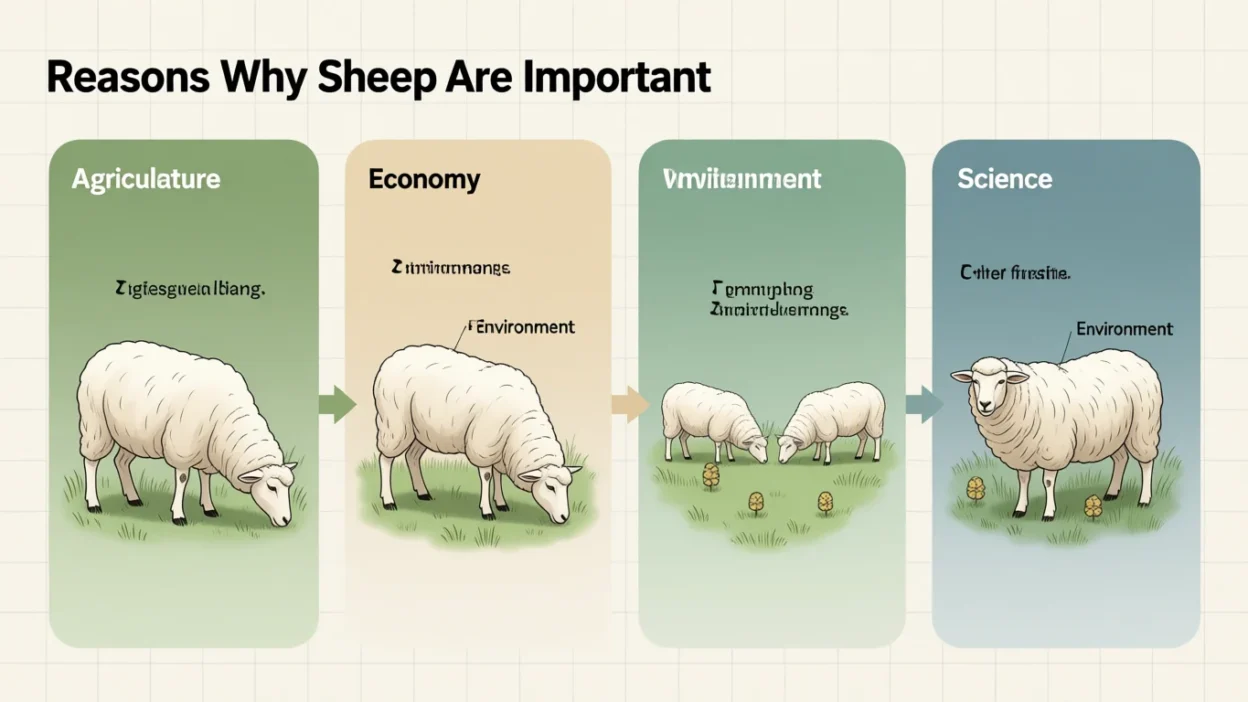
Sheep are gentle, valuable animals that have supported human life for thousands of years. From providing wool, milk, and meat to maintaining ecosystems, these humble grazers play an essential role in agriculture, culture, and the environment.
Many people see sheep as simple farm animals, but in reality, they’re crucial to food production, land management, and even scientific research.
Here are 25+ reasons why sheep are important for humans and nature.
Sheep Provide Wool
Wool is one of the oldest natural fibers used by humans. It’s warm, durable, renewable, and biodegradable — making it perfect for clothing, blankets, and carpets.
They Supply Meat
Sheep provide lamb and mutton, both rich sources of protein, vitamins, and minerals essential for human health.
Sheep Produce Milk
Sheep milk is nutritious and often used to make cheese, yogurt, and butter. Breeds like Awassi and East Friesian are known for high milk production.
They Support the Leather Industry
Sheepskin is used for making gloves, jackets, shoes, and furniture. It’s soft, strong, and long-lasting.
Sheep Help in Land Management
Grazing sheep help control weeds and overgrowth naturally, reducing the need for chemical herbicides.
They Prevent Wildfires
By eating dry grass and shrubs, sheep help lower wildfire risks in grassland and forest regions.
Sheep Enrich the Soil
Their manure acts as an organic fertilizer that improves soil fertility and crop productivity.
They Support Sustainable Agriculture
Sheep farming is eco-friendly and often practiced alongside crop farming for a balanced ecosystem.
Sheep Are Important for Rural Economies
In many regions, sheep farming provides income and employment to thousands of rural families.
They Are Used in Scientific Research
Sheep are studied in genetics, medicine, and biology due to their physiological similarity to humans. The first cloned animal, Dolly the sheep, revolutionized science.
Sheep Help Maintain Biodiversity
By grazing, sheep help preserve open habitats that support various plants, birds, and insects.
They Are Easy to Manage
Sheep are gentle, social animals that adapt well to different climates, making them ideal for small and large farms alike.
Sheep Contribute to Cultural Traditions
In many countries, sheep hold cultural and religious significance, especially during festivals and celebrations.
They Produce Lanolin
Sheep’s wool secretes lanolin, a natural oil widely used in skincare and cosmetics for moisturizing and protection.
Sheep Support the Textile Industry
From fine Merino wool to heavy-grade carpet wool, sheep fibers support global fashion and home furnishing industries.
They Provide Educational Value
Sheep are often used in agricultural schools and exhibitions to teach animal husbandry and farm management.
Sheep Improve Pasture Health
Rotational grazing of sheep helps regenerate grasslands and prevent overgrazing.
They Contribute to Carbon Sequestration
Healthy pastures maintained by grazing sheep can trap carbon in the soil, helping combat climate change.
Sheep Are Part of Many Ecosystems
They play an ecological role in grassland management and help maintain natural cycles.
Sheep Are Symbols of Peace and Purity
Across cultures, sheep symbolize innocence, humility, and gentleness, often featured in art and literature.
Sheep Aid in Economic Diversification
Farmers can profit from multiple products — wool, milk, meat, lanolin, and manure — making sheep highly versatile.
They Require Minimal Infrastructure
Sheep farming needs less space and equipment compared to larger livestock like cattle, making it affordable for smallholders.
Sheep Can Survive in Harsh Climates
From cold mountains to dry plains, sheep thrive in diverse environments due to their resilient nature.
They Inspire Innovation in Science
Sheep research has contributed to breakthroughs in cloning, genetics, and medical implants using sheep tissue.
Sheep Strengthen Community Farming
Cooperative sheep herding and wool production create shared community benefits and local trade opportunities.
They Promote Organic Farming Practices
Sheep farming aligns naturally with organic principles — low chemical use, renewable resources, and sustainable grazing.
Quick Table: Major Benefits of Sheep
| Category | Contribution | Example |
|---|---|---|
| Economic | Wool, meat, milk, lanolin | Supports rural livelihoods |
| Environmental | Weed control, soil health | Prevents land degradation |
| Scientific | Genetic research, cloning | Advances in biotechnology |
| Cultural | Festivals, symbols | Important in global traditions |
| Agricultural | Grazing, fertilizing | Enhances farm productivity |
Common Idioms and Sayings About Sheep
| Idiom or Saying | Meaning | Example |
|---|---|---|
| “Black sheep” | An outcast or unique person | He’s the black sheep of the family. |
| “Like a lamb to the slaughter” | Going into danger unaware | They followed the plan like lambs to the slaughter. |
| “Count sheep” | Try to sleep | I counted sheep until I fell asleep. |
| “Sheepish smile” | Shy or embarrassed expression | He gave a sheepish smile after the mistake. |
| “Follow like sheep” | Follow others blindly | They followed the trend like sheep. |
FAQs About Sheep
Q1: Why are sheep so important to humans?
Sheep provide essential resources like wool, meat, milk, and help maintain environmental balance.
Q2: What are the main products we get from sheep?
Wool, milk, meat, lanolin, and leather.
Q3: How do sheep help the environment?
They control weeds, enrich soil, and reduce wildfire risks through natural grazing.
Q4: Are sheep good for small farms?
Yes, they’re low-maintenance, adaptable, and ideal for small-scale farming.
Q5: Why is wool sustainable?
Wool is biodegradable, renewable, and long-lasting — unlike synthetic fibers that harm the environment.
Conclusion
Sheep are vital not only for farming but for the entire planet. They support ecosystems, contribute to science, and sustain millions of livelihoods. Their wool keeps us warm, their milk nourishes us, and their grazing nurtures the land.
Understanding their significance reminds us that every bleat in the field represents centuries of partnership between humans and nature.
Caring for sheep means caring for sustainability, tradition, and progress all at once.

Jozaf Jo is a content writer at Whygenix.com, crafting clear, engaging articles that simplify complex ideas, helping readers understand the why behind topics in education, lifestyle, and personal growth.