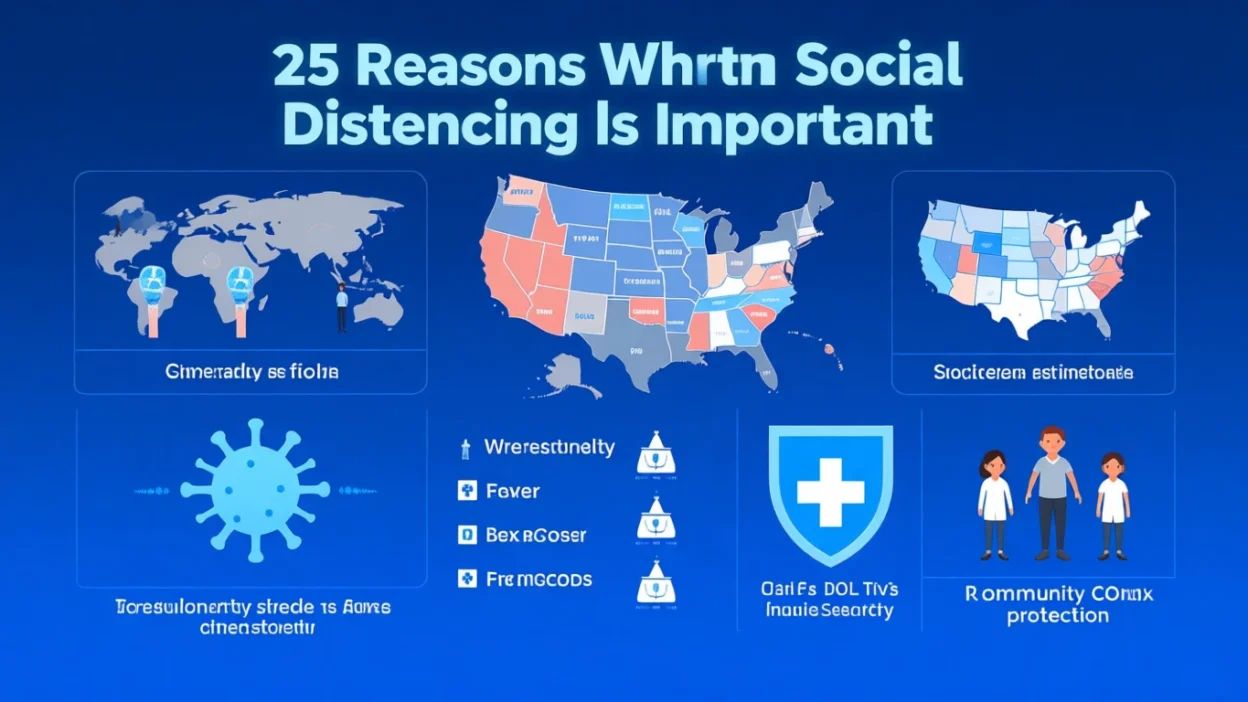
Social distancing became a global concept during major disease outbreaks, especially during COVID-19. It simply means keeping a safe physical distance from others to reduce the spread of infections.
While it may seem like a small change in daily behavior, social distancing plays a massive role in protecting public health, supporting healthcare systems, and slowing down contagious diseases.
Here are 25 important reasons why social distancing matters and why it remains a valuable practice during outbreaks.
Reduces the Spread of Viruses
Keeping distance slows down person-to-person transmission, especially for airborne and droplet-based illnesses.
Protects High-Risk Individuals
People with weak immune systems, chronic diseases, or older age benefit greatly from fewer exposure opportunities.
Prevents Hospitals From Overcrowding
Fewer infections mean healthcare systems can treat patients more effectively without being overwhelmed.
Slows Down Outbreaks
Distancing helps flatten the curve, allowing time for medical interventions and strategic planning.
Lowers Daily Contact Rate
Reduced physical interaction decreases opportunities for harmful pathogens to spread.
Supports Public Health Measures
Social distancing works alongside masks, hygiene, and vaccination to create a stronger line of protection.
Helps Avoid Large Community Transmission
When large gatherings are minimized, diseases cannot spread rapidly across communities.
Reduces Asymptomatic Spread
Many people may carry infections without symptoms; distancing limits their reach.
Protects Essential Workers
Workers in healthcare, transportation, and food services face fewer risks when the public reduces contact.
Allows Time for Vaccine Development
Slowing spread buys time for research, trials, and safe vaccine rollout.
Keeps Schools and Workplaces Safer
Distancing helps maintain safer environments during outbreaks, reducing closures.
Encourages Personal Space Awareness
People become more mindful of cleanliness, contact, and health behaviors.
Minimizes Economic Disruption
While distancing affects the economy, uncontrolled outbreaks cause even more severe economic damage.
Reduces Stress on Healthcare Supplies
Protective gear, medication, and beds remain available when cases stay manageable.
Lowers Mortality Rates
Fewer infections mean fewer severe cases, hospitalizations, and deaths.
Protects Against New Variants
Social distancing reduces chances for viruses to mutate by limiting their spread.
Encourages Responsible Behavior
It shows community responsibility and care for others’ health.
Helps Government Agencies Respond
Officials gain time to plan lockdowns, testing, and treatment strategies.
Offers Psychological Reassurance
People feel safer knowing others respect distancing guidelines.
Reduces Burden on Caregivers
Family members caring for high-risk relatives face fewer exposure risks.
Keeps Public Transport Safer
Fewer passengers reduce the risk of viral spread in buses, trains, and taxis.
Supports Remote Work Systems
Distancing policies encourage innovation in remote work, saving time and travel costs.
Enhances Disease Tracking
Lower case numbers make testing and tracing more effective and accurate.
Prevents Reinfection Waves
Distancing can help stop recurring outbreaks and seasonal surges.
Protects the Entire Community
When people practice distancing, the collective benefit becomes stronger, safeguarding society as a whole.
Summary Table: Why Social Distancing Matters
| Category | Importance | Example |
|---|---|---|
| Health | Reduces infection rates | Fewer sick individuals in communities |
| Safety | Protects vulnerable groups | Elderly and immunocompromised individuals |
| Healthcare | Prevents hospital overload | Available beds and resources |
| Society | Slows outbreaks | Controlled spread |
| Economy | Limits long-term damage | Fewer disruptions to businesses |
Common Idioms Related to Safety and Health
| Idiom | Meaning | Example |
|---|---|---|
| Better safe than sorry | Being cautious prevents harm | Social distancing follows the “better safe than sorry” mindset. |
| In the clear | Safe from danger | After distancing, the region was finally in the clear. |
| A wake-up call | An important warning | The outbreak was a wake-up call to improve hygiene. |
| Play it safe | Take precautions | Many chose to play it safe and avoid large gatherings. |
| On the safe side | Extra careful | Stay on the safe side and keep your distance. |
Real-Life Examples of Social Distancing
- Governments limited large gatherings to reduce rapid transmission.
- Hospitals reported lower infection rates when distancing rules were implemented.
- Schools that practiced distancing experienced fewer outbreaks.
- Workplaces adopted hybrid systems to avoid close contact.
- Public transport introduced spacing rules to protect passengers.
FAQs
Q1: What is the purpose of social distancing?
To reduce the spread of contagious diseases and protect public health.
Q2: Does social distancing really work?
Yes. Studies show it significantly lowers transmission rates.
Q3: Who benefits the most from social distancing?
Older adults, immunocompromised individuals, and people with chronic illnesses.
Q4: When should social distancing be practiced?
During outbreaks, pandemics, seasonal waves, or when illness spreads quickly.
Q5: Is social distancing still important today?
Yes, especially during disease spikes or in crowded environments.
Conclusion
Social distancing plays a vital role in controlling infectious diseases and protecting communities. It reduces spread, prevents hospital overload, protects vulnerable groups, and slows down outbreaks. Even small actions—keeping distance, avoiding large crowds, and staying aware—can make a major difference in public health.
Understanding why social distancing is important helps individuals make responsible decisions that benefit everyone.

Joy Root is a content writer at Whygenix.com, creating clear, engaging articles that explain complex ideas simply, helping readers understand why topics matter in everyday life and personal growth.