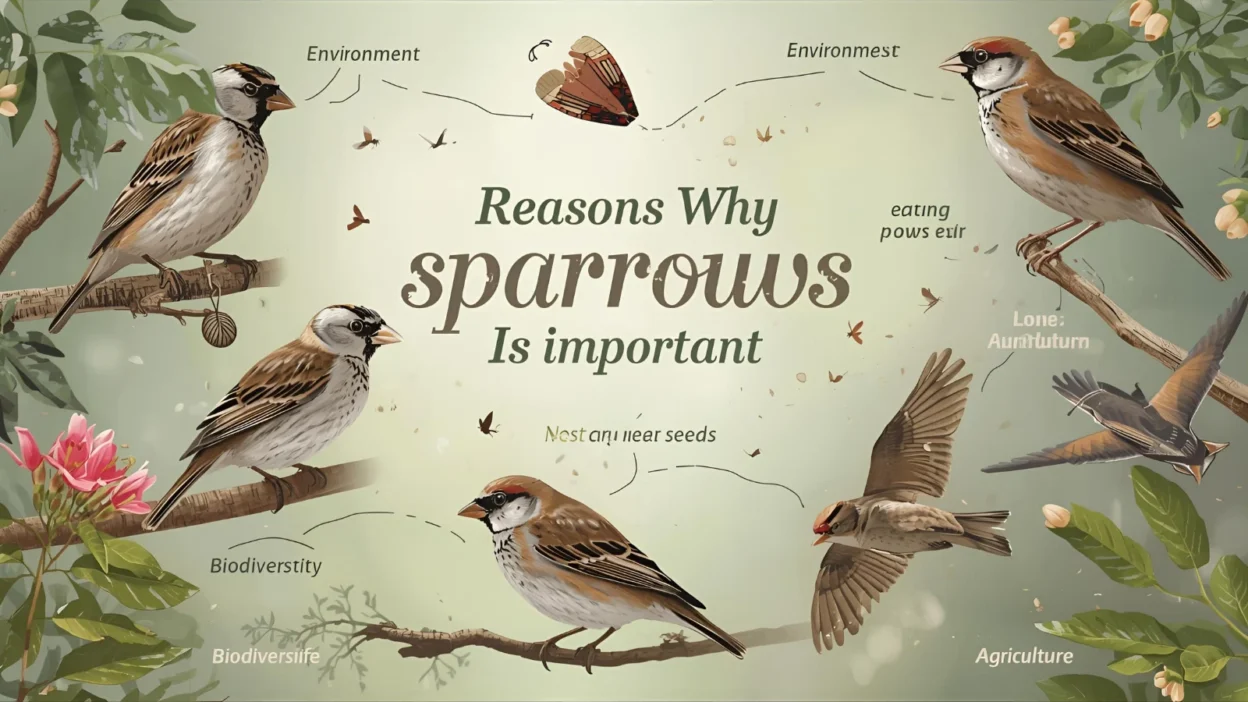
Sparrows may look small and ordinary, but their importance is extraordinary. These tiny birds contribute to ecosystems, agriculture, culture, and even human well-being in countless ways. They live close to us, share our spaces, and quietly support environmental balance every single day.
Here are 25+ detailed reasons why sparrows are important and why protecting them matters.
Sparrows Control Insects Naturally
Sparrows eat large quantities of insects—especially pests like caterpillars, beetles, and aphids. This natural pest control protects crops and gardens.
Example: A sparrow colony can eliminate thousands of insects during a single breeding season.
They Help Maintain Ecological Balance
Sparrows are part of the food chain, serving as prey for owls, hawks, and other predators. Their presence keeps ecosystems functioning smoothly.
Sparrows Protect Crops from Damage
By feeding on crop-eating insects, sparrows indirectly increase agricultural productivity. Farmers have relied on sparrows for natural pest regulation for centuries.
They Help Disperse Seeds
Sparrows eat seeds and unintentionally spread them, contributing to plant growth and vegetation recovery.
Sparrows Promote Plant Diversity
Because they feed on a wide range of seeds, they help maintain biodiversity in urban and rural environments.
They Are Indicators of Environmental Health
A decline in sparrow populations usually signals pollution, habitat loss, or changes in climate. Their presence reflects environmental stability.
Sparrows Clean Up Food Waste
These birds feed on crumbs, grains, and leftovers, helping reduce organic waste around human settlements.
They Thrive in Urban Areas
Few birds adapt to cities as well as sparrows. Their ability to live alongside humans shows how nature can coexist with urban development.
Sparrows Provide Educational Value
Teachers and researchers often use sparrows to teach ecology, bird behavior, and environmental conservation.
They Support the Food Chain
Sparrows serve as food for larger birds, mammals, and reptiles. Their role strengthens the balance of predator-prey relationships.
Sparrows Help with Pollination
Though not major pollinators, some sparrows occasionally feed on nectar and contribute to pollination in gardens.
They Add Life and Sound to Human Spaces
Their chirping brings natural soundscapes to neighborhoods, parks, and cities, reducing stress and improving well-being.
Sparrows Inspire Art and Literature
From poetry to paintings, sparrows appear in countless works symbolizing simplicity, hope, and resilience.
They Teach Cooperative Behavior
Sparrows share food sources and warn each other of danger. Their teamwork provides insights into social animal behavior.
Sparrows Are Culturally Significant
In many cultures, sparrows represent community, protection, and good luck. Their presence is associated with harmony and home.
They Help Control Weed Seeds
Sparrows feed on weed seeds, reducing the spread of unwanted plants.
Sparrows Support Biodiversity in Cities
Urban biodiversity depends heavily on small birds. Sparrows help maintain balance within city habitats.
They Encourage Birdwatching and Nature Awareness
For many people, sparrows are the first birds they learn to identify. They spark interest in wildlife and conservation.
Sparrows Strengthen Soil Health
Their droppings enrich the soil with natural nutrients that help plants grow.
They Adapt Easily to Changing Environments
Their resilience helps ecosystems remain stable even when other species struggle.
Sparrows Reduce Mosquito Populations
By eating mosquito larvae and insects, sparrows indirectly contribute to reducing mosquito-related diseases.
They Build Nests That Benefit Other Species
Once abandoned, sparrow nests become homes for small insects or other birds.
Sparrows Help Scientists Study Urban Wildlife
Researchers use sparrows to understand how animals adapt to pollution, noise, and temperature changes.
Sparrows Are Symbols of Hope and Survival
Historically, sparrows have been viewed as birds of endurance, adapting through wars, seasons, and urbanization.
They Strengthen Community Conservation Efforts
Because sparrows are widely loved, they often spark campaigns for bird feeders, green spaces, and pollution reduction.
Quick Table: What Sparrows Contribute
| Contribution | Impact | Example |
|---|---|---|
| Insect control | Protects crops | Eating caterpillars and beetles |
| Seed dispersal | Helps plant growth | Dropping seeds in new areas |
| Environmental indicator | Shows habitat health | Decline warns of pollution |
| Soil enrichment | Supports vegetation | Natural fertilizer |
| Biodiversity support | Strengthens ecosystems | Food for larger animals |
Idioms and Expressions Related to Sparrows
| Expression | Meaning | Example |
|---|---|---|
| A little bird told me | Secret source | A little bird told me you’re moving soon. |
| Sparrow-like | Small and quick | Her movements were light and sparrow-like. |
| Eat like a bird | Eat very little | She eats like a bird during the week. |
| Bird’s-eye view | See from above | The map gives a bird’s-eye view of the town. |
FAQs About Sparrows
Q1: Why are sparrows disappearing in some cities?
Because of pollution, lack of nesting spaces, pesticides, and reduced green areas.
Q2: How can we help sparrows return?
Provide bird feeders, water bowls, nesting boxes, and avoid harmful chemicals.
Q3: Do sparrows help the environment?
Yes. They control insects, disperse seeds, and maintain ecological balance.
Q4: Are sparrows harmful to crops?
No. They mostly eat insects and weed seeds that damage crops.
Q5: Why are sparrows important to urban biodiversity?
They fill ecological roles that few other species can perform in cities.
Conclusion
Sparrows may be small, but their contribution to the world is huge. From controlling insects to supporting plant growth, enriching soil, and maintaining biodiversity, they play a vital role in nature and in our daily surroundings. Their presence reflects the health of our environment, and their decline signals trouble.
Protecting sparrows means protecting our shared natural future. By creating safe spaces, avoiding chemicals, and embracing greener living, we help these remarkable birds continue to thrive.
Sparrows remind us that even the smallest creatures can have a powerful impact on the world.

Joy Root is a content writer at Whygenix.com, creating clear, engaging articles that explain complex ideas simply, helping readers understand why topics matter in everyday life and personal growth.