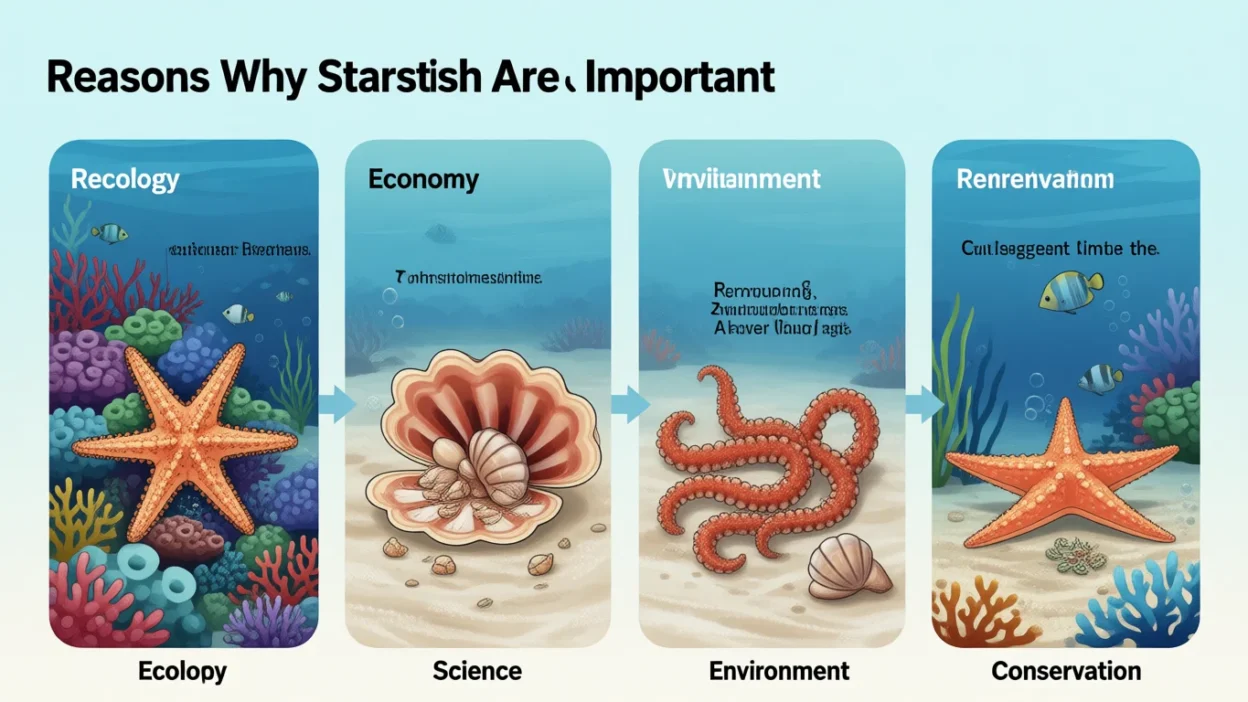
Starfish, also known as sea stars, are some of the most fascinating creatures in the ocean. Despite their simple, symmetrical shape, these marine animals play a complex and vital role in maintaining the health of coastal ecosystems.
With over 2,000 known species living in oceans around the world, starfish help regulate marine life, support biodiversity, and serve as indicators of ocean health. Here are 25+ reasons why starfish are important for nature, science, and the environment.
They Maintain Marine Ecosystem Balance
Starfish help control the population of other marine animals, especially mussels and clams, preventing overpopulation in reef systems.
Starfish Are Keystone Species
In many coastal ecosystems, starfish act as keystone predators. Their feeding activity maintains ecological balance by allowing other species to thrive.
They Support Coral Reef Health
By eating algae and small invertebrates that compete with corals, certain starfish species help coral reefs stay healthy and vibrant.
Starfish Promote Biodiversity
Through predation, they create space for new species to grow, increasing the variety of marine life in an area.
They Are a Food Source for Other Marine Animals
Fish, sea otters, and seagulls often feed on starfish, making them an important link in the marine food chain.
Starfish Indicate Ocean Health
Scientists use starfish populations to study changes in water temperature, pollution, and ecosystem health. A sudden decline often signals environmental imbalance.
They Help in Scientific Research
Starfish are studied in developmental biology and regeneration research because they can regrow lost limbs — even entire bodies in some cases.
Starfish Contribute to Medical Science
Research on starfish cells and regeneration helps scientists explore possibilities in tissue repair, healing, and limb regeneration in humans.
They Clean the Ocean Floor
Starfish feed on dead organisms and decaying matter, helping to naturally clean the seabed and recycle nutrients.
Starfish Prevent Overgrowth of Mollusks
By feeding on mussels and oysters, they prevent these populations from overrunning coral reefs and rocky shores.
They Support Coastal Ecosystem Stability
Healthy starfish populations maintain the balance between predator and prey species along coastlines, ensuring stable marine environments.
Starfish Help in Nutrient Cycling
By consuming dead matter and prey, they help recycle nutrients back into the ecosystem, enriching marine life.
They Are Vital for Educational Studies
Marine biologists and students use starfish to understand anatomy, regeneration, and marine adaptation — making them key for ocean education.
Starfish Inspire Marine Biotechnology
Their unique immune system and regeneration ability are helping researchers develop new biomedical and bioengineering applications.
They Attract Marine Tourism
Starfish are visually striking creatures that attract divers, photographers, and tourists, supporting eco-tourism industries worldwide.
They Represent Marine Beauty and Diversity
Their varied colors, shapes, and patterns symbolize the aesthetic richness and diversity of the ocean.
Starfish Are Important in Marine Food Webs
They regulate populations of smaller species while also serving as prey for larger predators, maintaining the natural balance of energy flow.
They Reflect Climate Change Effects
Changes in starfish numbers or behavior often indicate shifts in water temperature, acidity, or pollution — valuable data for climate scientists.
Starfish Are Natural Recyclers
They feed on leftover organic material, helping decompose waste in marine environments naturally.
They Strengthen Coral and Seagrass Habitats
By controlling competing species, they help preserve spaces for coral growth and seagrass expansion.
Starfish Support Oceanic Research Programs
Their study provides insights into evolutionary biology, cell division, and environmental adaptation — essential for marine science advancement.
They Are Culturally Symbolic
Starfish often symbolize renewal, healing, and guidance in literature and art — connecting human creativity with marine life.
Starfish Encourage Environmental Awareness
Their beauty and fragility remind us of the need to protect oceans from pollution, overfishing, and climate change.
They Regulate Detritus Levels
By consuming decomposing materials, starfish prevent excess organic buildup on the ocean floor.
Starfish Showcase Adaptation and Resilience
They survive in varying environments — from tropical reefs to cold ocean floors — demonstrating evolutionary adaptability.
They Inspire Ocean Conservation Efforts
Because starfish populations are sensitive to environmental change, their study motivates conservation projects worldwide.
Quick Table: Importance of Starfish
| Category | Contribution | Example |
|---|---|---|
| Ecological | Maintain marine balance | Control mollusk populations |
| Scientific | Regeneration and biology research | Medical tissue studies |
| Environmental | Ocean cleaning and nutrient cycling | Natural waste recycling |
| Educational | Marine learning and awareness | Ocean biology studies |
| Economic | Supports eco-tourism | Diving and marine photography |
Common Idioms and Symbolic Meanings Related to Starfish
| Phrase or Symbol | Meaning | Example |
|---|---|---|
| “Star of the sea” | Symbol of guidance or protection | Sailors viewed starfish as good luck charms. |
| “Like a starfish” | Ability to regrow or recover | She rebuilt her life like a starfish regrowing a limb. |
| “Reach for the stars” | Strive for success | His resilience was as steady as a starfish clinging to rock. |
FAQs About Starfish
Q1: Why are starfish so important to the ocean?
They regulate marine populations, recycle nutrients, and indicate the health of ecosystems.
Q2: Can starfish regrow their limbs?
Yes, many starfish can regenerate lost arms — some can even regrow their entire body from one limb.
Q3: What do starfish eat?
They feed on clams, mussels, coral, and decomposing organisms on the sea floor.
Q4: How do starfish affect coral reefs?
Most species protect corals by eating algae and small invertebrates, though some, like crown-of-thorns starfish, can damage reefs if populations grow too large.
Q5: Are starfish good indicators of climate change?
Yes. Their sensitivity to temperature, pollution, and acidity makes them valuable for tracking environmental change.
Conclusion
Starfish may look simple, but they’re among the most ecologically important creatures in the ocean. They keep marine life in balance, clean the ocean floor, support coral reefs, and contribute to vital scientific discoveries.
Beyond their biological value, they remind us of nature’s resilience — the power to regenerate and restore balance even in changing times. Protecting starfish means protecting the health of the seas and the future of our planet’s biodiversity.

Sara Taylor is a content writer at Whygenix.com, creating clear, engaging articles that simplify complex ideas, helping readers understand the why behind topics in education, lifestyle, and personal development.