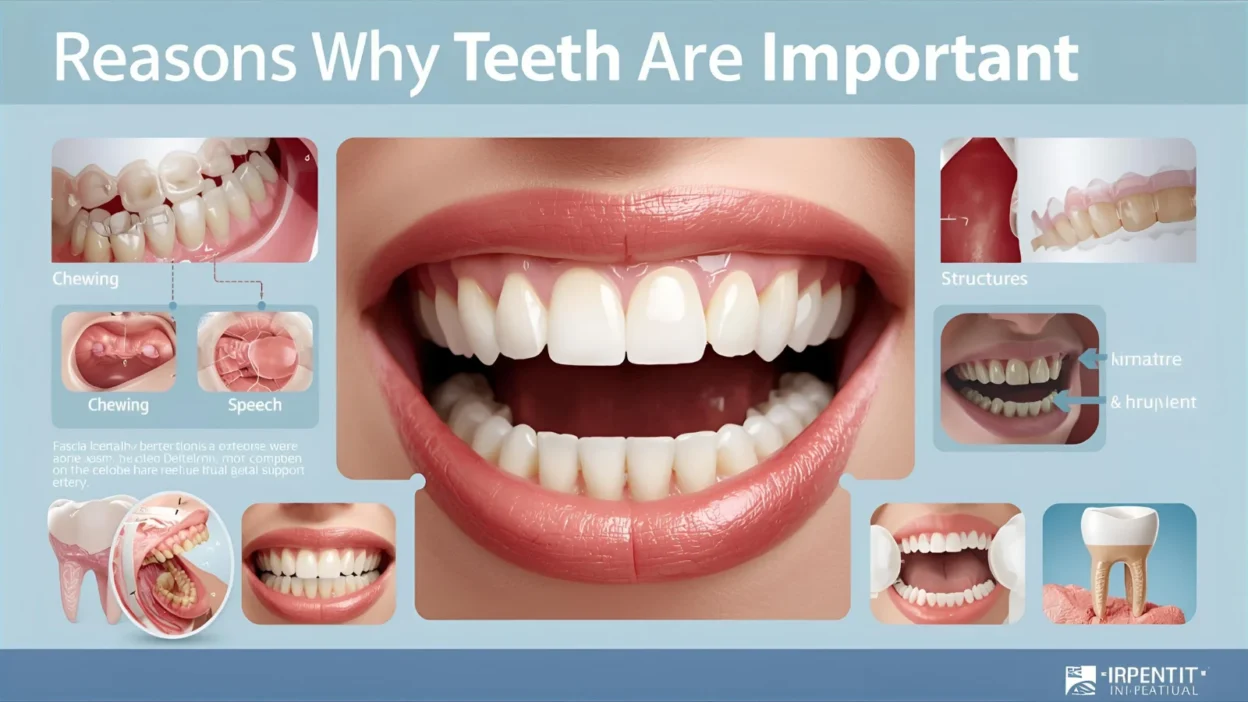
Teeth are one of the most essential yet often overlooked parts of the human body. Beyond just chewing, they support speech, confidence, facial structure, and overall health. Strong, healthy teeth help you eat properly, speak clearly, and smile confidently. Poor dental health, on the other hand, can lead to infections, pain, and even heart-related illnesses.
Here are 25+ detailed reasons why teeth are important for overall well-being, daily life, and long-term health.
Teeth Help Chew and Break Down Food
Teeth start the digestive process by breaking food into smaller pieces, making it easier to swallow and digest. Without proper chewing, the stomach has to work much harder.
They Support Clear Speech
Many sounds, such as “t,” “f,” “v,” and “s,” require teeth to be pronounced correctly. Missing or damaged teeth can affect pronunciation and clarity.
Teeth Maintain Facial Shape
Teeth act as internal support for cheeks and lips. When teeth are missing, the face can appear sunken or aged.
They Boost Confidence
A clean, healthy smile enhances self-esteem in social and professional settings. People with healthy teeth generally feel more confident interacting with others.
Teeth Help Prevent Bone Loss
Teeth stimulate the jawbone. When teeth fall out, the jawbone can weaken or shrink due to lack of stimulation.
They Improve Digestion
Proper chewing helps food break down more efficiently, allowing nutrients to be absorbed better in the digestive system.
Teeth Aid in Breaking Down Tough Foods
Hard foods like nuts, raw vegetables, and meat require strong teeth. Without them, your diet becomes limited.
Teeth Help in Emotional Expression
Smiling, laughing, and even showing surprise are all enhanced by visible, expressive teeth. They play a major role in nonverbal communication.
They Prevent Infections
Healthy teeth and gums act as a barrier against harmful bacteria. Poor oral hygiene can allow infections to enter the bloodstream.
Teeth Support Proper Bite Alignment
Well-aligned teeth ensure that pressure is evenly distributed when chewing, preventing jaw pain and headaches.
They Reduce Risk of Systemic Diseases
Poor dental health is linked to heart disease, diabetes complications, and respiratory infections. Healthy teeth support overall health.
Teeth Make Eating Enjoyable
Crunching an apple, chewing steak, or enjoying crispy snacks depends on strong teeth. They improve the texture and pleasure of eating.
They Enhance First Impressions
A bright, healthy smile is one of the first things people notice. Teeth influence how others perceive you.
Teeth Are Essential for Children’s Development
In children, baby teeth guide permanent teeth into correct positions, supporting proper jaw development.
They Help Maintain Cleanliness in the Mouth
Teeth help remove food particles naturally as we chew, reducing the amount of leftover debris.
Teeth Reduce Strain on the Digestive System
Well-chewed food prevents stomach discomfort, bloating, and indigestion.
They Aid in Stronger Vocabulary
Teeth help produce sounds that build proper language skills, especially in early childhood.
They Prevent Jaw Joint Problems
Balanced teeth reduce stress on the temporomandibular joint (TMJ), preventing jaw pain and clicking.
Teeth Provide Structural Strength to the Mouth
Without teeth, the mouth loses stability, affecting chewing, speaking, and facial comfort.
They Support Healthy Eating Habits
People with healthy teeth are more likely to eat balanced diets that include fruits, vegetables, and protein-rich foods.
They Reduce Bad Breath
Healthy teeth and gums prevent the buildup of sulfur-producing bacteria that cause bad breath.
Teeth Help Identify Health Problems Early
Dentists often detect early signs of diseases such as anemia, vitamin deficiencies, or diabetes through oral examinations.
They Help with Ageing Gracefully
Maintaining healthy teeth slows down visible signs of aging, preserving facial structure and smile quality.
They Prevent Pain and Discomfort
Healthy teeth prevent the constant discomfort associated with cavities, infections, and sensitivity.
Teeth Contribute to Emotional Well-Being
A stable, confident smile improves mood and helps people feel more comfortable in daily life.
Quick Table: Common Dental Problems and Their Causes
| Dental Issue | Possible Cause | Prevention |
|---|---|---|
| Cavities | Sugar, poor brushing | Regular brushing and flossing |
| Gum disease | Bacteria buildup | Dental cleanings, hygiene |
| Sensitivity | Enamel wear | Fluoride toothpaste |
| Bad breath | Gum infection | Proper oral care |
| Tooth loss | Decay, trauma | Early treatment |
Idioms Related to Teeth
| Idiom | Meaning | Example |
|---|---|---|
| By the skin of your teeth | Barely made it | He passed the test by the skin of his teeth. |
| Kick in the teeth | A painful disappointment | Losing the job was a kick in the teeth. |
| Arm and a leg / tooth and nail | Fight hard | She fought tooth and nail to win. |
| Grit your teeth | Endure something difficult | He had to grit his teeth and finish the job. |
| Cut your teeth on | Learn early skills | She cut her teeth on small business projects. |
FAQs About Teeth
Q1: Why are teeth so important for health?
They support digestion, speech, facial structure, and protect the body from infections.
Q2: How many teeth does an adult have?
Most adults have 32 permanent teeth.
Q3: Can tooth health affect the heart?
Yes. Gum infections can increase the risk of heart disease.
Q4: Why do teeth change color?
Stains from food, drinks, aging, and enamel thinning can cause discoloration.
Q5: How often should I visit the dentist?
A visit every six months is recommended for most people.
Conclusion
Teeth play a crucial role in health, communication, confidence, and daily function. They help us chew, speak clearly, maintain facial structure, and prevent infections. Good dental care protects overall health, improves appearance, and enhances quality of life. Strong teeth mean stronger digestion, clearer speech, and a brighter, more confident smile. Taking care of them is one of the simplest yet most powerful ways to care for your entire body.

Sara Taylor is a content writer at Whygenix.com, creating clear, engaging articles that simplify complex ideas, helping readers understand the why behind topics in education, lifestyle, and personal development.