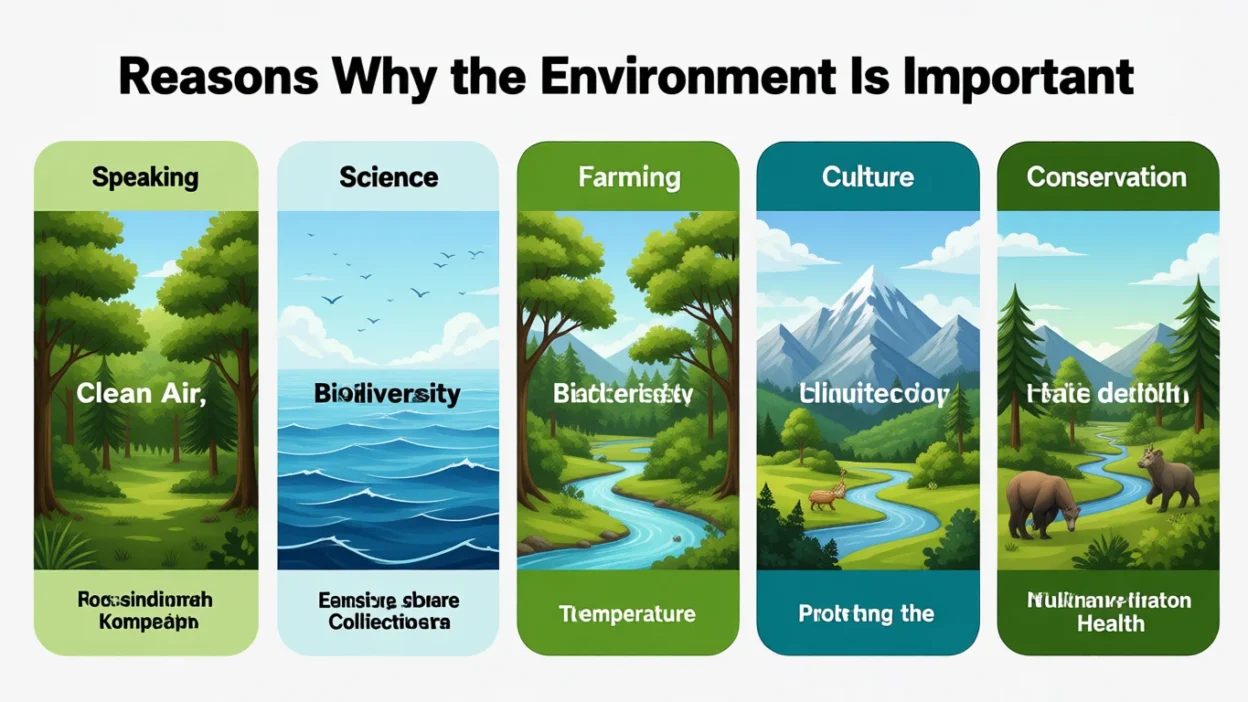
The environment is the foundation of every form of life on Earth. Without clean air, fresh water, fertile soil, balanced ecosystems, and stable climates, human survival would be impossible. The environment supports our health, economy, culture, food, shelter, and future.
Yet, because we see it every day, its importance is often overlooked. This guide explains 25 powerful reasons why the environment is important, showing how deeply it impacts our lives.
Provides Clean Air
The environment produces oxygen through trees, oceans, and plants, allowing humans and animals to breathe safely.
Supplies Fresh Water
Rivers, lakes, glaciers, and rainfall provide the water needed for drinking, farming, hygiene, and daily living.
Supports All Living Species
The environment is home to millions of plants, animals, insects, and microorganisms. Their survival depends on balanced natural habitats.
Regulates Climate
Forests, oceans, and natural cycles help control global temperatures, rainfall patterns, and seasonal changes.
Produces Food
Fertile soil, sunlight, and water allow crops, fruits, vegetables, and livestock to grow and feed the world.
Provides Raw Materials
Wood, minerals, metals, fibers, and energy sources come from the environment and support industries and households.
Maintains Biodiversity
Diverse ecosystems help species survive, evolve, and adapt. Biodiversity also strengthens nature’s resilience.
Purifies Air and Water
Natural systems filter pollutants, clean atmosphere layers, and purify water through soil, plants, and microorganisms.
Prevents Natural Disasters
Healthy forests and wetlands reduce floods, landslides, erosion, and storm damage.
Supports Human Health
The environment provides medicinal plants, clean air, and mental restoration through nature exposure.
Offers Outdoor Recreation
Mountains, beaches, forests, and parks support physical activities like hiking, swimming, and camping.
Creates Jobs and Income
Agriculture, tourism, forestry, fishing, and renewable energy all depend on a healthy environment.
Helps Maintain Soil Fertility
Natural processes enrich soil, supporting crop growth and preventing desertification.
Drives the Water Cycle
Evaporation, rain, and groundwater flow are environmental processes that make life possible.
Provides Energy Sources
Solar, wind, hydro, geothermal, and even fossil fuels all originate from environmental systems.
Influences Weather Patterns
Airflows, ocean currents, and mountain formations shape weather and seasonal conditions.
Supports Cultural and Spiritual Values
Many cultures connect deeply with forests, rivers, mountains, and wildlife for traditions and identity.
Protects Wildlife
Natural habitats give animals shelter, food, and safe breeding spaces.
Enables Scientific Discovery
Studying ecosystems, species, and climates helps scientists understand evolution, medicine, and environmental change.
Improves Mental Well-Being
Green spaces reduce stress, anxiety, and depression, promoting calmness and emotional health.
Allows Natural Recycling
The environment breaks down waste through decomposition, nutrient cycles, and microbial activity.
Offers Natural Beauty
Landscapes, oceans, and forests inspire art, photography, travel, and creative imagination.
Stabilizes the Global Economy
Global trade, agriculture, fisheries, energy, and tourism rely on environmental stability.
Secures Future Generations
Protecting the environment ensures that upcoming generations inherit a healthy planet.
Ensures Survival of Humanity
Without a stable environment, food systems, water supplies, and health systems would collapse. The environment is our life-support system.
Summary Table: Why the Environment Matters
| Category | Importance | Example |
|---|---|---|
| Health | Clean air, safe water, medicinal plants | Breathing oxygen from trees |
| Economy | Jobs, materials, tourism | Farming, forestry |
| Climate | Temperature and weather regulation | Forests capturing carbon |
| Biodiversity | Balanced ecosystems | Coral reefs, rainforests |
| Human Life | Food, water, energy | Rivers supplying drinking water |
Common Idioms Related to Nature & Environment
| Idiom | Meaning | Example |
|---|---|---|
| Mother Nature | Natural world | Mother Nature provides everything we need. |
| Down to earth | Practical and simple | She has a down-to-earth attitude. |
| Turn over a new leaf | Start fresh | It’s time to turn over a new leaf and reduce waste. |
| In the same boat | Facing the same situation | We’re all in the same boat regarding climate change. |
| Go with the flow | Adapt to circumstances | He decided to go with the flow on the trip. |
Real-Life Examples of Environmental Importance
- Forests in the Amazon regulate rainfall across South America.
- Coral reefs protect coastal areas from waves and erosion.
- Wetlands filter pollutants and prevent urban flooding.
- Bees and insects pollinate crops that feed millions of people.
- Green spaces in cities improve mental health and reduce heat.
FAQs
Q1: Why is the environment important for humans?
Because it provides air, water, food, shelter, and natural resources essential for survival.
Q2: How does the environment affect health?
Clean environments improve breathing, reduce diseases, and offer medicinal plants.
Q3: Why is protecting the environment necessary?
To secure biodiversity, prevent climate change, and ensure a livable planet for future generations.
Q4: What happens if we damage the environment?
Pollution, loss of species, water shortages, extreme weather, and health problems increase.
Q5: How can people protect the environment?
Use less plastic, save water, plant trees, conserve energy, and support sustainable practices.
Conclusion
The environment supports every aspect of human life, from the air we breathe to the food we eat and the climate we depend on. It keeps ecosystems balanced, protects wildlife, fuels the economy, strengthens mental and physical health, and secures the future of the planet. Understanding why the environment is important helps us value and protect it more responsibly.

Joy Root is a content writer at Whygenix.com, creating clear, engaging articles that explain complex ideas simply, helping readers understand why topics matter in everyday life and personal growth.