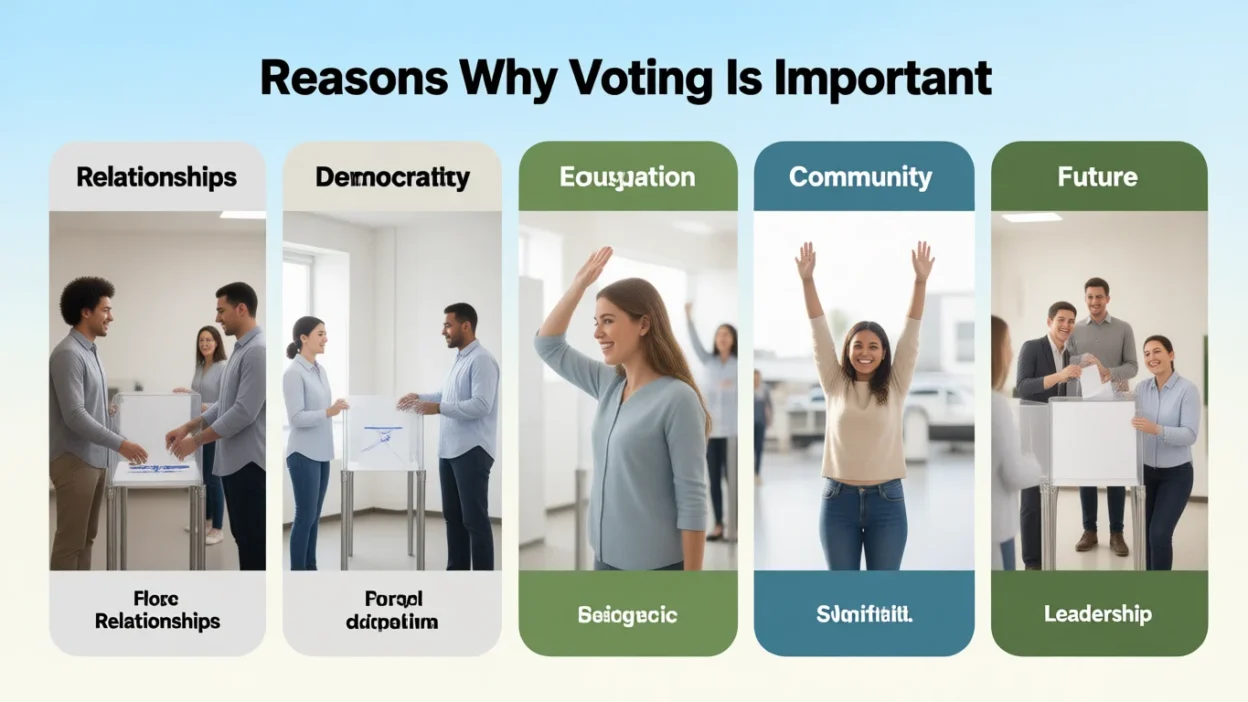
Voting is more than a civic duty — it’s the voice of the people. Through voting, citizens shape laws, choose leaders, and influence the direction of their communities and nations. Every ballot cast represents a belief, a hope, and a choice for the kind of world we want to live in.
In modern democracies, voting is the foundation of freedom and accountability. It gives power to the public and ensures that government decisions reflect the will of the people. Yet, many take this right for granted, forgetting that generations fought hard for the right to vote.
Let’s explore 25+ powerful reasons why voting is important — for individuals, societies, and the future of democracy.
Upholds Democracy
Voting is the cornerstone of any democratic system. It allows citizens to participate directly in shaping their government and ensures that leadership remains accountable to the people.
Gives People a Voice
Each vote represents a voice. When people vote, they express their opinions, values, and priorities — influencing decisions that affect their daily lives.
Ensures Representation
Voting ensures that diverse communities are represented in government. When people participate, elected officials reflect the population’s true makeup.
Protects Rights and Freedoms
By voting, citizens protect the rights and freedoms that define democracy. It keeps governments from becoming too powerful or unaccountable.
Shapes Public Policies
Every vote influences laws on education, healthcare, environment, and social justice. Active voters help determine what issues take priority.
Honors the Sacrifices of the Past
Many people throughout history — including civil rights leaders, reformers, and ordinary citizens — risked their lives to secure the right to vote. Casting a ballot honors their struggle.
Drives Social Change
Voting enables peaceful social change. Major reforms like women’s rights, civil rights, and labor laws became reality because people voted for change.
Strengthens Civic Responsibility
Voting fosters a sense of civic duty and responsibility. It reminds citizens that freedom requires participation, not just observation.
Promotes Equality
Every vote counts equally — regardless of wealth, race, gender, or social class. Voting is one of the few truly equal acts in society.
Builds a Sense of Belonging
Participating in elections connects people to their communities and strengthens the feeling of belonging to a shared democratic process.
Holds Leaders Accountable
Elected officials answer to voters. When citizens participate in elections, leaders are reminded that their power comes from the people.
Impacts Future Generations
The decisions made today affect education, climate, economy, and policies that shape the future. Voting helps protect the next generation’s opportunities.
Strengthens Community Voices
When communities vote in large numbers, they gain political influence and ensure their local needs and values are represented.
Encourages Transparency
Active voter participation keeps the political process open and transparent. It reduces corruption by ensuring that decisions are made in public view.
Influences Local Governments
Local elections often affect daily life more than national ones — including schools, roads, taxes, and safety. Voting locally is equally crucial.
Promotes Accountability in Policy
Politicians and policymakers act more responsibly when they know voters are watching and will decide their future.
Supports Economic Stability
Stable governments that reflect public will create environments where businesses thrive, jobs grow, and citizens prosper.
Preserves Cultural and Social Values
Through voting, people defend cultural beliefs, traditions, and social systems that matter most to them.
Encourages Public Debate
Voting stimulates conversation and public awareness. It invites citizens to discuss, question, and learn about issues that shape their nation.
Builds National Unity
When citizens vote, they share a common experience of participation and ownership in their country’s direction, promoting unity and pride.
Reduces Political Polarization
Higher voter turnout often leads to more balanced representation and reduces the impact of extremist views.
Inspires Future Voters
When adults vote, they model civic participation for younger generations, encouraging them to value their right to vote later in life.
Affects Global Standing
Democracies with strong voter participation are seen as stable and credible, influencing their international reputation and partnerships.
Drives Local and Environmental Action
Voting determines policies that protect the environment, improve local infrastructure, and fund sustainable community projects.
Empowers Marginalized Groups
Voting gives voice to underrepresented populations, allowing them to advocate for equality, justice, and fair treatment.
Prevents Apathy and Indifference
By voting, citizens actively engage in shaping their society instead of leaving decisions to others. It combats political apathy and ignorance.
Reinforces Faith in Democracy
Every election is a reminder that the people, not a select few, hold ultimate power in determining a nation’s future.
Quick Table: Key Impacts of Voting
| Area | Effect of Voting | Example |
|---|---|---|
| Democracy | Strengthens representation | Citizens elect fair leaders |
| Economy | Promotes stability | Voters choose pro-growth policies |
| Society | Ensures equality | Every citizen’s voice matters |
| Environment | Drives sustainability | Votes support climate-friendly laws |
| Future | Protects generations ahead | Voting for education and innovation |
Common Sayings and Quotes About Voting
| Quote | Author | Meaning |
|---|---|---|
| “The ballot is stronger than the bullet.” | Abraham Lincoln | Change happens through votes, not violence. |
| “Bad officials are elected by good citizens who don’t vote.” | George Jean Nathan | Avoiding voting allows poor leadership. |
| “Voting is the expression of our commitment to ourselves, one another, this country, and this world.” | Sharon Salzberg | Voting is a shared responsibility. |
| “Your vote is your voice.” | Common saying | Every ballot represents personal power and opinion. |
| “A man without a vote is a man without protection.” | Lyndon B. Johnson | Voting safeguards your rights and interests. |
Real-Life Examples
- Civil Rights Movement: Voter participation helped pass the Voting Rights Act of 1965.
- Women’s Suffrage: Decades of activism led to women earning the right to vote in many countries.
- Environmental Policies: Voters who support green initiatives influence laws that reduce pollution.
- Education Reforms: Voting shapes school funding and policies that affect millions of students.
- Global Examples: In many countries, high voter turnout leads to greater government accountability and social development.
FAQs About Voting
Q1: Why is voting so important in a democracy?
It ensures that power remains in the hands of the people and that governments act according to public interest.
Q2: Does one vote really make a difference?
Yes. Many elections have been decided by very narrow margins — every vote truly counts.
Q3: Why should young people vote?
They represent the future generation and their participation shapes long-term national policies.
Q4: What happens if citizens don’t vote?
Low turnout weakens democracy, reduces representation, and allows unfit leaders to gain power.
Q5: How can I encourage others to vote?
Educate, discuss, and remind people how their votes can shape policies, communities, and the nation’s future.
Conclusion
Voting is not just a right — it’s a responsibility. It gives citizens control over their government, protects freedom, and ensures that every voice is heard. Democracies grow stronger when people participate and weaker when they remain silent.
Each ballot cast is an act of hope — a belief that tomorrow can be better than today. So, whether it’s a local election or a national one, make your voice count. Vote with purpose, pride, and awareness — because your choice today shapes the future for generations to come.

Sara Taylor is a content writer at Whygenix.com, creating clear, engaging articles that simplify complex ideas, helping readers understand the why behind topics in education, lifestyle, and personal development.