If you’ve ever typed “saucey” and paused to wonder if it looks right, you’re not alone. English spelling can be tricky, especially when informal variations start appearing online.
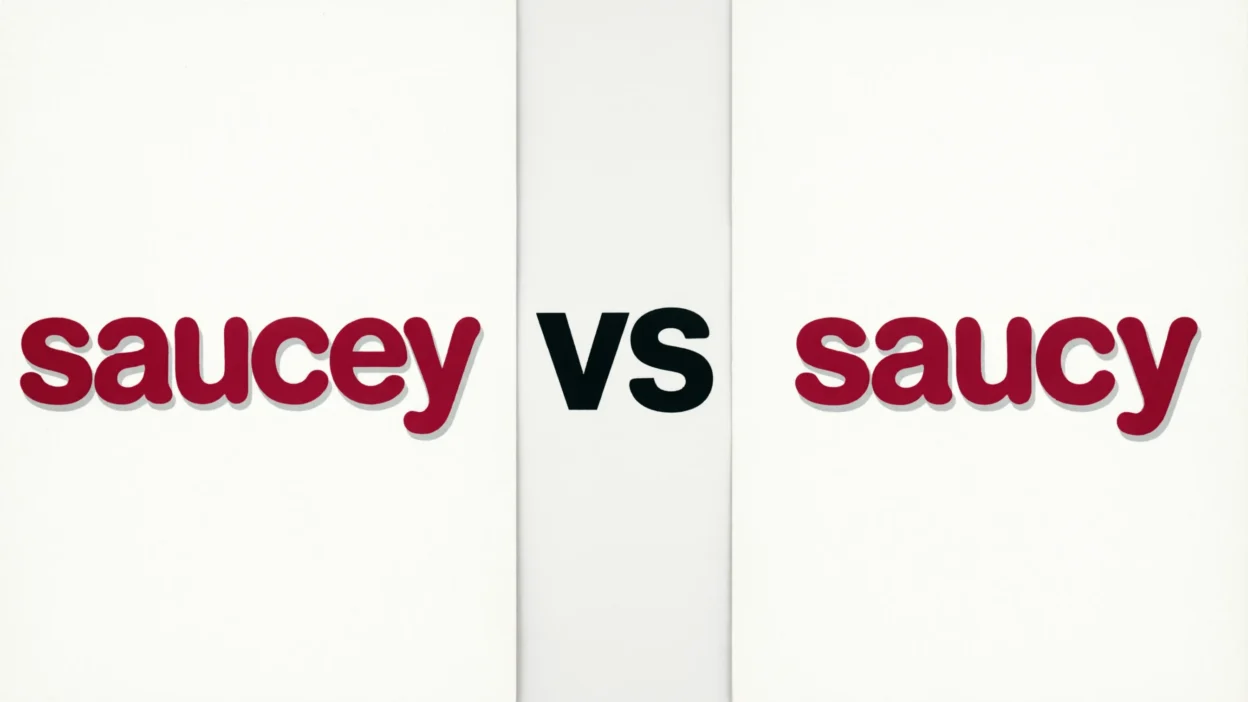
The confusion between saucey vs saucy is a perfect example of how language evolves—and how easy it is to mix up what’s standard with what’s trendy.
In this guide, we’ll break things down clearly so you know exactly which spelling to use in formal writing, casual conversations, and everything in between. By the end, you’ll feel confident choosing the right word every time.
Quick Answer: Saucey vs Saucy
- Correct spelling: Saucy
- Incorrect/nonstandard variant: Saucey
- Meaning: Bold, cheeky, or slightly rude in a playful way
👉 Use “saucy” in all formal and standard English contexts.
👉 “Saucey” is a misspelling or informal variation sometimes seen online.
What Does “Saucy” Mean?
The word saucy has been part of English for centuries. It originally referred to something related to sauce (as in food), but over time, it developed a figurative meaning.
Today, “saucy” typically describes someone or something that is:
- Playfully bold or cheeky
- Slightly disrespectful in a humorous way
- Confident, sometimes flirtatious
- Lively or spirited
Example Sentences
- She gave a saucy reply that made everyone laugh.
- That child has a saucy attitude!
- His comment was a bit saucy, but not offensive.
In modern usage, “saucy” often carries a lighthearted tone rather than a negative one.
What About “Saucey”?
The spelling “saucey” is not considered correct in standard English. It’s usually:
- A misspelling of saucy
- A stylistic or informal variation used online
- Sometimes used in branding or usernames
Example (Informal Use)
- “That outfit is looking saucey 🔥”
While you might see it on social media, it’s not appropriate for formal writing, academic work, or professional communication.
Saucey vs Saucy: Key Differences
Here’s a quick comparison to make things crystal clear:
| Feature | Saucy ✅ | Saucey ❌ |
|---|---|---|
| Correct spelling | Yes | No (nonstandard) |
| Usage | Formal & informal English | Informal/slang only |
| Meaning | Cheeky, bold, playful | Same (intended meaning) |
| Dictionary status | Recognized | Not recognized |
| Professional use | Recommended | Avoid |
Why Do People Write “Saucey”?
Language is constantly evolving, especially online. The spelling “saucey” appears for a few reasons:
1. Phonetic Spelling
People often write words the way they sound. Since “saucy” is pronounced saw-see, some assume “saucey” looks more intuitive.
2. Influence of “Sauce”
Because “saucy” comes from “sauce,” writers sometimes mistakenly add the “e.”
3. Social Media Trends
Platforms like TikTok, Instagram, and Twitter encourage creative spelling. “Saucey” can feel more stylized or trendy.
4. Branding & Personal Style
Some brands or usernames intentionally use “saucey” to stand out.
Common Mistakes to Avoid
Even confident writers make small spelling mistakes. Here are the most common errors with this pair:
❌ Using “saucey” in formal writing
- Incorrect: The article had a saucey tone.
- Correct: The article had a saucy tone.
❌ Assuming both are interchangeable
They are not. Only “saucy” is correct in standard English.
❌ Overusing “saucy” in serious contexts
While correct, “saucy” is informal in tone. Avoid it in highly formal writing unless appropriate.
When Should You Use “Saucy”?
Use “saucy” when you want to describe:
1. Playful Boldness
- A witty comeback
- A cheeky personality
2. Light Flirtation
- A teasing comment
- A confident, slightly daring tone
3. Humor with Attitude
- Something slightly mischievous but not offensive
Example
- “That was a saucy remark!”
Tone and Context: Is “Saucy” Positive or Negative?
Good question—because it depends on context.
Positive Tone
- Confident
- Fun
- Playful
Example:
- She gave a saucy smile.
Slightly Negative Tone
- Mildly disrespectful
- Too bold
Example:
- Don’t get saucy with your teacher.
In most modern usage, it leans positive or playful rather than rude.
American vs British English
Here’s the good news: there’s no difference between American and British English for this word.
- 🇺🇸 American English: Saucy
- 🇬🇧 British English: Saucy
Both forms use the same spelling and meaning.
👉 “Saucey” is not accepted in either variety.
Synonyms for “Saucy”
If you want to vary your writing, here are some great alternatives:
- Cheeky
- Bold
- Sassy
- Playful
- Impudent
- Flirtatious
- Lively
Each has slightly different nuances, so choose based on tone.
Real-Life Usage Examples
Let’s see how “saucy” works in everyday language:
Casual Conversation
- “You’re getting a bit saucy today!”
Writing & Storytelling
- “He delivered a saucy line that stole the scene.”
Social Media Caption
- “Feeling a little saucy tonight 😏”
Professional Context (Light Tone)
- “The brand uses a saucy voice to engage younger audiences.”
FAQs About Saucey vs Saucy
1. Is “saucey” ever correct?
No. It’s considered a misspelling or informal variation. Use “saucy” instead.
2. Why do I see “saucey” online?
It’s often used for style, slang, or branding, not correctness.
3. Can I use “saucy” in formal writing?
Yes, but use it carefully. It’s slightly informal in tone.
4. Does “saucy” mean rude?
Not exactly. It usually means playfully bold, not genuinely disrespectful.
5. Is “saucy” the same as “sassy”?
They’re similar, but “sassy” can feel stronger or more attitude-driven. “Saucy” is often lighter and more playful.
6. Is there a difference in pronunciation?
No. Both “saucy” and “saucey” would be pronounced the same, which adds to the confusion.
7. Should I ever use “saucey” for SEO or branding?
Only if you’re intentionally targeting a stylized or unique brand identity. Otherwise, stick with “saucy.”
8. What part of speech is “saucy”?
It’s an adjective used to describe tone, behavior, or personality.
Final Summary
When it comes to saucey vs saucy, the answer is simple but important: “saucy” is the correct and standard spelling, while “saucey” is a nonstandard variation you should generally avoid. Whether you’re writing professionally, academically, or even casually, sticking with “saucy” ensures clarity and correctness.
That said, language isn’t static. “Saucey” may appear in informal spaces like social media, where creativity often outweighs strict grammar rules. But if your goal is polished, credible writing, “saucy” is always the better choice.
Actionable Takeaway
- ✅ Always use “saucy” in correct English
- ❌ Avoid “saucey” in formal or professional writing
- ✍️ Use “saucy” to describe playful boldness, humor, or light attitude
- 📌 When in doubt, stick with the dictionary-approved spelling
Mastering small distinctions like this can make a big difference in how your writing is perceived. Keep it simple, keep it correct—and stay a little saucy (in the best way 😉).

Bret Lee writes educational and research-based content for Whygenix.com, focused on clarity, accuracy, and explaining why concepts matter through simple, engaging, reader-friendly writing.