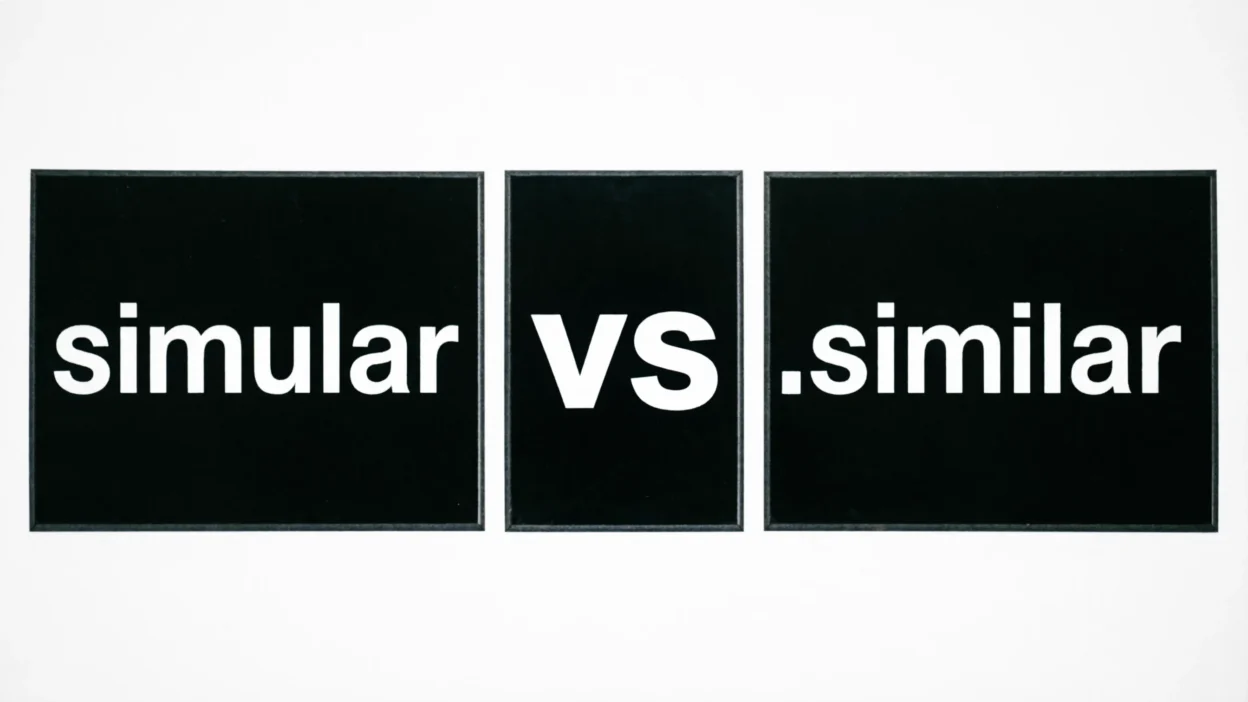
If you’ve ever typed “simular” and wondered why it gets flagged as incorrect, you’re not alone. This is one of the most common spelling mistakes in English, especially for learners and even native speakers typing quickly.
In this guide, we’ll clear up the confusion between simular vs similar, explain why the mistake happens, and show you exactly how to use the correct spelling with confidence in everyday writing.
Quick Answer: Simular vs Similar
- ✅ Correct spelling: Similar
- ❌ Incorrect spelling: Simular
“Similar” means almost the same but not exactly identical.
“Simular” is simply a misspelling and not a valid English word.
What Does “Similar” Mean?
The word similar is an adjective used to describe things that are alike in some way but not completely identical.
Simple Definition:
Having a resemblance in appearance, character, or quantity.
Examples in Sentences:
- These two phones look similar, but their features are different.
- We have similar tastes in music.
- Her writing style is similar to her teacher’s.
Why Do People Write “Simular”?
The mistake simular usually comes from how the word sounds when spoken. English pronunciation doesn’t always match spelling, which leads to confusion.
Common Reasons:
- Phonetic confusion: “Similar” is pronounced like SIM-uh-ler, which can sound like “simular.”
- Typing errors: Fast typing leads to swapping letters.
- Spelling patterns: Words like regular or particular influence people to assume “simular” is correct.
Simular vs Similar: Side-by-Side Comparison
| Feature | Simular ❌ | Similar ✅ |
|---|---|---|
| Spelling status | Incorrect | Correct |
| Meaning | None | Almost the same |
| Dictionary entry | Not recognized | Recognized word |
| Usage | Should be avoided | Standard English |
| Example | ❌ This looks simular | ✅ This looks similar |
How to Remember the Correct Spelling
A quick memory trick can save you from this mistake forever.
Easy Trick:
Think of “similar” as:
Or simply remember:
- “Similar” has “i” twice, not “u.”
Visual Cue:
- similar ✔
- simular ✘
Common Mistakes with “Similar”
Even when you use the correct spelling, there are a few usage mistakes people often make.
1. Using “Similar” Instead of “Same”
- ❌ These two answers are similar. (when they are identical)
- ✅ These two answers are the same.
2. Wrong Preposition
- ❌ Similar with
- ❌ Similar as
- ✅ Similar to
Correct Example:
- Your idea is similar to mine.
3. Overusing in Writing
Using “similar” too often can make your writing repetitive.
Better Alternatives:
- alike
- comparable
- related
- resembling
- close
Examples of “Similar” in Different Contexts
Everyday Conversation:
- We wore similar outfits to the party.
Academic Writing:
- The results were similar to previous studies.
Business Communication:
- Our strategy is similar to what competitors are using.
Creative Writing:
- The sky had a similar shade to the ocean, deep and endless.
Synonyms and Related Words
Using synonyms improves your writing and avoids repetition.
Common Synonyms:
- alike
- comparable
- equivalent
- related
- resembling
Slightly Different Nuances:
- Identical → exactly the same
- Comparable → can be compared fairly
- Related → connected in some way
American vs British English
Good news—there’s no difference here.
- 🇺🇸 American English: similar
- 🇬🇧 British English: similar
Both use the same spelling and meaning, so you don’t need to worry about regional variations.
When Should You Use “Similar”?
Use similar when you want to highlight resemblance without claiming something is exactly the same.
Use It When:
- Comparing ideas
- Describing appearance
- Explaining relationships
- Writing academically or professionally
Avoid It When:
- You mean something is exactly identical
- You need a stronger or more precise word
Real-Life Examples to Build Confidence
Let’s look at a few correct vs incorrect uses:
- ❌ This design is simular to mine.
- ✅ This design is similar to mine.
- ❌ They have simular opinions.
- ✅ They have similar opinions.
- ❌ The results were simular.
- ✅ The results were similar.
FAQs About Simular vs Similar
1. Is “simular” ever correct?
No, “simular” is not a correct English word. Always use “similar.”
2. Why do people confuse “simular” with “similar”?
Because of pronunciation and common spelling patterns in English.
3. What part of speech is “similar”?
“Similar” is an adjective.
4. Can I use “similar as” instead of “similar to”?
No, the correct phrase is always “similar to.”
5. What’s the difference between “similar” and “same”?
“Similar” means almost the same, while “same” means exactly identical.
6. Are there any regional differences in spelling?
No, both American and British English use “similar.”
7. What are some formal alternatives to “similar”?
Words like comparable, analogous, and equivalent work well in formal writing.
8. How can I avoid spelling mistakes like this?
Practice writing, proofread your work, and use tools like spell checkers.
Final Summary
To wrap it up, the difference between simular vs similar is simple but important. “Similar” is the correct spelling and widely used across all forms of English, while “simular” is just a common mistake that should be avoided. Understanding this distinction helps improve your writing clarity and credibility.
The best way to remember is to focus on correct spelling patterns and practice using “similar” in real sentences. Over time, it will become second nature, and you’ll never second-guess it again.
Actionable Takeaway
Next time you write, pause for a second and check:
👉 Does it have an “i” or a “u”?
Always choose similar, and if you’re unsure, use a quick spell check. Small improvements like this make a big difference in polished, professional writing.

Bret Lee writes educational and research-based content for Whygenix.com, focused on clarity, accuracy, and explaining why concepts matter through simple, engaging, reader-friendly writing.