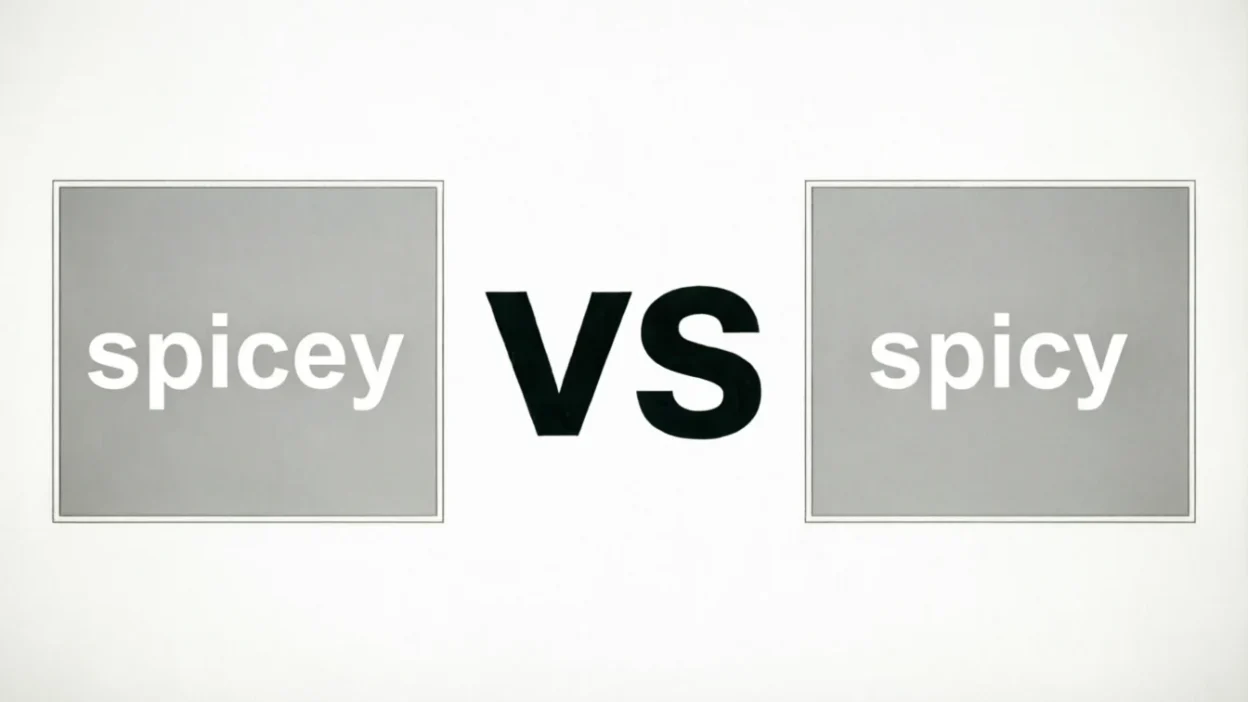
If you’ve ever typed “spicey” while describing your favorite hot wings or a bold curry, you’re not alone. Many people wonder whether spicey vs spicy are both acceptable spellings or if one of them is simply a mistake.
English spelling can be tricky, especially when pronunciation doesn’t clearly match the written form.
The short answer is simple: “spicy” is the correct spelling, while “spicey” is a common misspelling.
But there’s more to understand—like why people confuse the two, how the correct form developed, and how to remember it easily. In this guide, we’ll break it all down with clear explanations, real examples, and helpful tips.
Quick Answer
- Correct spelling: Spicy
- Incorrect spelling: Spicey
- Meaning: Something that contains a lot of spices or has a hot, strong flavor.
- Example: “This salsa is really spicy!”
In modern English dictionaries and style guides, “spicy” is the only accepted spelling. If you write “spicey,” most spell-check tools will flag it as an error.
What Does “Spicy” Mean?
The word spicy describes something that contains spices or strong flavors, often producing a hot or sharp taste.
Common meanings of “spicy”
- Food that contains pepper, chili, or strong seasoning
- Something exciting, bold, or intense
- In informal contexts, something slightly provocative or dramatic
Examples in sentences
- “I love spicy ramen on cold days.”
- “This curry is too spicy for me.”
- “The interview got a little spicy when politics came up.”
Related words and phrases include:
- hot food
- peppery flavor
- zesty taste
- well-seasoned dishes
- fiery cuisine
These LSI keywords help explain the idea of spicy food and strong flavors.
Why Do People Write “Spicey”?
Even though spicey is incorrect, many people still use it accidentally. There are a few simple reasons for this confusion.
1. Influence of the base word “spice”
Since the noun is spice, some people assume the adjective should logically be spicey.
But English spelling rules don’t always follow this pattern.
Example:
- Ice → icy
- Spice → spicy
The letter “e” drops before adding -y.
2. Pronunciation confusion
When spoken, spicy sometimes sounds like “spice-ee.” This makes people think an extra “e” belongs in the word.
3. Autocorrect and typing mistakes
Fast typing or autocorrect errors can produce spicey, especially if someone isn’t sure about the spelling.
4. Informal online writing
Social media posts, chats, and comments often contain relaxed spelling. Over time, people see spicey frequently and assume it might be correct.
However, formal writing, academic papers, and professional communication always use “spicy.”
Spicey vs Spicy: Side-by-Side Comparison
| Feature | Spicy | Spicey |
|---|---|---|
| Correct spelling | ✔ Yes | ❌ No |
| Dictionary recognized | ✔ Yes | ❌ No |
| Meaning | Food with strong spices or heat | Same intended meaning |
| Usage | Formal and informal English | Misspelling |
| Example | “The soup is spicy.” | “The soup is spicey.” (incorrect) |
As you can see, spicy is the only correct form used in proper English.
Examples of “Spicy” in Everyday Language
Understanding how the word appears in real situations makes it easier to remember.
Food and cooking
- “These tacos are incredibly spicy.”
- “Add more chili powder if you want it spicier.”
- “Thai food is known for its spicy flavors.”
Figurative meaning
The word isn’t only about food. It can also describe interesting or dramatic situations.
Examples:
- “The debate turned spicy after that comment.”
- “She shared a spicy story from her trip.”
Comparatives and superlatives
Like many adjectives, spicy can change form.
- Spicy
- Spicier
- Spiciest
Example:
- “This salsa is the spiciest one on the menu.”
American vs British English: Is There Any Difference?
In the case of spicey vs spicy, there is no difference between American and British English.
Both varieties use:
- Spicy → correct
- Spicey → incorrect
Unlike words such as color vs colour or favorite vs favourite, this spelling does not change by region.
So whether you’re writing in the United States, the United Kingdom, Canada, Australia, or anywhere else, spicy remains the correct spelling.
Common Mistakes People Make
When writing about food or flavor, several mistakes appear frequently.
1. Adding an extra “e”
Incorrect:
- “This curry is very spicey.”
Correct:
- “This curry is very spicy.”
2. Confusing “spicy” with “spice”
Example:
Incorrect:
- “This sauce is full of spice flavor and is very spice.”
Correct:
- “This sauce is full of spice and tastes spicy.”
3. Overusing “spicy” for every flavor
Not every flavorful food is spicy. Sometimes better words include:
- savory
- herb-filled
- flavorful
- zesty
- aromatic
4. Incorrect comparative forms
Incorrect:
- “This chili is more spicyer.”
Correct:
- “This chili is spicier.”
Understanding these small details helps improve writing clarity.
Easy Tricks to Remember the Correct Spelling
Here are a few simple memory tips.
Trick 1: Drop the “E” rule
Many English words drop the e before adding -y.
Examples:
- Ice → icy
- Spice → spicy
Trick 2: Think of the word “icy”
The pattern is the same:
- Ice → icy
- Spice → spicy
If icy looks correct to you, then spicy should too.
Trick 3: Use spell-check
Most writing tools automatically correct spicey → spicy.
This quick correction helps reinforce the right spelling.
Related Words and Synonyms for “Spicy”
Expanding your vocabulary can make your writing more interesting.
Flavor-related synonyms
- Hot
- Fiery
- Peppery
- Piquant
- Zesty
- Tangy
Informal or figurative alternatives
- Bold
- Exciting
- Dramatic
- Provocative
Example:
- “The chef created a fiery sauce with fresh chili peppers.”
Using different words helps avoid repetition while keeping your writing engaging.
FAQs About Spicey vs Spicy
1. Is “spicey” ever correct?
No. Spicey is always considered a misspelling of spicy in modern English.
2. Why do people spell spicy as spicey?
People often add the extra “e” because the base word is spice and pronunciation can sound like “spice-ee.”
3. Is spicy used only for food?
No. While it commonly describes hot or flavorful food, it can also mean exciting, bold, or dramatic in informal speech.
Example:
- “That conversation got spicy.”
4. Do British and American English spell it differently?
No. Both American and British English use the spelling “spicy.”
5. What is the comparative form of spicy?
The comparative form is spicier, and the superlative form is spiciest.
Example:
- “This dish is spicier than the last one.”
6. What foods are usually described as spicy?
Common examples include:
- Mexican salsa
- Indian curry
- Thai noodles
- Korean kimchi
- Buffalo wings
7. Can spicy describe personality or humor?
Yes. Informally, spicy can describe someone bold, witty, or slightly provocative.
Example:
- “Her spicy sense of humor makes everyone laugh.”
Final Summary
When comparing spicey vs spicy, the answer is clear: spicy is the correct spelling, while spicey is a common but incorrect variation. The confusion usually comes from the base word spice, pronunciation habits, or quick typing mistakes. However, dictionaries, grammar guides, and professional writing standards all recognize spicy as the only proper form.
Remember that spicy describes foods with strong spices or heat, and it can also describe bold or exciting situations in informal language. Whether you’re writing about chili peppers, flavorful dishes, or a lively conversation, the correct spelling will always be spicy.
Actionable takeaway
Whenever you write about hot or flavorful food, drop the “e” and spell it “spicy.” If you see spicey, treat it as a spelling mistake and correct it. This simple habit will make your writing clearer, more professional, and grammatically accurate.

Bret Lee writes educational and research-based content for Whygenix.com, focused on clarity, accuracy, and explaining why concepts matter through simple, engaging, reader-friendly writing.