Have you ever typed stary night and wondered if it looked a bit off? You’re not alone. This is a very common spelling mix-up, especially because the words sound almost identical when spoken.
But here’s the thing—only one of these spellings is actually correct. If you’re writing descriptions, stories, captions, or even school assignments, knowing the right form can make your writing look polished and professional. Let’s clear it up once and for all.
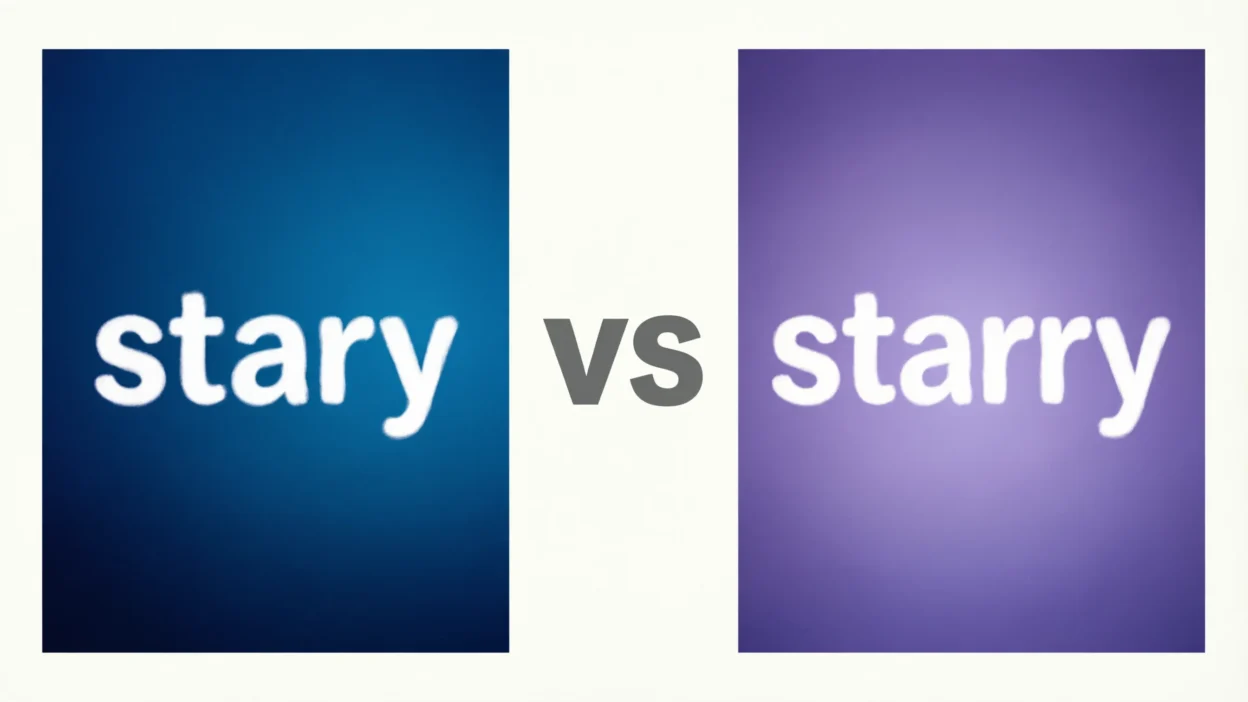
Quick Answer: Stary vs Starry
- ✅ Correct spelling: Starry
- ❌ Incorrect spelling: Stary
Starry is the only correct word in standard English. Stary is a misspelling and should be avoided.
What Does “Starry” Mean?
Starry is an adjective used to describe something that is full of stars or resembles stars.
Simple definition:
- Starry = filled with stars or shining like stars
Common uses:
- Describing the night sky
- Creating poetic or romantic imagery
- Referring to brightness or sparkle
Example sentences:
- “We gazed at the starry sky all night.”
- “It was a beautiful starry evening.”
- “Her eyes had a starry sparkle.”
The word often adds a dreamy, magical tone to writing.
Why “Stary” Is Incorrect
“Stary” might seem logical if you think of it as “star + y,” but English spelling rules don’t work that way here.
The correct formation:
- Base word: star
- Add suffix: -y
- Double the “r” → starry
So:
- star → starry ✅
- star → stary ❌
Why the double “r”?
This follows a common English rule:
When adding a suffix like “-y” to a short word ending in a consonant, you often double the final consonant to keep the pronunciation correct.
Stary vs Starry: Side-by-Side Comparison
| Feature | Starry ✅ | Stary ❌ |
|---|---|---|
| Correct spelling | Yes | No |
| Meaning | Full of stars | None |
| Dictionary recognized | Yes | No |
| Used in writing | Yes | Never |
| Professional usage | Recommended | Avoid |
The Spelling Rule Behind “Starry”
Double Consonant Rule
When a one-syllable word ends in:
- vowel + consonant (like star)
And you add a suffix (like -y), you:
- Double the final consonant
Examples:
- sun → sunny
- fun → funny
- big → bigger
- star → starry
This rule helps preserve pronunciation and readability.
American vs British English
Good news—there’s no difference here.
- 🇺🇸 American English: Starry
- 🇬🇧 British English: Starry
Unlike some spelling variations, this word is spelled the same in both versions of English.
Real-Life Usage in Context
In everyday writing:
- “The desert sky was incredibly starry.”
In literature:
- “Under the starry heavens, they made a wish.”
In social media captions:
- “Late nights and starry vibes ✨”
In famous phrases:
- “Starry Night” (a well-known phrase in art and culture)
Using the correct spelling enhances clarity and avoids distractions.
Common Mistakes to Avoid
1. Writing “stary”
- ❌ Incorrect: “It was a stary night.”
- ✅ Correct: “It was a starry night.”
2. Forgetting the double “r”
This is the most common issue—always remember to double the consonant.
3. Overthinking pronunciation
Even though it sounds like “stary,” spelling rules still apply.
4. Typing errors in fast writing
Autocorrect may not always catch this, so proofread carefully.
Related Words and Synonyms
To enrich your writing, here are similar or related terms:
- Sparkling
- Glittering
- Shimmering
- Celestial
- Radiant
- Luminous
- Twinkling
These words can help you create vivid imagery in descriptions.
When Should You Use “Starry”?
Use starry when describing:
- The night sky
- Romantic or dreamy settings
- Bright, shining appearances
- Poetic or emotional scenes
Avoid using it when:
- Referring to something unrelated to stars
- Writing technical or scientific descriptions (use precise terms instead)
FAQs About Stary vs Starry
1. Is “stary” ever correct?
No, it’s a spelling mistake and not recognized in standard English.
2. Is “starry” a real word?
Yes, it’s a common and widely used adjective.
3. Why does “starry” have two “r”s?
Because of the double consonant rule when adding “-y” to short words.
4. How do I remember the correct spelling?
Think: “A sky full of stars needs an extra ‘r’.”
5. Is “starry” used in formal writing?
Yes, especially in descriptive, literary, and creative contexts.
6. Does pronunciation change with spelling?
No, both “stary” (incorrect) and “starry” sound similar—but only one is correct.
7. Can I use “starry” metaphorically?
Absolutely. It’s often used to describe dreamy eyes or magical moments.
Final Summary
When it comes to stary vs starry, the answer is simple: starry is correct, and stary is a misspelling. The extra “r” isn’t optional—it follows a standard English rule that helps maintain proper pronunciation and structure.
Whether you’re writing creatively, posting on social media, or working on professional content, using starry ensures your writing looks accurate and polished. Small spelling details like this can make a big difference in how your message is received.
Actionable Takeaway
- Always use starry, never “stary”
- Remember the rule: double the consonant before adding “-y”
- Proofread your writing to catch small spelling errors
- Use “starry” to add vivid, descriptive imagery to your content
Mastering these small distinctions helps you write with clarity, confidence, and style.

Sara Taylor is a content writer at Whygenix.com, creating clear, engaging articles that simplify complex ideas, helping readers understand the why behind topics in education, lifestyle, and personal development.