
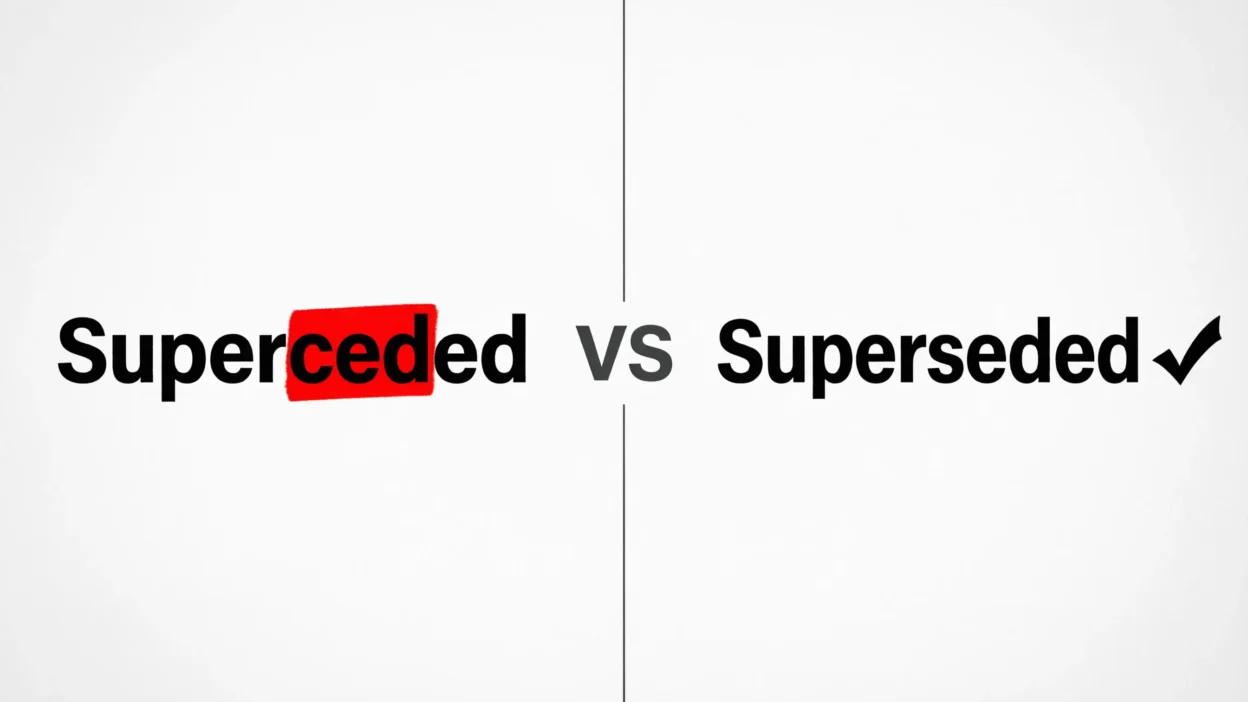
If you’ve ever been unsure whether to write “superseded” or “superceded,” you’re in good company. This is one of those tricky English words that even experienced writers get wrong.
The spelling doesn’t follow the usual rules, which makes it easy to second-guess yourself.
In this simple, friendly guide, we’ll break down superseded vs superceded, explain the correct spelling, provide clear examples, and show you how to avoid this common mistake in everyday writing.
Quick Answer: Superseded vs Superceded
- ✅ Superseded = Correct spelling
- ❌ Superceded = Incorrect spelling
👉 Always use “superseded.”
What Does “Superseded” Mean?
The word superseded means that something has been replaced, updated, or made obsolete by something newer or better.
Definition
Superseded = Replaced by something more recent, effective, or important
Examples
- The old law was superseded by new legislation.
- This model has been superseded by a newer version.
- His authority was superseded by the manager’s decision.
Related Terms (LSI Keywords)
- replaced
- outdated
- overridden
- substituted
- outdated version
👉 You’ll often see “superseded” in legal, technical, and formal contexts.
What About “Superceded”?
Definition
Superceded is not a correct spelling.
It’s a common mistake people make when trying to write “superseded.”
Why the Confusion Happens
- Many English words follow the “-cede” pattern (like proceed, precede)
- People assume this word follows the same rule
- But “supersede” is an exception—it uses “sede,” not “cede”
Example of Incorrect Usage
- ❌ The rule was superceded last year.
Correct Version
- ✅ The rule was superseded last year.
Superseded vs Superceded: Key Differences
Here’s a quick comparison:
| Feature | Superseded ✅ | Superceded ❌ |
|---|---|---|
| Spelling | Correct | Incorrect |
| Meaning | Replaced or updated | None |
| Usage | Formal and common | Should be avoided |
| Example | Superseded by new rules | Superceded (wrong) |
👉 Rule to remember: “Supersede” is an exception—don’t apply the usual “-cede” spelling.
Why This Mistake Is So Common
Even native speakers get this wrong. Here’s why:
- Words like precede, succeed, proceed follow “-cede”
- “Supersede” breaks that pattern
- It’s often misspelled in emails, blogs, and even official documents
Memory Trick
Think of it this way:
- Super + sede → Supersede (correct)
- Ignore the “cede” pattern here
Common Mistakes to Avoid
❌ Incorrect
- The old system was superceded.
- This version has been superceded.
✅ Correct
- The old system was superseded.
- This version has been superseded.
❌ Incorrect
- New policies superceded the old ones.
✅ Correct
- New policies superseded the old ones.
Even a small spelling error like this can reduce your credibility in formal writing.
When to Use “Superseded” in Real Life
Use superseded when something is:
- Replaced by a newer version
- Made outdated
- Overridden by authority or rules
Common Use Cases
- Laws and regulations
- Software updates
- Business policies
- Technical documentation
Example Sentences
- The outdated policy was superseded by new guidelines.
- Version 1.0 has been superseded by version 2.0.
- His decision was superseded by higher management.
American vs British English Differences
There is no difference between American and British English for this word.
- ✅ Superseded is correct in both
- ❌ Superceded is incorrect everywhere
SEO & Writing Tip: Why Spelling Matters
Using the correct spelling (superseded) helps with:
- Professional credibility
- Search engine optimization (SEO)
- Reader trust and clarity
- Error-free communication
Misspelling it as “superceded” can make your content look careless—especially in formal or technical writing.
FAQs About Superseded vs Superceded
1. Is “superceded” ever correct?
No, “superceded” is always incorrect.
2. Why is “superseded” spelled with “sede”?
It’s an exception in English that doesn’t follow the usual “-cede” pattern.
3. Which spelling should I use in professional writing?
Always use superseded.
4. Is this mistake common?
Yes, even advanced writers sometimes make this error.
5. What does “superseded” mean in simple terms?
It means something has been replaced or updated.
6. Can I use “superseded” in casual writing?
Yes, it works in both formal and informal contexts.
7. Is “supersede” related to “precede”?
They are different words with different meanings and spellings.
Final Summary
The difference between superseded vs superceded is straightforward once you know the rule. “Superseded” is the correct spelling and means something has been replaced or made obsolete. On the other hand, “superceded” is a common but incorrect spelling that should always be avoided.
Although English often follows patterns, this word is an exception. That’s why it’s easy to make mistakes—but now you know exactly how to get it right every time.
Actionable Takeaway
Before finalizing your writing, ask yourself:
👉 “Am I referring to something being replaced or updated?”
If yes, always use superseded—never “superceded.”
A quick spelling check can protect your credibility and make your writing more professional.

Joy Root is a content writer at Whygenix.com, creating clear, engaging articles that explain complex ideas simply, helping readers understand why topics matter in everyday life and personal growth.


