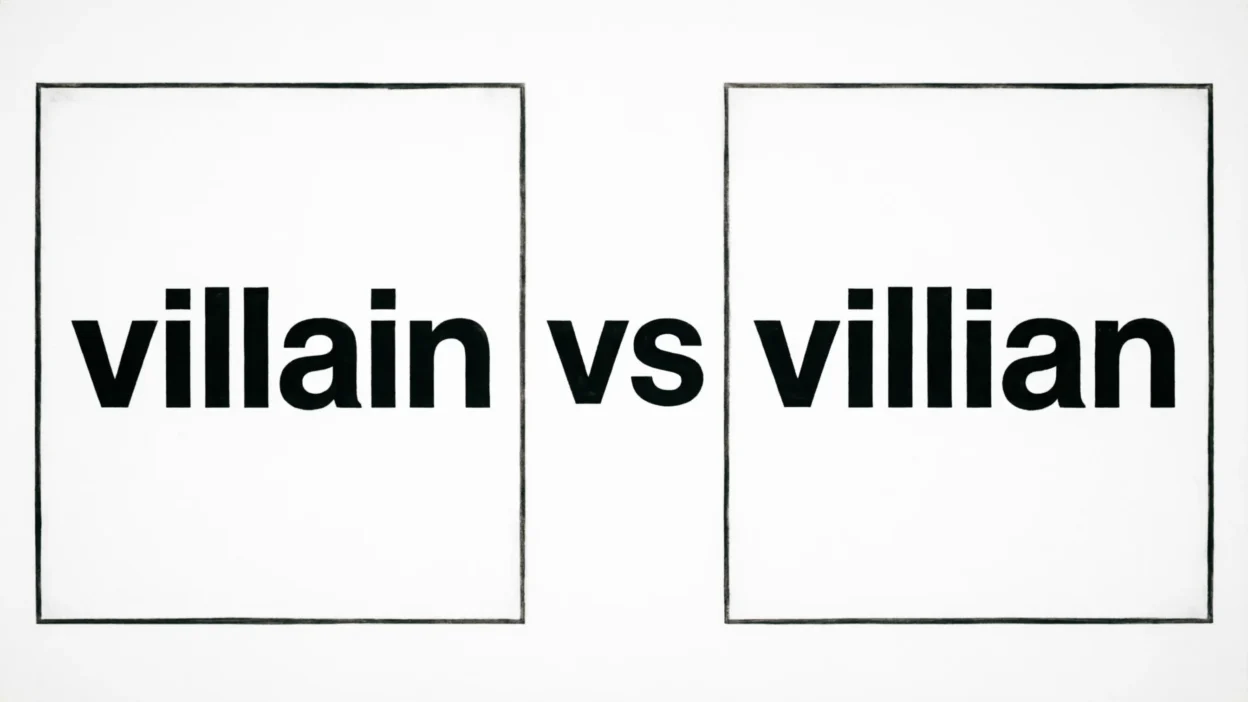
If you’ve ever typed “villian” and felt unsure, you’re definitely not alone. This is one of the most common spelling mistakes in English—mainly because the letters seem like they could go either way.
The confusion between villain vs villian comes down to letter order, and once you learn the correct pattern, it becomes easy to remember. In this guide, we’ll break it down clearly so you can use the right spelling every time.
Quick Answer
- ✅ Villain = Correct spelling
- ❌ Villian = Incorrect spelling
Always use “villain” with “ai,” not “ia.”
What Does “Villain” Mean?
The word villain refers to a bad or evil character, especially in stories, movies, or real-life situations.
Common meanings:
- A bad person in a story
- Someone who does harmful or immoral things
- The opposite of a hero
Examples:
- The villain in the movie was very powerful.
- Every story needs a strong villain.
- He acted like the villain in the situation.
Why “Villian” Is Incorrect
“Villian” is a very common misspelling, but it is not a valid word in standard English.
Here’s why:
- The correct spelling uses “ai”, not “ia.”
- English spelling rules can be tricky, especially with vowel combinations.
- “Villian” is not accepted in dictionaries or formal writing.
Correct vs incorrect:
- ❌ villian
- ✅ villain
Villain vs Villian: Key Differences
| Feature | Villain ✅ | Villian ❌ |
|---|---|---|
| Correct spelling | Yes | No |
| Letter order | “ai” | “ia” |
| Dictionary status | Valid | Invalid |
| Usage | Standard English | Avoid completely |
| Meaning | Evil character | Same idea (incorrect form) |
Common Mistakes to Avoid
This mistake happens more often than you might think. Here’s how to avoid it:
1. Mixing Up “ai” and “ia”
Many words use both combinations, which causes confusion.
- ❌ villian
- ✅ villain
2. Spelling Based on Sound
“Villain” is pronounced like “vil-uhn,” so the vowel order isn’t obvious from pronunciation.
3. Typing Quickly
Fast typing often leads to switching letters accidentally.
Examples of “Villain” in Sentences
Here are examples to help you use “villain” correctly:
Everyday Use:
- He became the villain of the story.
- Don’t make me the villain here.
Movies & Stories:
- The villain had a complex backstory.
- The hero finally defeated the villain.
Figurative Use:
- Stress can be the real villain in your life.
- Lack of planning is often the villain behind failure.
American vs British English
There is no difference in spelling:
- 🇺🇸 American English: villain
- 🇬🇧 British English: villain
Both use the same correct form.
Synonyms of “Villain”
To improve your writing, you can use:
- Antagonist
- Criminal
- Enemy
- Bad guy
- Opponent
- Wrongdoer
Example:
- The antagonist was defeated.
- The villain was defeated.
“Villain” is often more dramatic and widely understood.
When to Use “Villain” (Quick Tips)
Use villain when you want to:
- Describe a bad character in a story
- Refer to someone acting unfairly or cruelly
- Add dramatic effect to writing
Memory trick:
👉 Think: “Villain = ‘ai’ like in ‘pain’ (villains cause pain)”
FAQs About Villain vs Villian
1. Is “villian” ever correct?
No, “villian” is always incorrect. Use “villain.”
2. Why do people spell it “villian”?
Because the pronunciation doesn’t clearly show the vowel order, leading to confusion.
3. What part of speech is “villain”?
It is a noun.
4. Can “villain” be used in real life?
Yes, it can describe someone behaving badly or unfairly.
5. Is “villain” formal or informal?
It works in both contexts but is often used in storytelling or expressive writing.
6. Are there similar confusing words?
Yes—like “guardian vs gardian” or “believe vs beleive.”
7. How can I remember the correct spelling?
Remember the “ai” pattern in “villain.”
8. Does pronunciation change with spelling?
No, both versions would sound similar, which causes the confusion.
Final Summary
The difference between villain vs villian is simple but important. “Villain” is the correct spelling, while “villian” is a common mistake caused by mixing up vowel order.
Even though the word may sound straightforward, remembering the “ai” pattern ensures your writing stays accurate and professional.
Actionable Takeaway
Next time you write:
👉 Always use “villain” with “ai”
To improve your spelling:
- Pay attention to vowel order
- Double-check tricky words
- Practice with real examples
With time, this will become natural and boost your writing confidence.

Sara Taylor is a content writer at Whygenix.com, creating clear, engaging articles that simplify complex ideas, helping readers understand the why behind topics in education, lifestyle, and personal development.