You’re scrolling through comments or a group chat, and someone mentions “dry socket.”
Maybe it’s after a wisdom tooth video. Maybe a friend texts, “i think i have a dry socket.” Suddenly, you’re wondering what that actually looks like—and whether it’s something serious.
Most people first hear about dry socket after a tooth extraction, usually online, in texts, or while searching late at night because something doesn’t feel right.
The term sounds scary, and honestly, it can be uncomfortable if it happens. The good news? Once you know what to look for, it’s easier to understand and handle.
Let’s break it down clearly and calmly.
Quick Answer
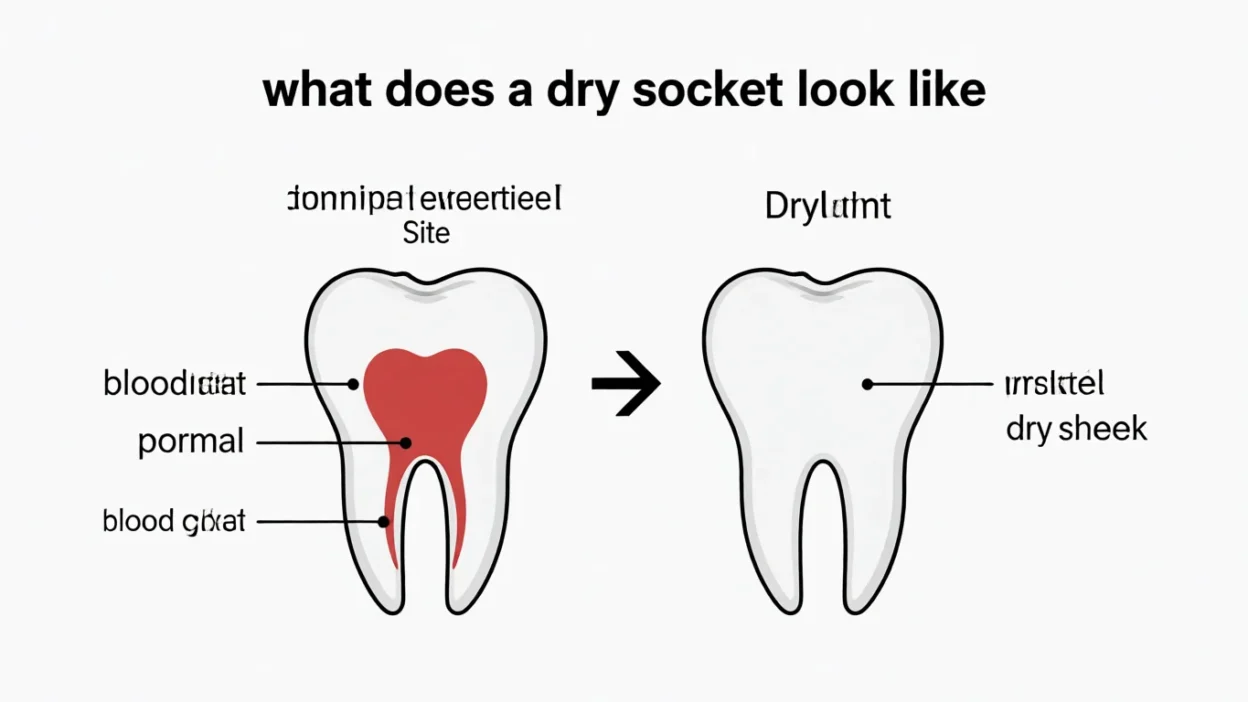
A dry socket looks like an empty tooth socket with exposed bone or a whitish-gray appearance, often without the normal dark blood clot.
What Does a Dry Socket Look Like? (Meaning Explained)
Full form (if applicable)
Dry socket is also called alveolar osteitis.
It’s not slang—it’s a real dental condition.
Plain-English explanation
After a tooth is pulled, a blood clot normally forms in the hole to protect the bone and nerves while healing.
A dry socket happens when that blood clot falls out, dissolves, or never forms properly.
When this happens, the socket looks:
- dry or empty
- white or gray instead of dark red
- sometimes shows bone
- irritated or inflamed around the edges
Why do people talk about it online?
People often search or ask about dry socket because:
- the pain feels worse than normal healing
- the look is unusual and worrying
- it’s commonly mentioned after wisdom tooth removal
- they want reassurance from others’ experiences
One short example sentence
Bold summary: A dry socket looks empty, pale, and sometimes shows bone because the protective blood clot is missing.
What a Normal Healing Socket vs a Dry Socket Looks Like
Understanding the difference helps reduce panic.
Normal healing socket
- dark red or brown blood clot
- looks filled, not hollow
- mild swelling
- pain slowly improves
Dry socket appearance
- empty or hollow-looking hole
- white, gray, or yellowish surface
- visible bone in some cases
- gum tissue looks irritated
The look is often the first thing people notice before the pain gets intense.
Where Is the Term “Dry Socket” Commonly Used?
Dry socket is a medical term, but it’s widely discussed online.
Common places you’ll see it
- texting friends after dental work
- social media comments under dental videos
- health forums
- reddit threads
- youtube comment sections
- dms asking for advice
Tone of the term
- neutral to serious
- informal when used in chats
- formal in medical settings
Online, people usually talk about it casually—but the condition itself is real.
Realistic Conversation Examples (Lowercase, Modern Style)
Here’s how people naturally talk about dry socket online.
- “my tooth hole looks white and hurts so bad”
- “pretty sure this is dry socket and i’m stressed”
- “did your socket look empty when you had it?”
- “i see bone and now i’m panicking”
- “dentist said it’s dry socket, explains the pain”
- “wish i didn’t google dry socket pics”
- “is it normal if the socket looks gray?”
- “pain didn’t start until day three”
- “i messed up and used a straw”
These conversations show how appearance + pain raise concern.
When to Use and When NOT to Use the Term
Because it’s a medical condition, context matters.
✅ When to use “dry socket”
- describing symptoms after tooth extraction
- asking a dentist or clinic for help
- discussing recovery experiences
- seeking advice in health forums
❌ When not to use it
- joking about pain
- diagnosing others online
- using it casually without dental context
- assuming every tooth pain is dry socket
Comparison table
| Context | Example Phrase | Why It Works or Doesn’t |
|---|---|---|
| dental chat | “my socket looks dry and white” | accurate description |
| health forum | “is this dry socket?” | seeking advice |
| casual joke | “this pain is dry socket lol” | minimizes condition |
| diagnosing friend | “you definitely have dry socket” | not appropriate |
What Does Dry Socket Feel Like (Along With How It Looks)?
While this article focuses on what a dry socket looks like, feeling matters too.
Common sensations include:
- strong throbbing pain
- pain spreading to ear or jaw
- bad taste in mouth
- unpleasant smell
Often, people notice the look first, then the pain follows.
Similar Terms or Related Conditions
People often confuse dry socket with other dental issues.
| Term | What It Means | When It Applies |
|---|---|---|
| normal socket | healing extraction site | early recovery |
| infected socket | bacterial infection | swelling + pus |
| gum inflammation | irritated gums | mild pain |
| tooth extraction pain | normal soreness | first 1–2 days |
| alveolar osteitis | medical name | clinical diagnosis |
Knowing the difference helps avoid unnecessary panic.
FAQ: Common Questions About Dry Socket Appearance
1. Can you see a dry socket without pain?
Sometimes yes at first, but pain usually follows within a day or two.
2. What color is a dry socket?
Often white, gray, or pale, instead of dark red.
3. Is seeing bone always dry socket?
Not always, but visible bone is a strong sign and should be checked.
4. Does a dry socket bleed?
Usually no, because the blood clot is missing.
5. How soon does dry socket appear?
Commonly 2–4 days after extraction.
6. Can dry socket heal on its own?
It needs dental treatment to relieve pain and protect healing.
7. Should I look at pictures online?
It’s okay for awareness, but photos can be more alarming than helpful.
What Causes a Dry Socket?
Understanding causes helps prevent it.
Common causes include:
- smoking or vaping
- using straws
- spitting forcefully
- touching the socket
- poor oral hygiene
Dentists often warn about these right after extraction.
Final Thought
So, what does a dry socket look like?
It usually appears as an empty, pale socket without a blood clot, sometimes showing bone and surrounded by irritated gum tissue.
While it can look scary—and feel painful—it’s a known and treatable dental issue.
If something looks off after a tooth extraction, trust your instincts and reach out to a dentist. Understanding what you’re seeing helps you act quickly and heal properly.

Joy Root is a content writer at Whygenix.com, creating clear, engaging articles that explain complex ideas simply, helping readers understand why topics matter in everyday life and personal growth.