You’re scrolling through a group chat when someone types, “the doctor put me on amoxicillin.”
Another friend replies, “wait, what does amoxicillin treat again?”
If that sounds familiar, you’re not alone. Amoxicillin is one of those medicine names we see everywhere—on prescriptions, in health posts, or mentioned in casual online chats—but many people aren’t fully sure what it actually treats. Is it for colds? Tooth pain? Fever? Something else?
Let’s break it down in a simple, friendly way so you know exactly what does amoxicillin treat, when it’s used, and when it’s not.
Quick Answer
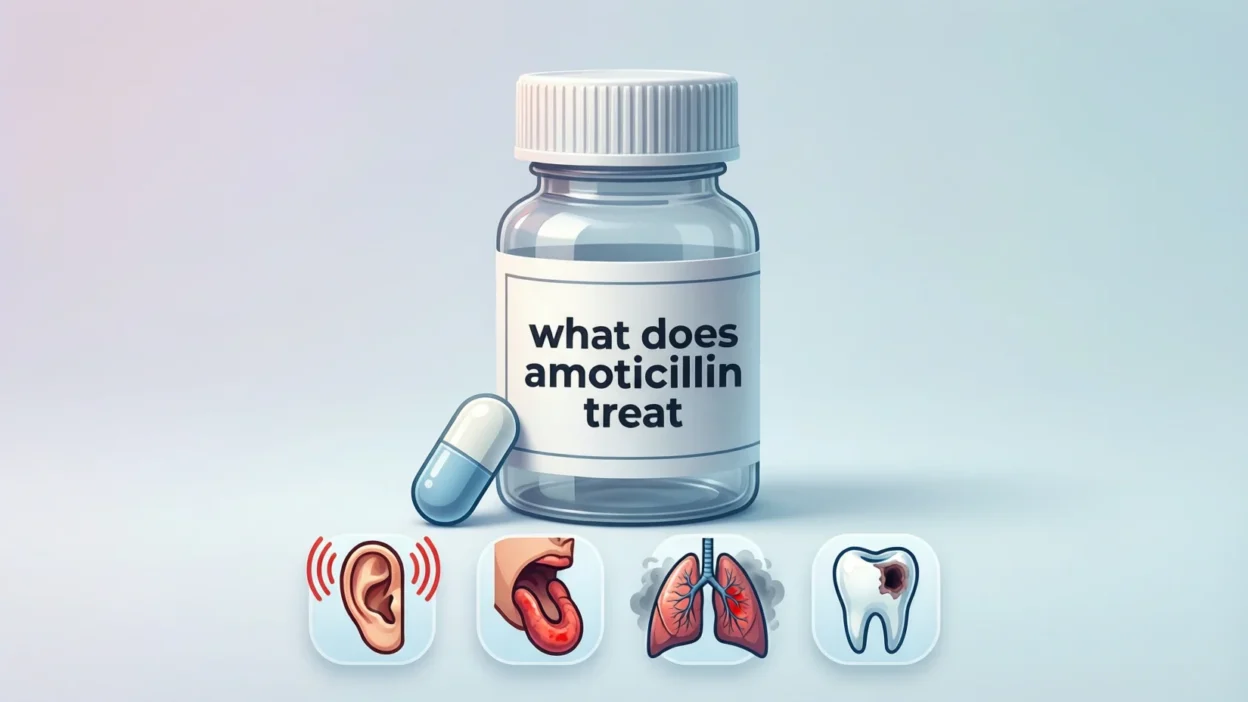
Amoxicillin treats bacterial infections like ear infections, throat infections, sinus infections, urinary tract infections, and some skin and dental infections.
What Does Amoxicillin Treat?
Full Form
Amoxicillin does not stand for a longer phrase.
It’s the name of an antibiotic in the penicillin family.
Plain-English Explanation
Amoxicillin is a medicine that helps your body fight bacterial infections. It works by stopping bacteria from growing, which helps your immune system clear the infection.
It does not work on viruses. That means it won’t help with the flu, common cold, or COVID-19.
Doctors prescribe amoxicillin because it’s:
- effective
- widely trusted
- safe for many adults and children
Short Example Sentence
Bold summary: Amoxicillin treats bacterial infections, not viral illnesses like colds or flu.
Common Infections Amoxicillin Treats
Here are the most common conditions doctors prescribe amoxicillin for:
1. Ear Infections
Especially common in children.
Amoxicillin helps reduce pain, swelling, and infection.
2. Throat Infections
This includes strep throat, which is caused by bacteria.
3. Sinus Infections
When sinuses get infected with bacteria, amoxicillin can help clear them.
4. Chest and Lung Infections
Such as bronchitis or pneumonia caused by bacteria.
5. Urinary Tract Infections (UTIs)
Used in some cases, depending on the bacteria.
6. Skin Infections
For infected cuts, wounds, or skin conditions caused by bacteria.
7. Dental Infections
Often prescribed for tooth abscesses or gum infections.
Where Is the Term “Amoxicillin” Commonly Used?
You’ll often see or hear the word amoxicillin in both medical and everyday conversations.
Common Places
- doctor visits
- pharmacy prescriptions
- health-related text messages
- social media health posts
- online forums and comments
- parenting groups
- recovery chats
Tone of Use
- neutral
- medical
- informational
It’s not slang, but it shows up a lot in casual online talk about health.
Realistic Conversation Examples
Here’s how people naturally mention amoxicillin in everyday chats:
- “doc put me on amoxicillin for 7 days”
- “is amoxicillin strong?”
- “they gave my kid amoxicillin for ear pain”
- “amoxicillin finally helped my sinus infection”
- “can i take amoxicillin on an empty stomach?”
- “turns out it wasn’t viral so i needed amoxicillin”
- “i’m allergic to penicillin so no amoxicillin for me”
- “tooth infection = amoxicillin + pain meds”
When to Use and When NOT to Use Amoxicillin
✅ When Amoxicillin Is Used
- bacterial infections
- doctor-prescribed cases
- confirmed strep throat
- bacterial sinus or ear infections
- certain dental problems
❌ When Amoxicillin Should NOT Be Used
- colds or flu
- viral sore throats
- COVID-19
- without a prescription
- if you’re allergic to penicillin
Comparison Table
| Context | Example Phrase | Why It Works / Doesn’t |
|---|---|---|
| strep throat | “amoxicillin cleared it” | correct use |
| ear infection | “doc prescribed amoxicillin” | appropriate |
| common cold | “took amoxicillin” | ❌ won’t help |
| viral fever | “using antibiotics” | ❌ ineffective |
| dentist visit | “amoxicillin before procedure” | correct |
What Amoxicillin Does NOT Treat
This part is very important.
Amoxicillin does not treat:
- colds
- flu
- viral cough
- COVID-19
- allergies
Using antibiotics when they’re not needed can lead to antibiotic resistance, which makes infections harder to treat later.
Similar Medicines and Alternatives
Here are some medicines related to or used instead of amoxicillin:
| Medicine | What It Treats | When Used |
|---|---|---|
| penicillin | bacterial infections | similar use |
| augmentin | stronger bacterial infections | resistant bacteria |
| azithromycin | chest, throat infections | penicillin allergy |
| cephalexin | skin, urinary infections | alternative option |
| doxycycline | acne, lung infections | different antibiotic |
Doctors choose based on the infection and patient history.
Common Side Effects of Amoxicillin
Most people tolerate it well, but some may experience:
- mild stomach upset
- nausea
- diarrhea
- skin rash
If you notice severe rash, swelling, or trouble breathing, seek medical help immediately.
FAQ: What People Ask About Amoxicillin
1. What does amoxicillin treat exactly?
It treats bacterial infections like ear, throat, sinus, dental, and skin infections.
2. Does amoxicillin treat the flu?
No.
The flu is viral, and antibiotics don’t work on viruses.
3. How long does amoxicillin take to work?
Most people feel better within 2–3 days, but you must finish the full course.
4. Can kids take amoxicillin?
Yes.
It’s commonly prescribed for children when needed.
5. Is amoxicillin a strong antibiotic?
It’s considered moderate but effective, not the strongest.
6. Can I stop amoxicillin early?
No.
Always finish the full prescription unless your doctor says otherwise.
7. Can I take amoxicillin without a prescription?
No.
It should only be taken when prescribed by a healthcare professional.
Final Thought
So, what does amoxicillin treat?
Amoxicillin treats bacterial infections, not viral illnesses. It’s commonly used for ear infections, strep throat, sinus infections, dental problems, and certain skin or chest infections.
Understanding when it helps—and when it doesn’t—can protect your health and prevent misuse.
If you’re ever unsure, always ask a doctor before taking antibiotics.

Joy Root is a content writer at Whygenix.com, creating clear, engaging articles that explain complex ideas simply, helping readers understand why topics matter in everyday life and personal growth.