The first time I saw the word ASMR, it was in a late-night comment section. Someone wrote, “this video gives me instant asmr,” and everyone else seemed to agree.
I had no idea what they meant. Was it slang? A sound effect? A mood? A few taps later, I realized ASMR was everywhere—YouTube, TikTok, Instagram Reels, even casual texts between friends.
People use it to talk about calming sounds, relaxing videos, and that oddly soothing feeling you get when someone whispers or taps gently. If you’ve ever wondered why millions of people love it and keep mentioning it online, you’re in the right place.
Quick Answer
ASMR means Autonomous Sensory Meridian Response, a relaxing tingling feeling some people get from gentle sounds or visuals.
What Does ASMR Mean in Text and Online Chats?
Full Form of ASMR
ASMR stands for Autonomous Sensory Meridian Response.
That sounds complicated, but the idea is simple.
Plain-English Explanation
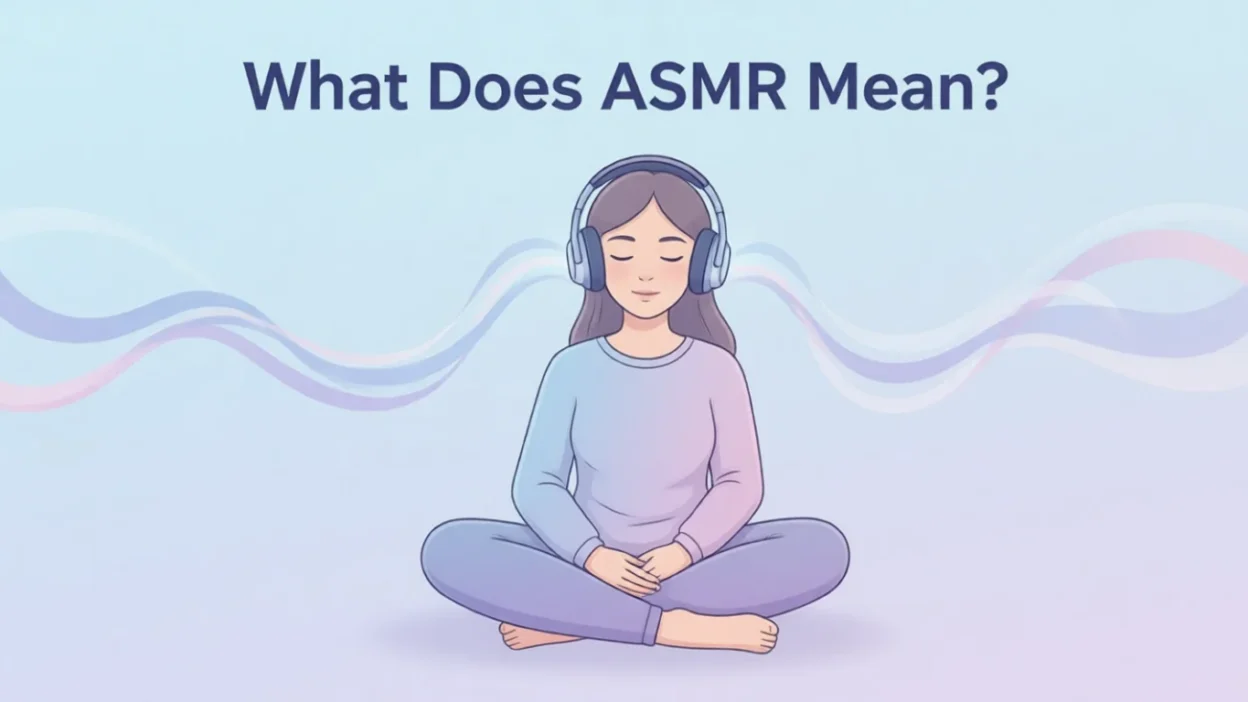
ASMR is a calm, tingly feeling that usually starts on the head or neck and moves down the body. It’s triggered by soft sounds or gentle actions like whispering, tapping, brushing, or slow movements.
People often describe it as:
- relaxing
- comforting
- sleepy
- peaceful
Not everyone feels ASMR, but those who do really enjoy it.
Why People Use the Term
People use “ASMR” to:
- describe calming videos or sounds
- talk about relaxation or sleep
- recommend content that feels soothing
- explain a physical response to sound
Short Example Sentence
“this tapping video gives me so much asmr.”
Bold summary: ASMR means a calming, tingly sensation triggered by soft sounds or visuals that help people relax.
Where Is ASMR Commonly Used?
ASMR is a big part of modern internet culture, especially on video-based platforms.
Common Places You’ll See ASMR
- YouTube (ASMR channels and videos)
- TikTok and Instagram Reels
- Comments under relaxing videos
- Text messages between friends
- Reddit and online forums
- Streaming platforms
Tone of the Term
The tone of ASMR is usually:
- casual
- informal
- sometimes neutral
It’s not formal or professional. You’ll rarely see it in work emails, but you’ll see it everywhere online.
How ASMR Is Used in Real Conversations
Here are realistic, modern examples you might see in chats or comments. All written in natural, lowercase texting style.
- “this video is pure asmr”
- “i listen to asmr to fall asleep”
- “whispering videos give me chills”
- “not everyone gets asmr but i do”
- “that keyboard sound is accidental asmr”
- “asmr videos calm my anxiety”
- “i need some asmr after today”
- “this audio is weirdly relaxing”
These examples show how naturally the term fits into online chat.
When to Use and When Not to Use ASMR
✅ When to Use ASMR
- Talking about relaxing videos or sounds
- Recommending sleep or calm content
- Commenting on soothing audio
- Casual chats with friends
- Social media comments
❌ When Not to Use ASMR
- In professional or formal writing
- With people unfamiliar with internet slang
- To describe loud or chaotic content
- In serious or sensitive conversations
Comparison Table
| Context | Example Phrase | Why It Works or Doesn’t |
|---|---|---|
| youtube comment | “this is top-tier asmr” | casual & fitting |
| text to friend | “i’m watching asmr to relax” | natural use |
| work email | “this meeting was asmr” | confusing |
| loud concert | “this noise is asmr” | incorrect meaning |
Why Do People Like ASMR So Much?
People enjoy ASMR for different reasons.
Some use it to:
- fall asleep faster
- reduce stress or anxiety
- relax after a long day
- focus while studying
- feel comforted
ASMR content often feels slow and gentle, which is the opposite of fast, noisy social media. That’s part of why it’s so popular.
Similar Words and Alternatives to ASMR
Sometimes people use other words instead of ASMR, depending on the situation.
| Term | Meaning | When to Use It |
|---|---|---|
| relaxing | calming feeling | general use |
| soothing | gentle and peaceful | casual chat |
| calming | reduces stress | neutral tone |
| chill | laid-back mood | informal slang |
| white noise | steady background sound | sleep talk |
| satisfying | pleasing to watch or hear | comments |
These words don’t mean exactly the same thing, but they’re often used in similar contexts.
Common ASMR Triggers People Talk About
Even though this isn’t slang, people often mention triggers when talking about ASMR.
Popular triggers include:
- whispering
- tapping
- scratching
- page turning
- soft speaking
- brushing sounds
You’ll often see comments like, “this tapping is my favorite asmr trigger.”
FAQ: Common Questions About ASMR
1. What does ASMR mean in simple terms?
It means a relaxing tingling feeling caused by gentle sounds or visuals.
2. Is ASMR a slang word?
No, it’s an actual term, but it’s mostly used in informal online spaces.
3. Does everyone experience ASMR?
No. Some people feel it strongly, others don’t feel it at all.
4. Is ASMR only about sounds?
Mostly sounds, but visuals and slow movements can trigger it too.
5. Is ASMR popular on social media?
Yes. ASMR videos are extremely popular on YouTube, TikTok, and Instagram.
6. Can ASMR help with sleep?
Many people use ASMR to relax and fall asleep faster.
7. Is ASMR weird or normal?
It’s completely normal, and millions of people enjoy it daily.
ASMR in Texting and Internet Culture
In texting culture, ASMR is often used as:
- a reaction
- a recommendation
- a vibe description
- “that sound was accidental asmr”
- “this video is asmr gold”
It’s become a shared internet language that signals calm and comfort.
Final Thought
So, what does ASMR mean? It’s more than a word—it’s a feeling. ASMR stands for a calming, tingly response many people get from soft sounds and gentle visuals.
That’s why the term shows up so often in texts, comments, and social media posts. In a loud digital world, ASMR represents slowing down, relaxing, and finding comfort in simple sounds.
Whether you love it, feel curious about it, or just keep seeing the word online, now you know exactly what it means and how it’s used.

Joy Root is a content writer at Whygenix.com, creating clear, engaging articles that explain complex ideas simply, helping readers understand why topics matter in everyday life and personal growth.