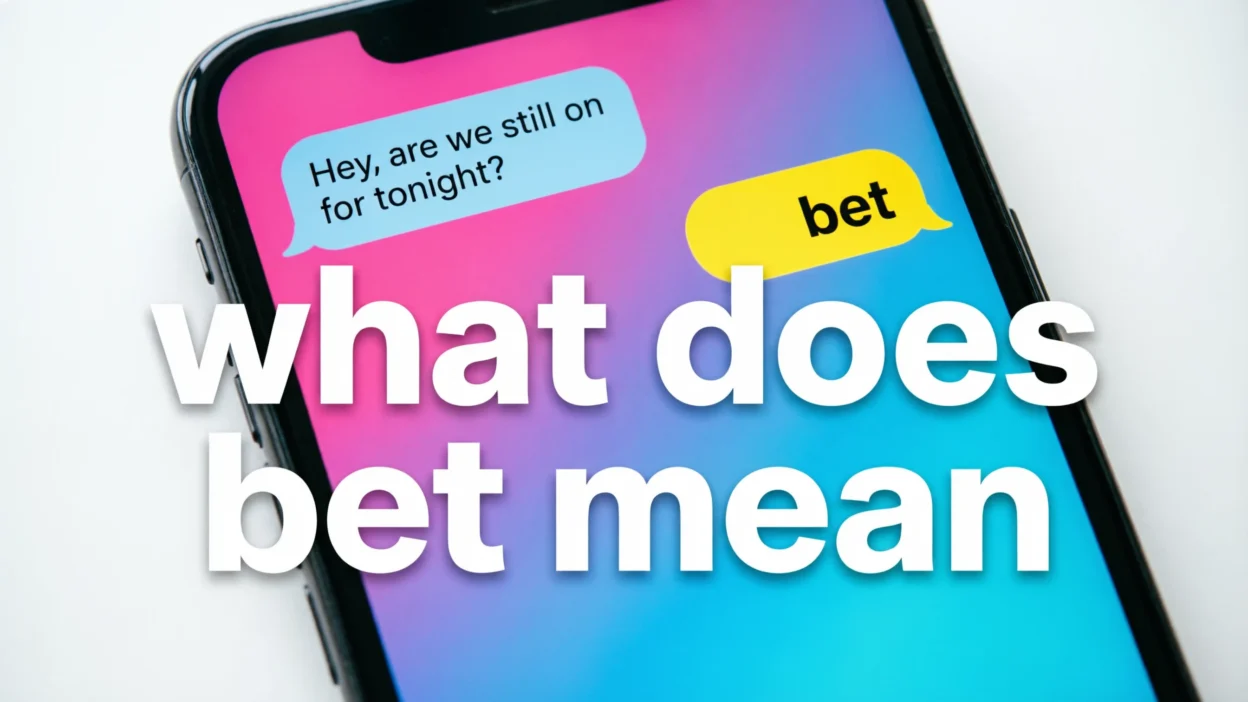
The first time someone replied “bet” to my message, I was confused.
I had just texted, “let’s meet at 6.” They answered with one word: “bet.”
I stared at my phone thinking… wait, what does bet mean? Are we gambling? Did I miss something? Was that a yes? A challenge?
If you’ve seen “bet” in texts, DMs, gaming chats, or social media comments and felt unsure, don’t worry. You’re not alone. This short word has a big meaning in modern texting culture — and once you understand it, you’ll start seeing it everywhere.
Quick Answer
“Bet” means “okay,” “yes,” or “I agree” in casual texting and online slang.
What Does Bet Mean in Text Slang?
Originally, the word bet means to gamble or place a wager.
Example:
But in modern text slang meaning, “bet” has changed. It no longer has anything to do with money.
Plain-English Explanation
In today’s online chat meaning, bet is a way to say:
- okay
- sure
- sounds good
- deal
- I’m down
- challenge accepted
It shows agreement, confidence, or excitement.
Why Do People Use “Bet”?
People use “bet” because it’s:
- Short
- Cool-sounding
- Easy to type
- Confident
- Popular in social media slang
It replaces longer replies like:
- “okay, that works.”
- “yes, I agree.”
- “let’s do it.”
One Short Example
That simply means: okay, I will.
In simple terms: “bet” means yes, okay, or I agree in casual texting.
Where Is “Bet” Commonly Used?
“Bet” is part of modern chat shorthand and texting culture. You’ll mostly see it in informal spaces.
1. Text Messages (Very Informal)
Friends often use “bet” in one-on-one chats.
Example:
Tone: casual and informal
2. Social Media Platforms
On apps like:
- TikTok
- Snapchat
- X (Twitter)
You’ll see “bet” in comments and replies.
Example:
Tone: casual, playful
3. Gaming Chats
Gamers use “bet” a lot.
Example:
Here, it means challenge accepted.
Tone: competitive but informal
4. Group Chats
In group chats, “bet” keeps things moving fast.
Example:
Tone: friendly and relaxed
Is “Bet” Formal?
No.
You should not use “bet” in:
- Business emails
- School essays
- Job interviews
- Professional meetings
It belongs in informal chat and texting culture, not formal communication.
Realistic Conversation Examples (Modern Text Style)
Here are natural examples written in lowercase like real chats:
- “we leaving at 8.”
“bet.” - “bring snacks.”
“bet i got you.” - “you won’t beat me in 2k.”
“bet watch.” - “let’s skip class tomorrow.”
“bet 😭” - “pull up to the party.”
“bet say less.” - “i’ll call you later.”
“bet.” - “double or nothing.”
“bet.” - “meet me outside.”
“bet coming.” - “don’t be late.”
“bet i won’t.”
As you can see, “bet” fits easily into quick online chat replies.
When to Use and When Not to Use “Bet”
Even though “bet” is popular, it doesn’t work everywhere.
✅ When to Use It
Do use “bet” when:
- texting friends
- replying casually on social media
- gaming online
- accepting a challenge
- agreeing quickly
It works best in relaxed conversations.
❌ When Not to Use It
Don’t use “bet” when:
- writing a school paper
- sending a work email
- talking to your boss
- speaking in formal meetings
- writing official documents
In those cases, say “okay,” “yes,” or “confirmed” instead.
Quick Comparison Table
| Context | Example Phrase | Why It Works (or Doesn’t) |
|---|---|---|
| Texting a friend | “see you at 6.” → “bet.” | works, casual and friendly |
| Gaming chat | “1v1?” → “bet.” | works, confident tone |
| Email to teacher | “homework due tomorrow.” → “bet.” | doesn’t work, too informal |
| Work message | “meeting at 9am.” → “bet.” | unprofessional tone |
Context matters a lot in digital communication.
Similar Slang Words and Alternatives
If you’re learning what does bet mean, you might also see these related slang terms.
1. “Say less”
Meaning: I understand, no need to explain more.
Example:
Use it when you’re confident and ready.
2. “For sure”
Meaning: definitely, yes.
Example:
More neutral than “bet.”
3. “Facts”
Meaning: that’s true, I agree.
Example:
Used to agree strongly.
4. “Deal”
Meaning: agreement confirmed.
Example:
Slightly more neutral.
5. “I’m down”
Meaning: I’m interested or willing.
Example:
Very common in texting culture.
Quick Comparison Table
| Slang | Meaning | Best Used When |
|---|---|---|
| Bet | okay, yes, challenge accepted | casual chats |
| Say less | I understand | confident agreement |
| Facts | that’s true | strong agreement |
| I’m down | I’m interested | plans with friends |
| Deal | agreement confirmed | simple arrangements |
Each one fits slightly different situations.
Why “Bet” Became So Popular
Language changes fast, especially online.
“Bet” became popular because it:
- Sounds cool
- Feels confident
- Is super short
- Works as a full reply
- Fits meme culture
It also has roots in African American Vernacular English (AAVE), where it has been used for years before becoming mainstream in social media slang.
Now it’s part of everyday online chat meaning across many platforms.
Frequently Asked Questions (FAQ)
1. What does bet mean in texting?
It means okay, yes, or I agree in casual conversation.
2. Does bet mean a real gamble?
Not in texting slang. In modern chat, it usually has nothing to do with money.
3. Is bet rude?
No. It’s not rude. It’s just informal.
4. Can adults use bet?
Yes. Anyone can use it, but it’s more common among teens and young adults.
5. Is bet used worldwide?
Yes, especially in English-speaking countries, thanks to social media and gaming culture.
6. Is bet a texting abbreviation?
No. It’s a real word used in a new slang way.
7. Can bet mean challenge accepted?
Yes. In competitive situations, it often means challenge accepted.
Final Thought
So, what does bet mean?
In today’s texting culture, “bet” simply means yes, okay, or I agree. It can also show confidence or accept a challenge.
It’s short. It’s bold. And it fits perfectly into social media slang and online chat meaning.
Just remember:
Use it with friends, not your boss.
Now the next time someone texts “bet,” you won’t be confused — you’ll know exactly what they mean.

Joy Root is a content writer at Whygenix.com, creating clear, engaging articles that explain complex ideas simply, helping readers understand why topics matter in everyday life and personal growth.