You’re scrolling through social media or chatting with friends, and someone casually says, “they’re so bipolar.”
You pause. Is that a joke? A mood thing? Or something serious?
A lot of people first hear the word bipolar online—in texts, comments, memes, or casual conversations. It gets used fast and loosely, but the meaning behind it is often misunderstood. Some people use it to describe mood swings, while others mean a real mental health condition.
If you’ve ever wondered what does bipolar mean, especially in texting or online chat, you’re in the right place. Let’s explain it clearly, respectfully, and in plain language—no medical jargon, no confusion.
Quick Answer
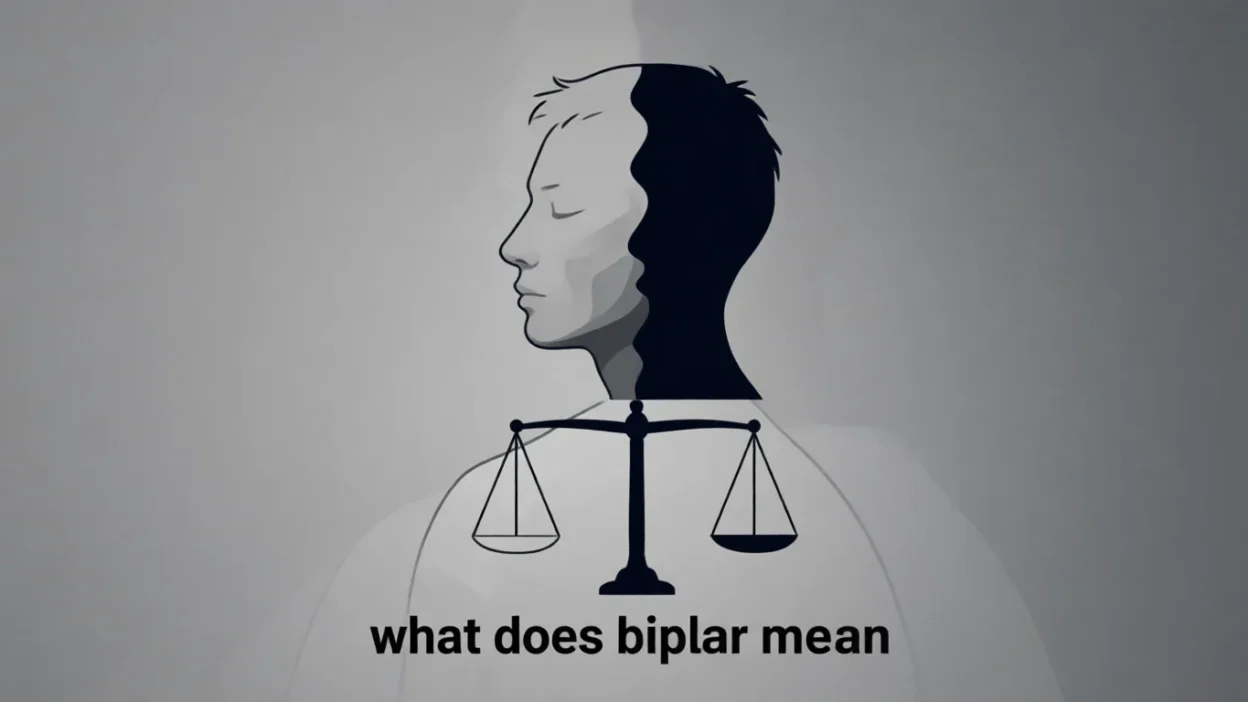
Bipolar means a mental health condition where a person experiences extreme mood changes, ranging from very high energy to very low depression.
What Does Bipolar Mean?
Is there a full form?
No. Bipolar is not an abbreviation. It comes from:
- “bi” meaning two
- “polar” meaning opposite extremes
Together, it refers to two opposite mood states.
Plain-English explanation
When someone has bipolar disorder, their mood doesn’t just change a little. It can swing between:
- high-energy, excited, or impulsive moods (called mania)
- very low, sad, or tired moods (called depression)
These changes are stronger and last longer than normal mood shifts.
Why people use the word
- to talk about mental health
- to describe mood extremes (often incorrectly)
- because it’s common in online slang
- due to lack of awareness about the real meaning
Short example sentence
➡️ One-line summary: Bipolar means experiencing extreme emotional highs and lows, often as part of a mental health condition.
Where Is the Term “Bipolar” Commonly Used?
The word bipolar shows up in many places online and offline.
Common spaces you’ll see it
- text messages
- social media posts
- comments and replies
- DMs
- online forums
- mental health discussions
- casual conversations
Tone of the word
- formal in medical or educational contexts
- neutral in awareness discussions
- often misused casually in informal chats
Important note: Using “bipolar” casually can be hurtful, even if not intended that way.
Bipolar in Texting and Online Chat
In texting culture, the term is often misused to describe:
- sudden mood changes
- indecisive behavior
- emotional reactions
But that’s not the correct meaning.
Real bipolar disorder is not about changing moods in minutes. It involves long-lasting mood episodes that affect daily life.
Realistic Conversation Examples (Modern Chat Style)
Here are examples of how the word appears online—both correct and incorrect usage.
- “he opened up about having bipolar disorder”
- “i’m learning more about bipolar for my psych class”
- “people throw around bipolar way too easily”
- “being sad one day isn’t bipolar”
- “mental health topics like bipolar need respect”
- “i used to misunderstand what bipolar meant”
- “she said her brother lives with bipolar”
- “calling mood swings bipolar isn’t accurate”
- “that post explained bipolar really well”
When to Use and When Not to Use “Bipolar”
✅ When it’s okay to use the term
- discussing mental health education
- sharing personal or diagnosed experiences
- awareness and support conversations
- medical or academic settings
❌ When NOT to use it
- joking about someone’s mood
- describing normal emotional changes
- insulting or labeling others
- memes that spread misinformation
Comparison table
| Context | Example Phrase | Why It Works / Doesn’t |
|---|---|---|
| education | “bipolar affects mood regulation” | ✅ accurate |
| awareness | “learning about bipolar disorder” | ✅ respectful |
| casual chat | “you’re bipolar today” | ❌ harmful |
| joke | “weather’s bipolar” | ❌ misleading |
| support | “they’re managing bipolar well” | ✅ supportive |
Common Slang or Alternatives People Confuse With Bipolar
Many words get mixed up with bipolar. Let’s clear them up.
| Term | What It Really Means | When to Use |
|---|---|---|
| mood swings | normal emotional changes | everyday talk |
| emotional | expressing feelings | casual chat |
| unstable | inconsistent behavior | general description |
| depressed | feeling sad (not diagnosis) | informal use |
| condition | high energy state (medical) | clinical context |
| stressed | overwhelmed feeling | daily conversation |
Using the right word matters—it avoids misunderstanding and stigma.
Why Misusing “Bipolar” Is a Problem
Using bipolar as slang can:
- spread false information
- minimize real mental health struggles
- hurt people living with the condition
- create stigma around mental health
Language shapes how we think. Using words carefully shows awareness and respect.
FAQs About “What Does Bipolar Mean”
1. What does bipolar mean exactly?
It refers to a mental health condition involving extreme mood highs and lows.
2. Is bipolar just mood swings?
No. Mood swings are normal. Bipolar involves intense, long-lasting mood episodes.
3. Can bipolar be used as slang?
People do, but it’s not correct and can be hurtful.
4. Is bipolar common?
Yes. Many people worldwide live with bipolar disorder.
5. Is it okay to say someone is bipolar?
Only if it’s medically accurate and shared respectfully.
6. Do teens and adults both use the term online?
Yes, but teens often see it misused in social media slang.
7. Why is bipolar misunderstood online?
Because it’s often simplified or joked about in memes and casual chats.
Bipolar and Modern Digital Communication
In today’s texting culture, words travel fast. The term bipolar is one of many mental health words that crossed into casual speech—but lost meaning along the way.
Understanding what does bipolar mean helps:
- improve communication
- reduce stigma
- promote mental health awareness
- make online spaces more respectful
Being informed is a small step that makes a big difference.
Final Thought
So, what does bipolar mean?
It describes a mental health condition marked by extreme emotional highs and lows—not everyday mood changes. While the word appears often in texting and social media, using it correctly and respectfully matters.
Knowing the real meaning helps you communicate better, avoid misunderstandings, and show empathy in today’s digital world.

Bret Lee writes educational and research-based content for Whygenix.com, focused on clarity, accuracy, and explaining why concepts matter through simple, engaging, reader-friendly writing.