Introduction
A friend once texted me late at night with a strange question: “this might sound weird… but what does black poop mean?”
They had noticed something unusual after using the bathroom and immediately started searching online.
If you’ve ever experienced this, you probably know the feeling. Changes in stool color can be surprising, even a little scary.
Most people expect stool to be brown, so seeing it turn black can raise a lot of questions.
The good news is that black poop doesn’t always mean something serious. Sometimes it’s caused by certain foods or medications, but in other cases it could signal a health issue that needs attention.
Let’s break it down in simple terms.
Quick Answer
Black poop can mean bleeding in the upper digestive tract, but it can also be caused by foods, supplements, or medications like iron or bismuth.
What Does Black Poop Mean?
Black poop refers to stool that appears very dark, tar-like, or almost completely black instead of the usual brown color.
In medical terms, black stool caused by internal bleeding is sometimes called melena.
Simple Explanation
When blood travels through the digestive system—from the stomach or small intestine—it becomes darker as it mixes with digestive fluids. This process can turn stool black and sticky-looking.
However, not every case of black stool is caused by bleeding.
Common Reasons for Black Poop
Some of the most common causes include:
1. Certain Foods
Dark foods can temporarily change stool color. Examples include:
- black licorice
- blueberries
- dark chocolate
- foods with dark food coloring
2. Iron Supplements
Iron pills often make stool look dark green or black.
3. Medications
Some medications can darken stool, especially ones containing bismuth.
4. Digestive Tract Bleeding
Bleeding in the stomach or upper intestine can produce black, tar-like stool.
Possible causes include:
- stomach ulcers
- gastritis
- esophageal varices
- digestive tract injury
Example Sentence
“after taking iron supplements for a few days, i noticed my poop turned black.”
In short: black poop can be caused by food or medicine, but sometimes it signals bleeding in the upper digestive system.
Where People Usually Notice or Discuss This
Unlike internet slang, black poop is a health-related topic usually discussed in medical or everyday situations.
Doctor Visits
Many people ask doctors about black stool changes, especially if the color appears suddenly.
Health Forums and Online Searches
People often search questions like:
- “what does black poop mean?”
- “is black stool dangerous?”
- “why is my poop black?”
Health forums and Q&A sites are common places where people discuss symptoms.
Text Messages or Family Conversations
Sometimes people mention it casually in messages when they are concerned.
Example:
“this is weird but my poop looked black today… should i worry?”
Tone of the Term
The tone is typically:
- neutral
- medical
- concerned
It’s not slang; it’s usually used in a health or medical context.
Realistic Conversation Examples
Here are some natural ways people might talk about black poop in everyday conversations.
“hey, this might be tmi but what does black poop mean?”
“i took iron pills and now my poop looks black”
“should i worry if my stool is black?”
“i googled it and it says black poop could be from bleeding”
“my doctor said dark stool can happen with certain meds”
“i ate a lot of blueberries yesterday and now my poop is really dark”
“if it’s black and sticky you should get it checked”
“mine went back to normal after i stopped the supplements”
“i’m going to call the doctor just to be safe”
These examples show how people often discuss the topic in casual but concerned conversations.
When to Pay Attention to Black Poop
Not every case of black stool is serious, but there are situations where you should be cautious.
When It May Be Normal
Black stool may be harmless if:
- you recently took iron supplements
- you used medications with bismuth
- you ate very dark foods
- the color returns to normal within a day or two
When You Should See a Doctor
You should get medical help if black stool comes with symptoms like:
- stomach pain
- dizziness
- weakness
- vomiting blood
- foul-smelling, sticky stool
- unexplained fatigue
These could signal internal bleeding.
Quick Comparison Table
| Situation | Example | Why It Matters |
|---|---|---|
| iron supplements | “my stool turned black after iron pills” | common and usually harmless |
| dark foods | “i ate lots of blueberries yesterday” | temporary color change |
| bleeding symptoms | “black stool with stomach pain” | may indicate digestive bleeding |
| long-term black stool | “it’s been black for several days” | should be checked by a doctor |
When in doubt, it’s always safer to seek medical advice.
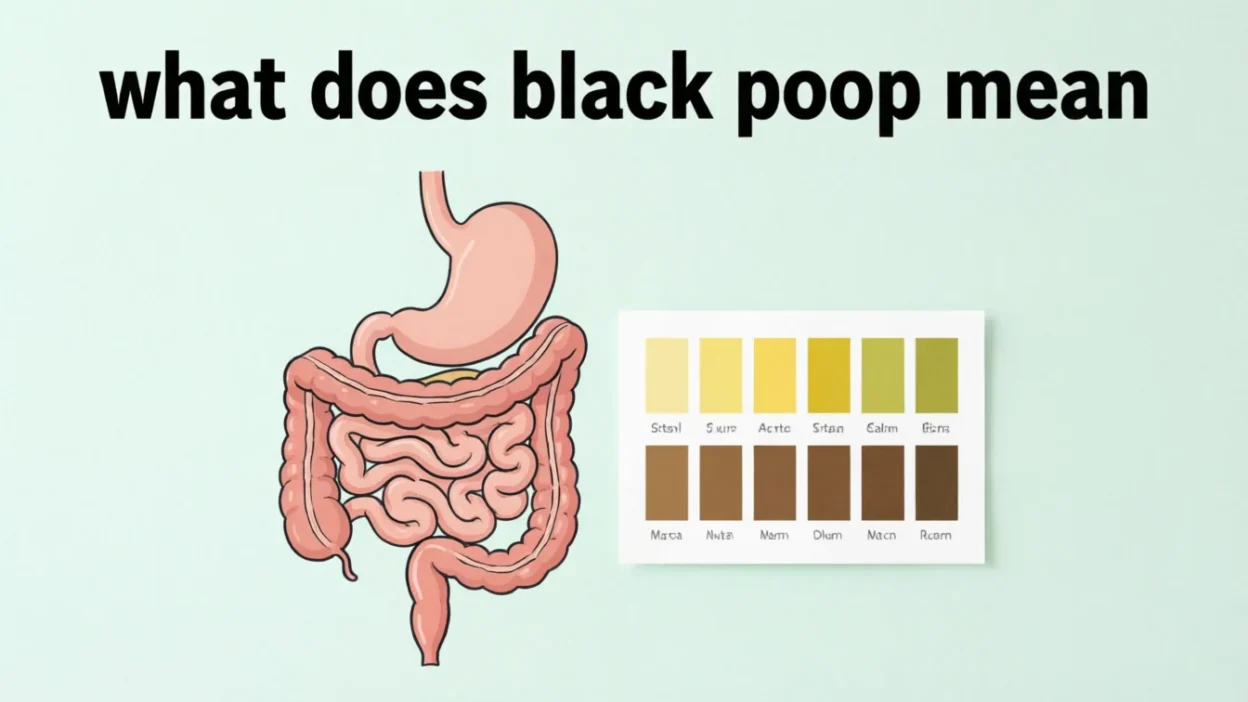
Other Stool Colors and What They Mean
Changes in stool color can happen for many reasons. Here are some other common colors.
| Stool Color | Possible Meaning |
|---|---|
| Brown | normal healthy stool |
| Green | fast digestion or green foods |
| Yellow | fat absorption issues |
| Red | possible lower digestive bleeding |
| White or pale | possible liver or bile problems |
Each color can provide clues about digestive health.
Frequently Asked Questions
1. Is black poop always dangerous?
No. Black stool can be caused by foods, iron supplements, or medications. But it can also signal digestive bleeding, so persistent cases should be checked.
2. How can I tell if black poop is from bleeding?
Bleeding-related stool is usually very dark, sticky, and foul-smelling. It may also come with symptoms like weakness or stomach pain.
3. Can iron pills cause black poop?
Yes. Iron supplements commonly turn stool dark green or black, which is usually harmless.
4. How long should black poop last?
If caused by food or medication, it usually returns to normal within one or two days.
5. Should I go to the doctor for black stool?
You should see a doctor if:
- the color lasts several days
- you feel weak or dizzy
- you have stomach pain
- you see blood or tar-like stool
6. Can food cause black poop?
Yes. Foods like blueberries, licorice, and dark-colored foods can temporarily darken stool.
7. Is black poop common?
It’s not very common, but it happens occasionally due to diet, medication, or digestive conditions.
Final Thought
Seeing black poop can feel alarming, but it doesn’t always mean something serious. In many cases, the cause is simple—like certain foods, iron supplements, or medications.
However, if black stool appears suddenly, lasts several days, or comes with symptoms like pain or dizziness, it’s important to seek medical advice. Stool color changes can sometimes be a sign of bleeding in the digestive system.
Understanding what different stool colors mean can help you pay attention to your body and catch potential health issues early.
If something feels unusual or concerning, it’s always best to check with a healthcare professional for peace of mind.

Sara Taylor is a content writer at Whygenix.com, creating clear, engaging articles that simplify complex ideas, helping readers understand the why behind topics in education, lifestyle, and personal development.