You’re scrolling through social media, reading comments under a heated post, when you see someone type “don’t tread on me.”
It feels serious. Strong. Almost like a warning.
Maybe you’ve also seen it on a flag emoji, a profile bio, a meme, or even in a group chat during an argument. You pause and think, Is this slang? Is it political? Is it a threat—or just a phrase?
You’re not alone. A lot of people first encounter “don’t tread on me” online without knowing where it comes from or what it really means.
Let’s break it down in plain, simple language so you understand exactly what people mean when they use it today.
Quick Answer
“Don’t tread on me” means “don’t control me, don’t disrespect me, and don’t take away my freedom.”
What Does “Don’t Tread on Me” Mean?
Full form
There is no shortened full form—“don’t tread on me” is a complete phrase.
Plain-English explanation
At its core, don’t tread on me is a warning or boundary statement. It tells others:
- don’t push me around
- don’t take my rights
- don’t cross my limits
The word “tread” means to step on. So the phrase literally means “don’t step on me”—but emotionally and socially, it means don’t overpower or control me.
Why people use it
People use this phrase to:
- express independence
- push back against authority
- show resistance
- protect personal freedom
Short example sentence
➡️ One-line summary: “Don’t tread on me” is a strong way to say “respect my freedom and boundaries.”
Where Did “Don’t Tread on Me” Come From?
This phrase comes from American history.
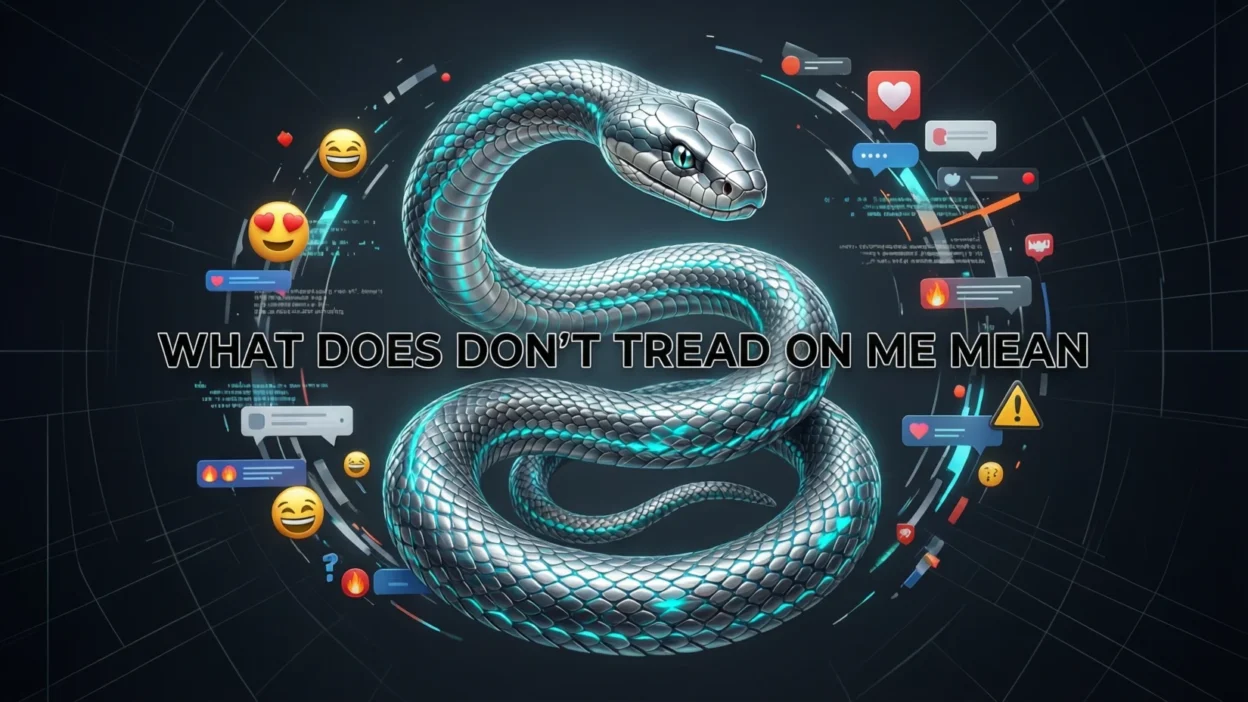
It was famously used on the Gadsden Flag, created in 1775, featuring:
- a coiled rattlesnake
- the words “don’t tread on me”
The message was simple:
If you threaten my freedom, I will defend myself.
Over time, the phrase moved from history books into modern culture—especially online.
How “Don’t Tread on Me” Is Used Today
Today, the phrase shows up in many digital spaces, often without the historical background.
Common online uses
- social media comments
- profile bios
- political discussions
- memes and GIFs
- debate threads
- gaming chats
- DMs during arguments
Tone of the phrase
- strong
- serious
- defensive
- usually informal
- sometimes confrontational
It’s not playful slang—it carries weight.
“Don’t Tread on Me” in Texting and Online Chat
In texting culture, this phrase is usually used to draw a line.
People type it when they feel:
- attacked
- judged
- controlled
- pressured
It’s often a response, not a conversation starter.
Realistic Conversation Examples (Lowercase, Modern Style)
Here’s how don’t tread on me might appear in real chats:
- “i can believe what i want. don’t tread on me.”
- “stop telling me how to live—don’t tread on me.”
- “this is my opinion. don’t tread on me.”
- “respect personal freedom. don’t tread on me.”
- “i’m all for rules, but don’t tread on me.”
- “keep politics out of my dms. don’t tread on me.”
- “debate is fine, control isn’t. don’t tread on me.”
- “i draw the line here—don’t tread on me.”
When to Use and When Not to Use “Don’t Tread on Me”
✅ When to use it
- defending personal boundaries
- expressing independence
- political or social debates
- strong opinion statements
- when tone is already serious
❌ When NOT to use it
- casual friendly chats
- jokes or light humor
- professional emails
- sensitive emotional discussions
- with people unfamiliar with the phrase
Comparison table
| Context | Example Phrase | Why It Works / Doesn’t |
|---|---|---|
| political debate | “don’t tread on me” | ✅ fits strong tone |
| social media comment | “respect freedom—don’t tread on me” | ✅ clear message |
| group joke chat | “lol don’t tread on me” | ❌ tone mismatch |
| work email | “don’t tread on me regarding deadlines” | ❌ inappropriate |
| personal boundary | “this is my choice—don’t tread on me” | ✅ effective |
Similar Words or Alternatives
If you want to express the same idea with different wording, here are alternatives.
| Phrase | Meaning | When to Use |
|---|---|---|
| respect my boundaries | don’t cross limits | polite discussions |
| stay in your lane | mind your own business | casual chats |
| hands off | don’t interfere | direct warning |
| live and let live | mutual freedom | calmer tone |
| don’t control me | clear resistance | serious talk |
| back off | stop pushing | heated moments |
Some alternatives are softer; “don’t tread on me” is one of the strongest.
Common Misunderstandings About the Phrase
- thinking it’s just slang
- assuming it’s always aggressive
- using it jokingly when others take it seriously
- not realizing its political and historical weight
Because of its background, some people react strongly to it—positively or negatively.
Is “Don’t Tread on Me” Political?
Often, yes—but not always.
- some use it politically
- others use it for personal freedom
- some use it as a general warning
Online, the meaning depends heavily on context and audience.
FAQs About “What Does Don’t Tread on Me Mean”
1. What does “don’t tread on me” mean in simple words?
It means don’t control me or take away my freedom.
2. Is “don’t tread on me” slang?
Not exactly—it’s a historical phrase used in modern slang-like ways online.
3. Is the phrase aggressive?
It can sound strong or defensive, depending on context.
4. Is it okay to use in texting?
Yes, but only in serious or boundary-setting conversations.
5. Do younger people use this phrase?
Yes, especially on social media and in debates.
6. Is it formal or informal?
Mostly informal, sometimes serious, rarely formal.
7. Can it be misunderstood?
Yes. Some people may see it as political or confrontational.
Why Understanding This Phrase Matters
Knowing what does don’t tread on me mean helps you:
- understand strong online opinions
- avoid misreading tone
- respond appropriately
- communicate boundaries clearly
In digital spaces, words carry emotion—and this phrase carries a lot of it.
Final Thought
So, what does don’t tread on me mean?
It’s a powerful way of saying “respect my freedom, my choices, and my boundaries.”
Whether used in history, politics, or modern texting culture, the phrase signals resistance and independence.
Use it carefully, understand its weight, and always consider context—because in online communication, tone matters just as much as words.

Sara Taylor is a content writer at Whygenix.com, creating clear, engaging articles that simplify complex ideas, helping readers understand the why behind topics in education, lifestyle, and personal development.