Introduction
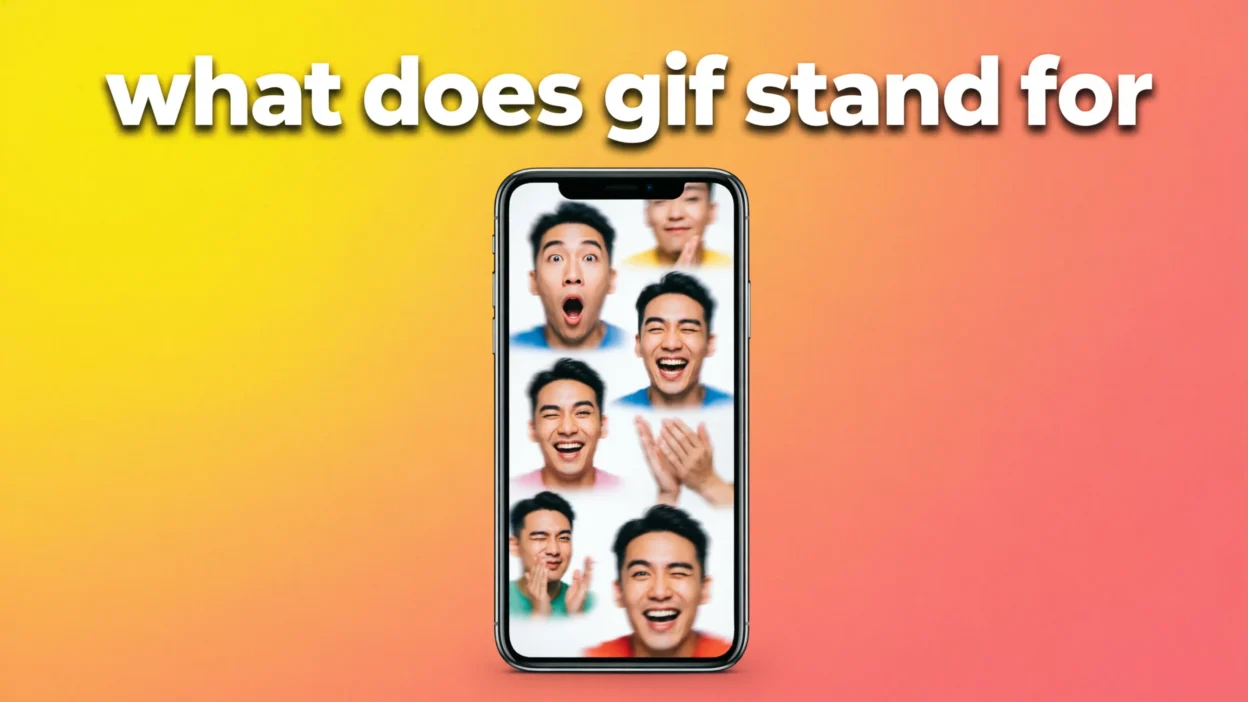
You’re chatting with a friend, and instead of replying with words, they send a short looping animation of someone clapping or rolling their eyes. Under it, they type, “this gif says it all.”
If you’ve spent any time online, you’ve probably seen GIFs everywhere—on social media, in group chats, and even in work messages. But have you ever stopped and wondered what GIF actually stands for?
Many people use GIFs every day without knowing the meaning behind the name. The term comes from a technical format that became one of the most popular ways to express reactions on the internet.
Let’s break it down in simple terms.
Quick Answer
GIF stands for “Graphics Interchange Format,” a digital image format that supports short looping animations.
What Does GIF Stand For?
The abbreviation GIF stands for Graphics Interchange Format.
It’s a type of image file format created to display graphics and short animations on computers and the internet.
Simple Explanation
A GIF is basically a small image file that can show multiple frames in a loop, creating a short animation.
Unlike videos, GIFs:
- usually have no sound
- repeat automatically
- are quick to load and easy to share
That’s why they became extremely popular in online messaging and social media.
Why People Use GIFs
People use GIFs because they:
- show emotions quickly
- make conversations fun
- replace long text responses
- add humor to chats
Instead of typing “that’s hilarious,” someone might send a laughing GIF.
Example Sentence
“i can’t stop laughing at that cat gif you sent.”
In short: GIF stands for “Graphics Interchange Format,” a type of image file used for short looping animations online.
Where GIFs Are Commonly Used
Today, GIFs are everywhere on the internet and are a big part of modern digital communication.
Text Messages
Many messaging apps allow users to send GIFs directly in conversations.
People use them to show reactions like:
- laughing
- eye-rolling
- applause
- surprise
Social Media
GIFs are extremely common on platforms like:
- Twitter (X)
- TikTok comments
They help people react to posts in a fun and visual way.
Messaging Apps
Apps like:
- Messenger
- Telegram
- Discord
have built-in GIF search tools so users can quickly find a reaction.
Online Forums and Communities
GIFs are widely used in online forums to express reactions in discussions.
Tone of the Term
The tone when using GIFs is usually:
- casual
- informal
- humorous
However, they’re sometimes used in light professional communication too.
Realistic Conversation Examples
Here are some natural texting-style examples showing how people talk about or use GIFs in chats.
“that reaction gif is perfect 😂”
“hold on, i need a gif for this moment”
“i sent the funniest dog gif in the group chat”
“this gif describes my mood today”
“did you see the dancing gif she posted?”
“lol that movie gif is legendary”
“i love replying with gifs instead of words”
“that eye-roll gif is exactly how i feel”
“wait i’m finding the perfect gif for this”
These examples show how GIFs have become part of everyday texting culture.
When to Use and When Not to Use GIFs
While GIFs are fun, they aren’t always appropriate.
When to Use GIFs
Use GIFs when:
- chatting with friends
- reacting to social media posts
- making group chats fun
- sharing jokes or memes
When Not to Use GIFs
Avoid GIFs when:
- writing formal emails
- sending professional reports
- communicating serious information
- messaging someone who prefers formal communication
Quick Comparison Table
| Context | Example Phrase | Why It Works / Doesn’t Work |
|---|---|---|
| group chat | “this gif is hilarious” | casual and fun |
| social media | posting a reaction gif | normal online behavior |
| work email | “please see this gif reaction” | too informal |
| serious discussion | sending a joke gif | may seem insensitive |
Knowing when to use GIFs helps maintain good communication etiquette.
Similar Terms or Related Internet Media
Several other digital media types are often mentioned alongside GIFs.
| Term | Meaning | When Used |
|---|---|---|
| Meme | humorous image or video shared online | internet culture and jokes |
| Sticker | small graphic used in chats | messaging apps |
| Emoji | small digital icons expressing emotion | texting and social media |
| Short Video | brief video clip | platforms like TikTok |
| Reaction Image | still image showing emotion | online discussions |
Example
Instead of sending a GIF, someone might reply with:
- a laughing emoji
- a reaction meme
- a funny sticker
These are all part of modern online communication culture.
Frequently Asked Questions
1. What does GIF stand for?
GIF stands for Graphics Interchange Format, a digital image format used for static images and short animations.
2. How do you pronounce GIF?
There are two common pronunciations:
- “gif” (hard G, like gift)
- “jif” (soft G)
The creator of the format originally said it should be pronounced “jif.”
3. Who created the GIF format?
The GIF format was created in 1987 by Steve Wilhite at the online service CompuServe.
4. Why are GIFs so popular online?
GIFs are popular because they:
- are quick to load
- loop automatically
- show emotions visually
- make conversations more entertaining
5. Do GIFs have sound?
No. GIF files do not contain audio, which is why they behave differently from videos.
6. Are GIFs still popular today?
Yes. Even with short videos and memes, GIFs remain widely used in messaging apps, social media, and online forums.
7. Are GIFs the same as videos?
No. GIFs are image files that display frames in a loop, while videos are larger media files that usually include sound.
Final Thought
The term GIF stands for Graphics Interchange Format, but today it means much more than just a technical file type. GIFs have become a major part of internet culture, helping people express emotions, humor, and reactions in a quick and visual way.
From funny movie moments to cute animal reactions, GIFs make conversations more lively and engaging. Whether you’re texting friends, posting on social media, or reacting in a group chat, GIFs provide a simple way to say a lot without typing a single word.
Now the next time someone sends a perfect reaction GIF, you’ll know exactly what the name stands for—and why it became such a big part of online communication.

Bret Lee writes educational and research-based content for Whygenix.com, focused on clarity, accuracy, and explaining why concepts matter through simple, engaging, reader-friendly writing.