I still remember the first time I saw someone type, “i think my kidney hurts?” in a group chat. At first, I thought they were joking about a bad workout. But then the messages got serious.
They described a sharp ache in their lower back and asked if anyone knew what kidney pain feels like. That moment made me realize how confusing body pain can be—especially when you’re not sure what organ is causing it.
If you’ve ever felt a deep ache in your side or back and wondered what’s going on, you’re not alone.
Quick Answer
Kidney pain usually feels like a deep, dull ache or sharp pain in your lower back or side, just below your ribs, and it may come with other symptoms like fever, nausea, or painful urination.
What Does Kidney Pain Feel Like? (Plain-English Explanation)
Let’s break it down simply.
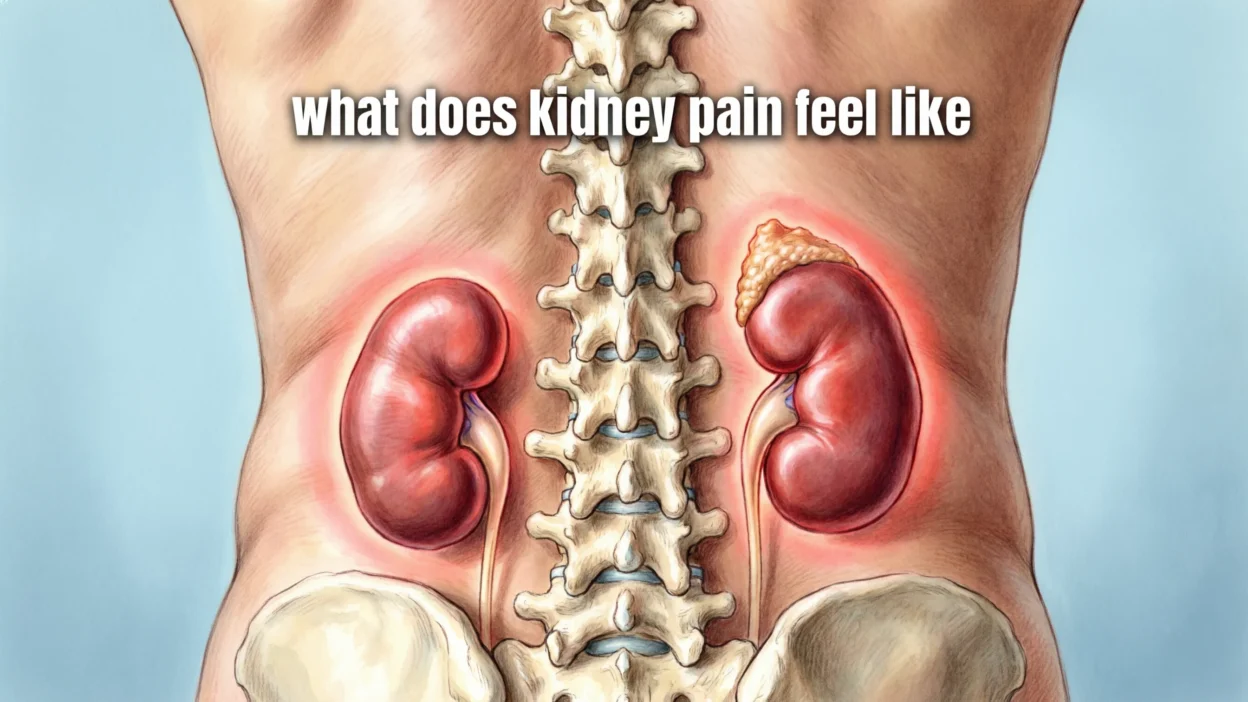
Your kidneys are two bean-shaped organs located in your back, just under your rib cage—one on each side of your spine. Their main job is to filter waste and extra fluid from your blood to make urine.
So, what does kidney pain feel like?
Most people describe it as:
- A deep, steady ache in the side or lower back
- Pain just under the ribs
- Pain that may spread to the lower belly or groin
- A sharp, intense pain that comes in waves (common with kidney stones)
Unlike regular back pain, kidney pain often feels deeper and doesn’t change much when you move or stretch.
Why Does Kidney Pain Happen?
Kidney pain usually happens because of:
- Kidney infection
- Kidney stones
- A blockage in the urinary tract
- Injury to the kidney area
For example:
“i’ve had this deep ache on my right side all day, and it hurts when i pee—could it be my kidney?”
In simple terms: Kidney pain feels like a deep ache or sharp pain in your side or lower back and is often linked to infections or stones.
Where Is Kidney Pain Located?
If you’re trying to figure out what does kidney pain feel like, location is key.
Kidney pain is usually:
- On one or both sides of your lower back
- Just below the rib cage
- Slightly above the waist
- Sometimes moving toward the belly or groin
A helpful trick: if the pain is higher than your hips and deeper than a muscle strain, it could be kidney-related.
Kidney Pain vs. Back Pain: What’s the Difference?
Many people confuse kidney pain with muscle pain.
Here’s how they’re different:
Back Pain
- Often caused by strain or poor posture
- Gets worse with movement
- Feels sore or tight
- Improves with rest or stretching
Kidney Pain
- Feels deeper and more internal
- Doesn’t change much with movement
- May come with fever, chills, nausea
- Often linked with urinary changes
If your pain comes with symptoms like burning while peeing or cloudy urine, it’s more likely kidney-related.
Common Symptoms That Come With Kidney Pain
If you’re asking what does kidney pain feel like, you should also know the warning signs that often show up with it.
Here are symptoms that may appear:
- Fever and chills
- Nausea or vomiting
- Painful urination
- Frequent urge to pee
- Blood in urine
- Cloudy or strong-smelling urine
If you have severe pain plus fever, it could be a kidney infection—and that needs medical care fast.
What Does Kidney Stone Pain Feel Like?
Kidney stone pain is very different from a dull ache.
People often describe it as:
- Sharp, stabbing pain
- Pain that comes in waves
- Extremely intense discomfort
- Pain moving from back to groin
- Restlessness (you can’t get comfortable)
Many say it’s one of the worst pains they’ve ever felt.
When Should You Worry About Kidney Pain?
Mild back aches are common. But kidney pain can be serious.
You should see a doctor if you have:
- Severe pain that won’t go away
- Fever with back or side pain
- Blood in urine
- Trouble urinating
- Pain with nausea or vomiting
Don’t ignore these signs. Kidney infections can spread if untreated.
How Long Does Kidney Pain Last?
It depends on the cause.
- Kidney infection: Pain may last until treated with antibiotics
- Kidey stones: Pain may come and go until the stone passes
- Injury: Pain may improve as the area heals
If pain lasts more than a couple of days, get checked.
What Does Kidney Pain Feel Like in Women vs. Men?
The feeling is mostly the same for people of all genders. However:
- Women may confuse kidney pain with menstrual cramps or ovarian pain
- Men may mistake it for muscle strain
The key difference is location and other symptoms, not gender.
Can You Have Kidney Pain Without Urinary Symptoms?
Yes, but it’s less common.
Sometimes early kidney issues cause:
- Mild side pain
- Tiredness
- Slight nausea
But most kidney-related pain includes some urinary changes.
What Causes Kidney Pain Most Often?
Here are the most common causes:
1. Kidney Infection
A serious infection that spreads to the kidneys. Usually comes with fever and chills.
2. Kidney Stones
Hard mineral deposits that block urine flow. Causes sharp, intense pain.
3. Urinary Tract Infection (UTI)
If untreated, it can spread upward to the kidneys.
4. Injury
A fall or blow to the lower back can injure the kidney.
How Doctors Check Kidney Pain
If you see a doctor, they may:
- Ask about your symptoms
- Check your urine
- Do blood tests
- Order an ultrasound or CT scan
This helps find out what’s causing the pain.
Can Kidney Pain Go Away on Its Own?
Sometimes.
- Small kidney stones may pass naturally.
- Mild infections might improve early on—but still need antibiotics.
Never assume serious pain will just fix itself.
Home Care Tips (Only for Mild Discomfort)
If your pain is mild and you’re waiting to see a doctor:
- Drink plenty of water
- Rest
- Use a heating pad on low
- Avoid heavy lifting
But if symptoms get worse, seek help immediately.
Frequently Asked Questions (FAQ)
1. What does kidney pain feel like exactly?
It feels like a deep ache or sharp pain in your lower back or side, usually under the ribs.
2. Is kidney pain constant or does it come and go?
It can be both. Infections cause steady pain, while kidney stones cause wave-like pain.
3. Can kidney pain feel like a pulled muscle?
Yes, but muscle pain usually changes with movement. Kidney pain usually doesn’t.
4. Where do you feel kidney pain in the body?
On one or both sides of the lower back, just below the rib cage.
5. Is kidney pain serious?
It can be. If it’s paired with fever, nausea, or blood in urine, see a doctor quickly.
6. How do I know if my pain is kidney-related?
Look at location, depth of pain, and other symptoms like urinary changes.
Final Thoughts
So, what does kidney pain feel like? It’s usually a deep, steady ache or sharp pain in your lower back or side, just under your ribs. It often comes with other warning signs like fever, nausea, or painful urination.
The biggest mistake people make is confusing kidney pain with normal back pain. If your discomfort feels deeper, doesn’t improve with movement, and comes with other symptoms, don’t ignore it.
Listening to your body matters. When in doubt, get checked out. Your kidneys do a lot for you—so taking pain seriously is always a smart move.

Bret Lee writes educational and research-based content for Whygenix.com, focused on clarity, accuracy, and explaining why concepts matter through simple, engaging, reader-friendly writing.