You’re scrolling through a group chat or comments when someone says, “i felt dizzy today—doctor said low blood pressure.”
You pause. You’ve heard of high blood pressure a lot, but low blood pressure? What does that actually mean?
Many people first hear this term online—through texts, social media posts, or casual conversations—without anyone explaining it clearly. That can make it feel confusing or even scary. The truth is, low blood pressure can mean different things for different people, and it’s not always dangerous.
Let’s break it down in a simple, friendly way so it actually makes sense.
Quick Answer
Low blood pressure means the force of blood pushing through your arteries is lower than normal, which can sometimes cause dizziness, weakness, or fainting.
What Does Low Blood Pressure Mean? (Text Meaning Explained)
Full form (if applicable)
Low blood pressure is medically called hypotension.
Plain-English explanation
Your blood pressure is how strongly your blood pushes against your blood vessels as your heart pumps.
When that pressure is too low, your body may not get enough blood and oxygen—especially your brain.
This can make you feel:
- lightheaded
- tired
- dizzy
- weak
Some people naturally have low blood pressure and feel totally fine. Others notice symptoms right away.
Why do people talk about it so much?
People mention low blood pressure because:
- it causes noticeable symptoms
- it comes up during doctor visits
- fitness and health creators talk about it
- people feel weird and want reassurance
One short example sentence
Bold summary: Low blood pressure means blood is moving through your body with less force than usual, sometimes leading to dizziness or weakness.
What Is Considered Low Blood Pressure?
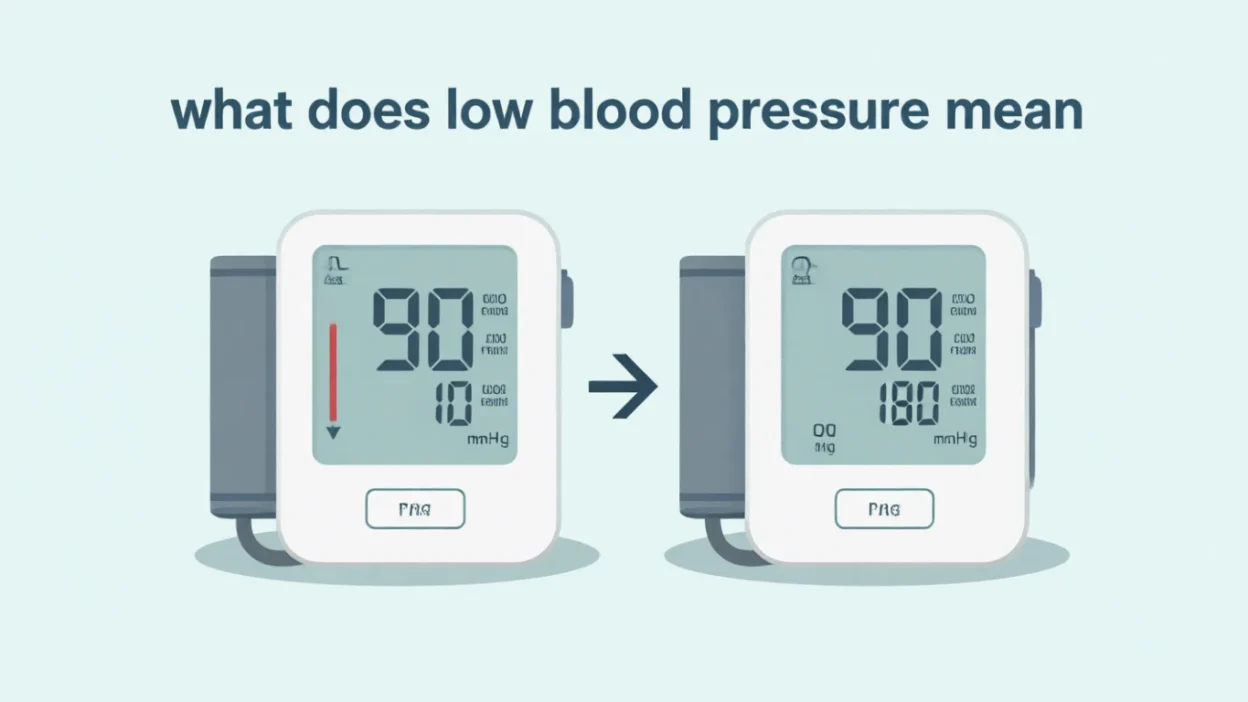
Blood pressure is written as two numbers, like 120/80.
- The top number = systolic pressure
- The bottom number = diastolic pressure
General guideline
Low blood pressure is often considered:
- below 90/60
But here’s the important part:
numbers alone don’t tell the whole story.
If you feel fine, low numbers may not be a problem. If you feel bad, even slightly low numbers matter.
Where Is the Term “Low Blood Pressure” Commonly Used?
Low blood pressure is a medical term, but it’s often discussed casually online.
Common places you’ll see it
- texting friends or family
- social media captions
- comments on health videos
- online health forums
- dms asking for advice
- wellness communities
Tone of the term
- neutral
- informal in chats
- formal in medical settings
People usually use it casually online, but it still refers to a real health condition.
Realistic Conversation Examples (Lowercase, Modern Style)
These examples show how people naturally talk about low blood pressure in online chats.
- “i get dizzy a lot, might be low blood pressure”
- “doctor said my bp was low but not dangerous”
- “anyone else feel shaky from low blood pressure?”
- “i fainted once because my bp dropped”
- “low blood pressure runs in my family”
- “coffee helps my low bp sometimes”
- “standing up too fast is my enemy”
- “low bp but high stress lol”
- “hydration helps more than i thought”
Common Symptoms People Associate With Low Blood Pressure
Not everyone has symptoms, but common ones include:
- dizziness or lightheadedness
- fainting
- blurry vision
- nausea
- fatigue
- cold or clammy skin
Symptoms often show up when:
- standing up quickly
- being dehydrated
- skipping meals
When to Use and When NOT to Use the Term
Because it’s a health-related term, it should be used thoughtfully.
✅ When to use “low blood pressure”
- sharing personal experiences
- discussing health concerns
- asking for advice
- talking about doctor visits
❌ When not to use it
- diagnosing others
- joking about serious symptoms
- assuming it’s always dangerous
- using it without context
Comparison table
| Context | Example Phrase | Why It Works or Doesn’t |
|---|---|---|
| health chat | “my bp is low today” | personal experience |
| doctor visit | “i have symptoms of low bp” | clear communication |
| joking | “i’m lazy, must be low bp” | misleading |
| diagnosing | “you definitely have low bp” | not appropriate |
Similar Terms or Alternatives People Use
People often use different words or phrases to describe low blood pressure.
| Term | What It Means | When to Use |
|---|---|---|
| hypotension | medical term | clinical settings |
| low bp | casual shorthand | texting |
| dizzy spells | symptom-based | informal chats |
| fainting | extreme symptom | descriptive |
| lightheaded | common feeling | everyday language |
| bp drop | sudden change | casual speech |
Using simpler words often helps conversations feel clearer.
What Causes Low Blood Pressure?
Low blood pressure can happen for many reasons, such as:
- dehydration
- standing up too fast
- skipping meals
- pregnancy
- certain medications
- heart conditions
Sometimes it’s temporary. Other times, it’s ongoing.
FAQ: Common Questions About Low Blood Pressure
1. Is low blood pressure dangerous?
Not always. It depends on symptoms, not just numbers.
2. Can low blood pressure be normal?
Yes. Some people naturally have low blood pressure and feel fine.
3. What does low blood pressure feel like?
Many people feel dizzy, weak, or lightheaded.
4. Can stress cause low blood pressure?
Stress usually raises blood pressure, but exhaustion can lower it.
5. Is low blood pressure worse than high blood pressure?
They’re different. High BP is often silent; low BP causes noticeable symptoms.
6. Can dehydration cause low blood pressure?
Yes. Dehydration is one of the most common causes.
7. Should I worry if I feel dizzy sometimes?
Occasional dizziness can happen, but frequent symptoms should be checked.
How People Talk About Low Blood Pressure Online
In texting culture and social media, people often shorten or soften the term:
- “low bp”
- “bp dropped”
- “feeling faint again”
These phrases make it easier to talk about health without sounding too serious.
Final Thought
So, what does low blood pressure mean?
It means your blood is moving through your body with less force than normal, which can sometimes cause dizziness, weakness, or fainting. For some people, it’s harmless. For others, it’s a sign to slow down, hydrate, or talk to a doctor.
Understanding the term helps you recognize symptoms, talk about it clearly, and feel more confident when it comes up in everyday conversations—online or offline.

Bret Lee writes educational and research-based content for Whygenix.com, focused on clarity, accuracy, and explaining why concepts matter through simple, engaging, reader-friendly writing.